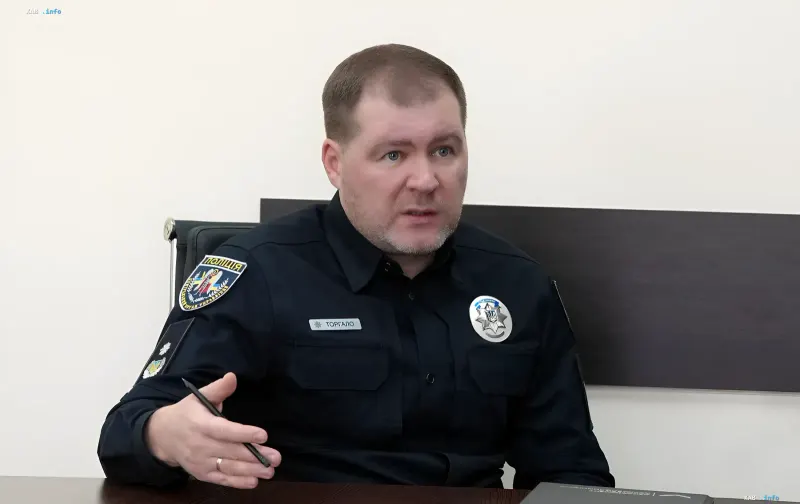
This week, audio recordings published by NABU of conversations between Khimprom drug cartel leader Yegor Burkin, known as "Mexican," caused widespread resonance in Ukraine. In the recordings, the suspect discusses attempts to influence those who interfered with the group's activities — among the figures he mentioned was Dmytro Torgalo, Head of the National Police's Drug Crime Department. In a blitz interview with RBC-Ukraine, Torgalo detailed the threats, the timeline of the investigation, and the mechanism that allowed criminals to sell synthetic cannabinoids for years under the guise of "souvenir" products.
From Initiative to Ban: Closing the Legal Loophole
According to Torgalo, back in September 2025, the National Police appealed to the Ministry of Health with an initiative to add the synthetic cannabinoid ADB-4en-PINACA — the exact compound used in U420 network products — to the list of prohibited substances. The documentation of the stores' activities began in December 2025: in parallel, investigators and operatives identified organizers, production sites, supply channels, and the movement of funds. In February 2026, the government made a decision to ban ADB-4en-PINACA. Torgalo emphasized that the searches were preceded by both the gathering of evidence and work on the changes necessary to control the substance. According to him, this work began under the leadership of Ivan Vyhovsky and continues under current National Police Chief Maksym Tsutsyrydze; operatives of the Drug Crime Department and investigators of the Main Investigative Department are jointly working on the case.
Operation Timeline: From 2025 Searches to the Elimination of U420
According to Torgalo, threats against police officers were received during the preparation and execution of specific investigative actions. He listed the key stages: searches of group members in June 2025, operations against Khimprom recruitment call centers in Ukraine, Albania, and Kazakhstan throughout 2025–2026, as well as the April 2026 operation targeting the U420 network and investigative actions against the inner circle of the group's leader in violent crime cases. "Therefore, we link these threats to specific investigations. They were received by police officers working on these cases," Torgalo explained. He added that despite the pressure, the searches took place, notices of suspicion were served to the suspects, and the investigations are ongoing.
"Souvenir" Products and Call Centers: How the Law Was Circumvented
Answering the question of why the stores continued operating if the police knew about their products, Torgalo explained that the organizers exploited the fact that the specific substance had not yet been added to the list of prohibited substances, selling the products as "souvenirs." To bring individuals to justice for illicit trafficking, it was necessary to regulate the legal status of the substance and gather evidence against those involved. The banning procedure, he said, could not be implemented by a single police decision: the draft resolution went through government agency approvals, a public discussion lasting at least 30 days, and approval by the State Regulatory Service. "We went through this procedure simultaneously with documenting the network's activities," the Head of the Drug Crime Department noted.
What is on the "Mexican's" Recordings
On the audio recordings published by NABU, Burkin, according to Torgalo, mentions the closed stores and call centers himself, and then explains his threats with the phrase: "...because you are now doing the same thing to my friends." According to the police, this refers to people from the "Mexican's" inner circle against whom investigative actions were being conducted at that time. Torgalo regards these statements as an attempt to halt work targeting the group and its circle. The threats, he said, were received not only by him personally but also by other officers of the Department directly working on the case.
The Role of the Bihus.Info Investigation
In the interview, Torgalo also touched upon the role of the Bihus.Info journalistic investigation into the U420 network, which, according to him, "so alarmed" the "Mexican" and his partners in the illegal "business." The details of this part of the conversation are not fully disclosed in the provided material, but the mere mention of journalistic work in the context of police operational actions indicates that public coverage of the network's activities became one of the factors that accelerated pressure on Khimprom's infrastructure.