The high-profile NABU and SAP special operation "Karthago", made public in September 2026 and allegedly encompassing an entire criminal infrastructure under the cover of high-ranking officials, was not the first blow against the U420 network and the Himprom cartel. As RBC-Ukraine reports, citing a publication by Babel chief editor Kateryna Kobernik, even before the anti-corruption agency's high-profile operation, National Police units had spent years conducting their own investigation into this group — and did so, according to her, amid systematic threats of violence against investigators and their families.
Himprom and U420: Work Done Earlier
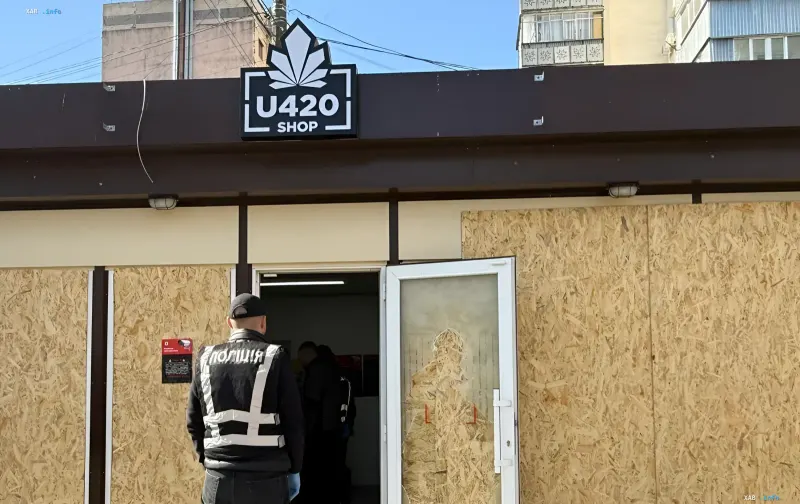
According to Kobernik, in 2025–2026 National Police units closed 105 U420 network drug shops, detained 23 members of the Himprom group's so-called enforcement wing, and issued two notices of suspicion to its leader, known by the nickname "Mexican". The journalist emphasizes that the materials published by NABU made a strong impression on society, but the detective bureau was not the first to investigate the syndicate's activities: a significant portion of the operational work on the U420 network was carried out by the police long before "Karthago".
Threats That Did Not Stop the Investigation
Kobernik recalls that drug cartel members regularly threatened law enforcement officers and their loved ones. According to her, the bandits planned to throw acid not only at journalist Denys Bihus, but also, for example, at the wife of Deputy National Police Head Andriy Nebytov. The syndicate's leader, the journalist claims, offered two million dollars for the resignation of Dmytro Torgalo, head of the Drug Crime Combating Department, who continued the investigation despite pressure. Video footage of people being beaten with sledgehammers was also published earlier by the National Police as part of their own Himprom investigation, she noted.
"Karthago" and the Issue of "Cover-Up"
Recall that NABU and SAP previously published new audio recordings in the "Karthago" case, announcing the exposure of a criminal organization that, according to the investigation, operated in Ukraine for years under the cover of officials from the SBU, the Prosecutor General's Office, and the National Police. According to the agency, the scheme covered dozens of fraudulent call centers, drug trafficking, counterfeit currency manufacturing, and the kidnapping and torture of people. One of the scheme's participants, according to the investigation, is Himprom drug cartel leader Yehor "Mexican" Burkin. Thus, the narrative of a "cover-up" by certain officials and the fact of the police's multi-year work against the same network coexist in the public sphere as two parallel lines of the same conflict.
Who Actually Worked in the System
Kobernik notes that during the Himprom investigation, threats were received not only by commanders, but also by rank-and-file investigators who continued working despite pressure. She emphasizes that law enforcement agencies — the National Police, the prosecutor's office, and the SBU — employ many personnel who fight crime and corruption, and that Torgalo, according to her, was not dismissed and continues his service. "The only thing these normal law enforcement officers lack is the same successful PR for their successful work that NABU already has, and the ability to correct the system when it fails," the journalist summarizes.
Thus, a dual picture is forming around the "Karthago" case and the U420 network: on one hand, a high-profile anti-corruption operation by NABU and SAP emphasizing a top-level "cover-up"; on the other hand, the multi-year work of the National Police, which, according to Kobernik, remained away from public resonance. Both lines converge on one point: the U420 network and the Himprom group were under investigation even before their activities were brought to the forefront by Operation "Karthago".