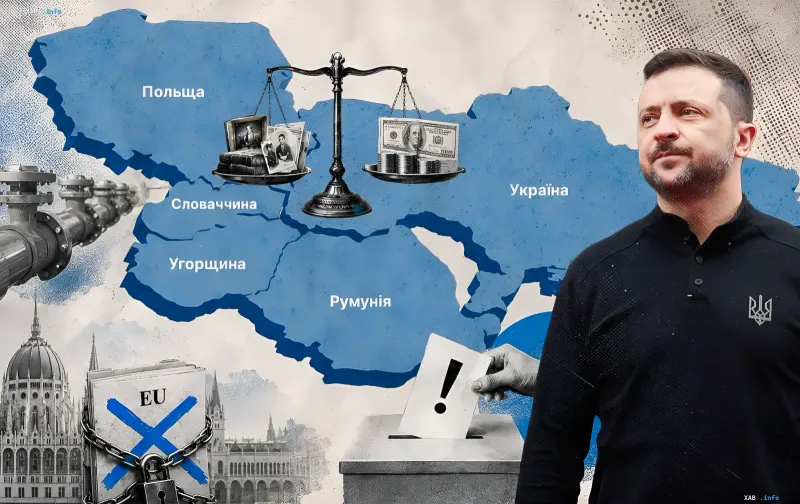
In the context of a full-scale war, the significance of Western neighbors for Ukraine's survival is hard to overestimate. However, alongside repelling Russian aggression, Kyiv has to regularly put out "diplomatic fires" with EU and NATO countries. Relations with Poland, Slovakia, Hungary, and Romania, which are critical for the logistics of military supplies and European integration, have their own specifics and hidden risks.
"War of Orders" and Historical Disputes
Relations with Warsaw in recent times are hard to call warm. In June, there was the largest escalation in many years, triggered by naming one of the Ukrainian Armed Forces units after UPA heroes. This move was absolutely unexpected for Kyiv and led to an emotional storm dubbed the "war of orders".
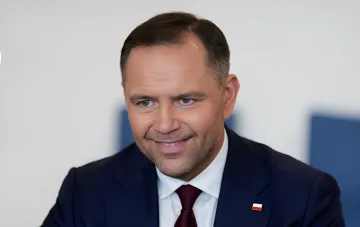
First, Polish President Karol Nawrocki stripped Volodymyr Zelenskyy of the highest state award — the Order of the White Eagle. In response, several top Ukrainian officials renounced Polish orders and medals. The situation was exacerbated by anti-Ukrainian hysteria in Polish social media and isolated physical attacks on Ukrainians.
Another wave of escalation was expected on July 11 — the Day of Remembrance for the Victims of the Volhynian Tragedy. Head of the President's Office of Ukraine Kyrylo Budanov warned that Poland was preparing a series of "immature escalatory steps". However, the Polish leadership decided not to go for a new escalation. In his speech, Nawrocki limited himself to calling on parliament to legislatively ban the red-and-black flag of the OUN-UPA.
Turn to Pragmatism
According to Serhiy Herasymchuk, Deputy Executive Director of the "Ukrainian Prism" Foreign Policy Council, Warsaw's restraint is due to several factors. First, the warming of relations between Ukraine and the US, which the Polish President orients himself towards regarding sentiments in the White House. Second, the economic benefits of participating in Ukraine's reconstruction.
For its part, Kyiv is also focusing on constructiveness. On July 17, Volodymyr Zelenskyy announced "five steps" to overcome historical disputes. Among the measures — opening all SBU and Foreign Intelligence Service archives regarding events of the 20th century in Volhynia, as well as increasing the number of permits for exhumation work.
The reaction to these gestures was appropriate. Polish Prime Minister Donald Tusk noted that he receives the Ukrainian President's decisions with pleasure and hope, emphasizing the need to base relations on mutual respect and truth. However, Nawrocki's advisor Alvin Gayadur stated that "words alone are not enough".
New Tracks of Cooperation
Experts note that Ukrainian-Polish relations will no longer be the same. The parties will try to put them on transactional tracks: if Ukraine wants to get something from Poland, it must offer something in return.
A bright example of such pragmatism was defense cooperation. In early July, the Polish state concern PGZ signed new contracts with Ukrainian TAF Industries for the joint production of drones and servicing fighters. It is pragmatism and the Russian threat that will, to a certain extent, restrain Polish politicians from new escalations.