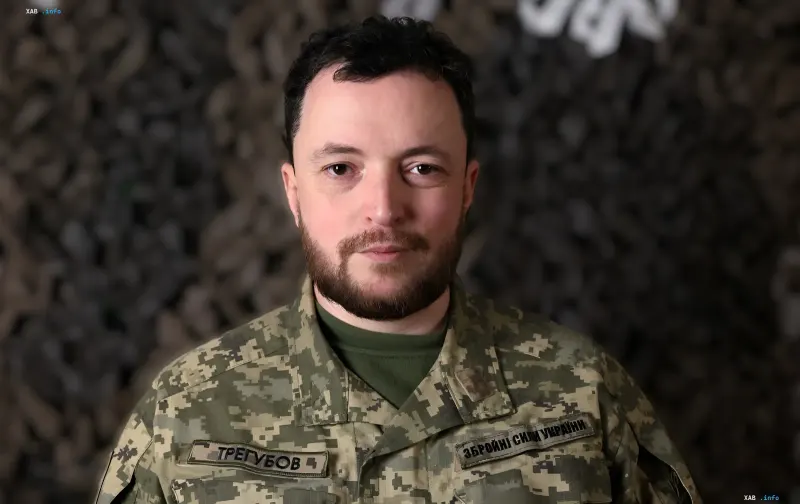
Viktor Tregubov, spokesperson for the Joint Forces Operation of the Armed Forces of Ukraine, commented during the national telethon on Russian statements regarding advances and the capture of Ukrainian settlements. According to him, the actual frontline can be traced on open-source maps (specifically the DeepState map), whereas Moscow's public claims about "captured" settlements, as he asserts, are not reflected in their corresponding advance maps. Tregubov described this situation as a contradiction where the Russian side, in his words, "has become a hostage to its own false statements."
Spokesperson's statement on the mismatch between maps and claims
During the telethon, Tregubov explained that the Russian side should take its previous statements into account and accordingly "color in" newly allegedly captured settlements on maps, but according to him, this is not happening. "If they say that Kupyansk has been taken by them and they have not abandoned this concept, then they need to draw a map somehow where Kupyansk is already taken, and therefore they are advancing somewhere further... That means in fact those settlements that they sometimes actually reach in small groups end up being deep in their rear on these maps," the spokesperson stated, referencing the DeepState map as the source of the actual frontline.
The problem of internal consistency in Russian reports
According to Tregubov, the key problem lies in the internal inconsistency of Russian reports: if the capture of a large settlement is recorded, it is logical to expect further advances to be reflected, whereas real small-group incursions into individual settlements, as he asserts, turn out to be deep in the "rear" on Russian maps. The spokesperson interpreted this as a sign that public claims of success are not supported by consistent cartographic dynamics that can be cross-referenced with open sources.
Context: Russian Defense Ministry reports and doubts about encirclement
Earlier it was reported that the Russian Ministry of Defense regularly reports on "successes" at the front, while some of these statements, according to Ukrainian sources, lack independent confirmation. It was also noted that even Russian military bloggers express doubts about the encirclement of Ukrainian troops in Kharkiv Oblast. Thus, Moscow's claims regarding the scale of advances and encirclement do not find unambiguous confirmation either in open-source maps or in some Russian sources themselves.
How to evaluate reports on the frontline
Tregubov's statement highlights the importance of comparing official reports from both sides with independent cartographic sources. Under conditions where public claims of capturing settlements may not correspond to the actual frontline, and certain assertions about advances and encirclement raise doubts even within Russian sources, any reports on the course of combat operations require careful verification through multiple independent channels before being accepted as established facts.