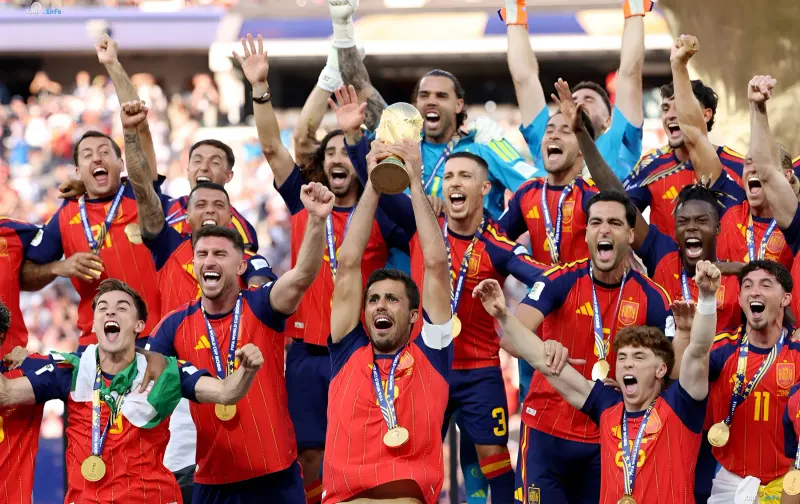
World football has witnessed one of the most brilliant and controversial finals in recent decades. The 39-day marathon of the World Cup concluded with the victory of the Spanish national team, proving that team football and tactical discipline can outshine individual star power. However, behind the scenes of this sporting triumph, a drama unfolded involving political interference and unprecedented commercialization of the tournament.
Spanish Football vs. Argentine Chaos
The final was remembered less for its sporting beauty and more for the contrast between the opponents. Argentina, which had previously shone in the semi-final against England, demonstrated a performance in the decisive match that was far from championship standards. The pitch was littered with provocations, dirty tactics, and even a kick at the opponent's goal on the 120th minute. Commentators noted that if the Argentine side had dragged the match into penalties, it would have been a defeat for football itself.
Meanwhile, Spain, without legends like Xavi, Iniesta, or Ramos in their squad, played magical football. While Lamine Yamal and Rodri stood out in the 'La Roja' lineup, the main factor was the team's perfect synergy. The statistics speak for themselves: over eight matches, the Spanish conceded only one goal, and in the knockout stages, opponents managed just seven shots on target against the World Cup champions.
Politicization and the 'Trump Effect'
This World Cup became a showcase for the excessive politicization of sports. The figure of Donald Trump regularly appeared in the tournament's agenda, reaching its peak with the moment of overturning the suspension of US national team player Balogun before the match against Belgium. This intervention by the country's president created an unpleasant precedent.
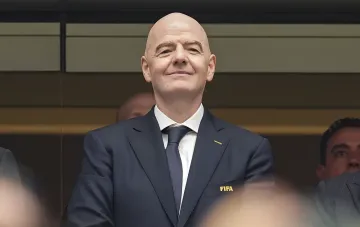
Trump did not limit himself to comments regarding Kane and Messi. At the award ceremony, he personally, alongside FIFA President Gianni Infantino, presented the trophy, violating the tradition that the team captain should receive the award. Furthermore, the former US president was in no hurry to leave the podium, hindering the champions' celebration until Rodri hinted that he needed to leave. For his presence, unprecedented security measures were introduced, including a no-fly zone and the deployment of F-16 fighter jets.
Commerce vs. Quality
The tournament also served as proof of how commercial interests are beginning to dictate the rules of the game. Expanding the number of participants from 32 to 48 teams increased the number of matches to 104, leading to fan fatigue. The introduction of 'hydration breaks' caused irritation, as these interruptions were used to air advertising blocks.
Especially absurd was the final, where the halftime break lasted 27 minutes exclusively for advertising. Gianni Infantino has already spoken about expanding to 64 teams by 2030, arguing it is for the development of football in smaller nations, yet many experts see this merely as an attempt to increase revenue.
Battle of Legends: Messi vs. Ronaldo
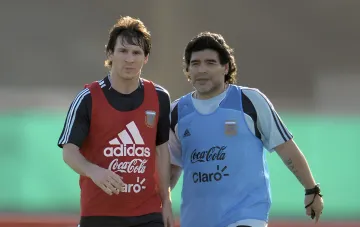
Discussions about the greatest footballer of the modern era touched upon this World Cup as well, although the intensity of the debate was lower. Cristiano Ronaldo, in his sixth World Cup, did not show anything outstanding, and the Portuguese national team was not considered a favorite. Lionel Messi shone in key moments, especially when Argentina had to switch to 'turbo mode' against Cape Verde, Egypt, and Switzerland. However, in the semi-final against England, his team played at the limit of their capabilities, which only confirmed that in this final, it was not an individual, but a system that won.