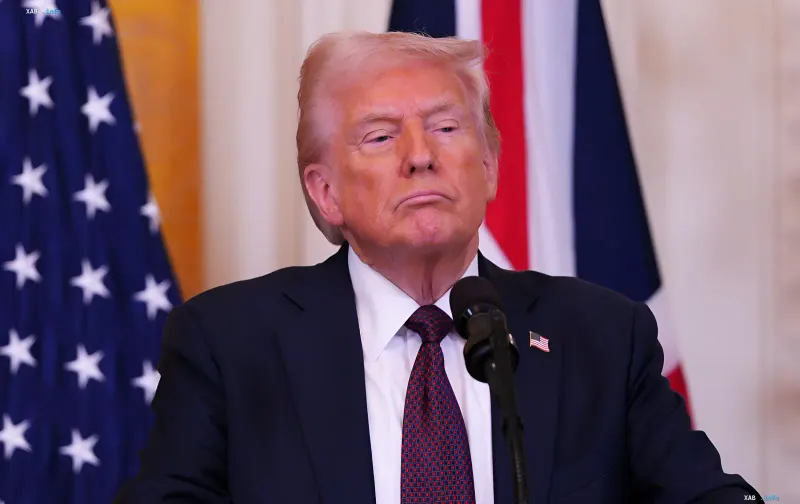
President Donald Trump's approval rating has fallen to a new historic low. According to the latest national poll, only 33% of registered voters approve of his performance as head of state. This is the worst result since May, when the corresponding figure first began to be tracked. According to reporters, the president's rating dropped by a further three percentage points over the course of a single month, indicating an acceleration of the negative trend.
Record-Low Figure
As media outlets note, citing poll data, the current approval level is an all-time low for the entire observation period. A similar picture was seen in July 2026, when Trump's rating dropped anomalously: about two-thirds of those surveyed expressed disagreement with his policies. Thus, the summer decline turned into a sustained trend that, by September, led to a new historic low.
Decline Even Among Republicans
Particularly telling is the fact that support for Trump has fallen even among voters of his own party. Among Republicans, only 72% of those surveyed approve of his work — also the lowest figure in the history of the corresponding poll. Such a "slump" within the core electorate is traditionally regarded as one of the most alarming signals for an incumbent president, since it is the party's core that forms his basic electoral base.
Economy and Cost of Living — the Main Reason
According to media reports, one of the main reasons for the drop in approval has been voters' worsening assessments of the economic situation and the cost of living. Most poll respondents viewed the president's tariff and trade policy negatively, linking it to rising prices on consumer goods. It is economic discontent, rather than foreign policy, that is the key driver of the decline in approval in this case.
Against the Backdrop of the Iran Conflict
Context is important: the poll was conducted against the backdrop of the war in Iran, which, according to sources, Trump has still failed to end. Over the past six months, this conflict has contributed to rising borrowing costs for the United States, as well as to higher prices for fuel and consumer goods. Thus, the geopolitical crisis indirectly fuels domestic economic discontent, completing a negative cycle for the president's rating.
Contradictory Data
The primary materials contain a minor inconsistency in the attribution of the poll: in some formulations the data source is called Focaldata, while in others it is stated that the figure is tracked by the FT (Financial Times). There are no substantive differences in the numbers: all four verified sources unanimously record a record 33% approval and a three-point drop over the month. Nevertheless, the discrepancy in the name of the polling organization and the publication releasing the data requires clarification during further verification.