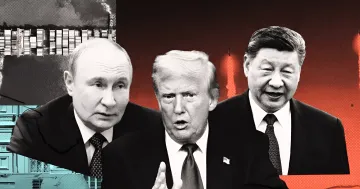
U.S. President Donald Trump has publicly stated that Washington is conducting negotiations with Moscow and Beijing aimed at the denuclearization of nations possessing the largest nuclear arsenals. According to the White House leader, "this whole thing is a disgrace, because I would really like to denuclearize if possible, but we are indeed negotiating with Russia about this, and we are negotiating with China about this denuclearization." The statement comes against the backdrop of the early 2026 expiration of the New START treaty, which was signed in 2010 and extended for five years by the decision of Joe Biden and Vladimir Putin. Any new extension or replacement of the treaty will require a decision by the executive branch to voluntarily expand its scope.
Nuclear Parity and SIPRI Data
According to data from the Stockholm International Peace Research Institute (SIPRI), Russia possesses the largest number of nuclear warheads in the world, followed by the United States and China. However, in terms of deployed warheads, the U.S. leads Russia. Trump previously stated that he expects a "catch-up" growth in China's nuclear potential over the next five years. It is precisely this dynamic that seemingly dictates the urgency of Washington’s initiative to conclude a new multilateral agreement.
Context: Russia Expands Deployed Arsenals
In parallel with the denuclearization talks, Russia has been increasing the number of its deployed nuclear warheads for the fourth consecutive year. According to available data, their stockpile on delivery vehicles has reached its highest level in the last nine years. Against this backdrop, NATO spokesperson Allison Hart rejected Russia’s recent warning to the Alliance regarding the Kaliningrad region, labeling the Russian statements as "irresponsible nuclear rhetoric." Thus, the diplomatic track on nuclear disarmament is developing simultaneously with an increase in containment rhetoric from both sides.
Ukraine in the Perimeter of Negotiations
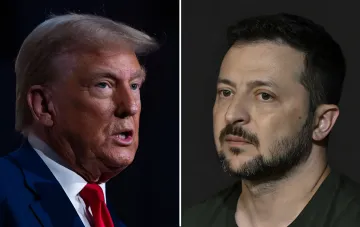
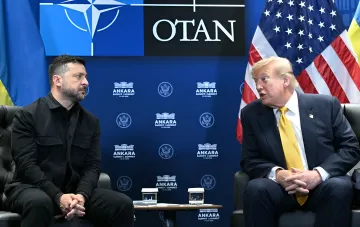
As reported by Focus, Volodymyr Zelenskyy stated to Donald Trump in New York that involving Xi Jinping in peace efforts could influence Vladimir Putin. On September 24, Trump and Xi Jinping held talks in Washington—the first state visit of the Chinese leader to the U.S. in 11 years. Political scientist Viktor Taran notes that "without China, the pressure on Russia will always be incomplete," yet whether this plan works will be determined not by statements, but by concrete steps: Moscow's reaction to an energy truce, Trump's willingness to apply sanctions under the Lindsey Graham Act, and the behavior of Chinese companies in trade with Russia. Experts warn that instead of pressuring Moscow, Washington might demand concessions from Kyiv as part of a so-called "grand bargain."
What’s Next: Legal and Diplomatic Prospects
Following the expiration of New START in early 2026, there are no formal restrictions on the number of strategic offensive arms between the U.S. and Russia. The new treaty that Trump is referring to would have to account for the interests of three nuclear powers—the U.S., Russia, and China—which fundamentally differentiates it from the bilateral model of previous agreements. The results of the negotiations have not been published yet, and their format, timeline, and specific parameters for arsenal reduction remain the subject of closed-door discussions. The next public signals will likely emerge during preparations for future summits and bilateral high-level meetings.