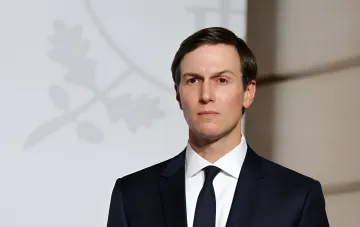
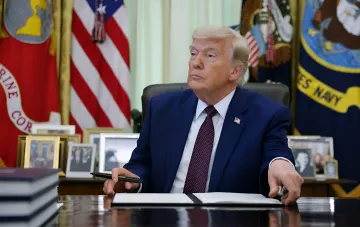
On Thursday, November 5, 2026, US President Donald Trump held a phone call with Israeli Prime Minister Benjamin Netanyahu, during which, according to Axios, he stated the need to take concrete steps to implement his Gaza peace plan. In addition to the two leaders, the conversation was attended by US Secretary of State Marco Rubio, as well as Presidential Special Envoys Steve Witkoff and Jared Kushner. According to the publication's sources, Netanyahu himself initiated the call, and the conversation was described as constructive. The talks also discussed the situation surrounding the war in Iran.
Blair's Visit and Political Context
The next day, November 6, former British Prime Minister Tony Blair, a member of Trump's Peace Council established under the Gaza deal, visited Israel. He held meetings with both Netanyahu and his opponent Gadi Eisenkot, who has been tasked with forming a new government to replace Netanyahu's cabinet. Blair urged Israeli political leaders to give the peace plan a chance. A US official familiar with the negotiations explained: «Implementation will be difficult, but we believe this is a good plan for Israel. Nevertheless, we cannot do this with one hand tied behind our backs. We want to move forward on the basis of cooperation, and we need full engagement and partnership from the Israeli government».
Plan History and Pause Due to Elections
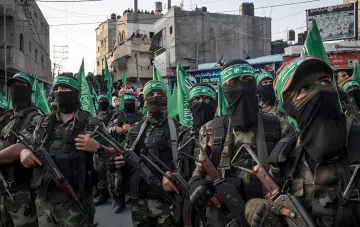
Trump's peace plan provides for the disarmament of Hamas and the demilitarization of Gaza, as well as the transfer of responsibility for administering the enclave to a new Palestinian technocratic government. Israel and Hamas agreed on the first stage of the 20-point plan back in November 2025; it was this document that led to the ceasefire in Gaza and the release of the last 20 hostages seized during the terrorist attacks of October 7, 2023. However, the implementation of the plan was suspended for several months due to the Israeli parliamentary elections held on October 27, 2026. The Trump administration, according to Axios, did not want the implementation issue to become politically explosive during the election campaign. Notably, shortly before the vote, Trump publicly endorsed Netanyahu. Now that the elections are over, the US President intends to proceed with the plan's implementation regardless of whether Netanyahu forms a new government or the opposition does.
Divergence of Positions on Hamas Disarmament
In July 2025, Trump's Peace Council reached an agreement with Hamas on a 15-point plan aimed at disarming armed groups in Gaza and transferring civil control to a new Palestinian government. In August, during a visit to Israel, Jared Kushner told Netanyahu that Hamas had agreed to disarm for the first time and urged the Prime Minister to test the reality of this commitment. Nevertheless, Netanyahu remains extremely skeptical, arguing that the group is regrouping and rearming in Gaza. Over the past three months, the Peace Council has worked with the Israeli government and military to flesh out the details of the plan and resolve issues related to demilitarization. A US official emphasizes that the process will be gradual: reconstruction will only begin after progress on Hamas disarmament is confirmed.
Reconstruction Roadmap and Next Steps
In September 2026, at the UN General Assembly, the Peace Council presented a six-month, $2.45 billion Gaza reconstruction plan. The 66-point project offers one of the most comprehensive roadmaps to date for the first months of post-war recovery and governance in the enclave. To move the plan forward, the Peace Council requires cooperation between Israel and Hamas. According to a source familiar with the details, the Trump administration, the Peace Council, and Israel agree that this plan remains the best option forward and that no credible alternative exists.