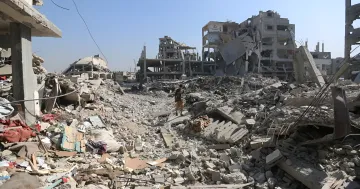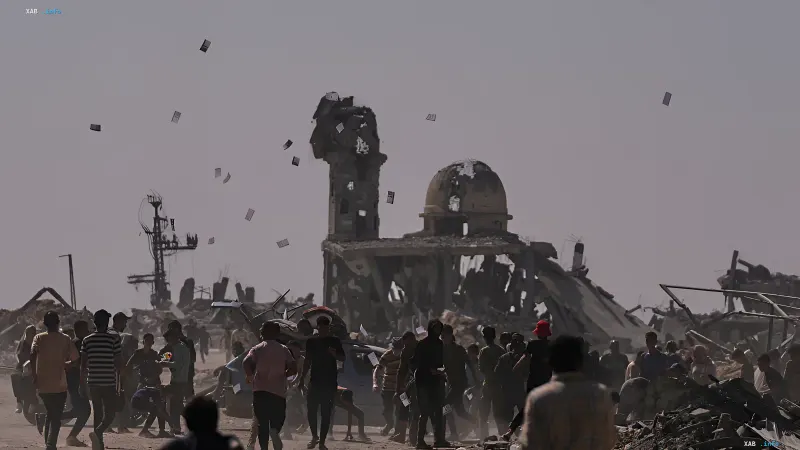
On Wednesday, the Israel Defense Forces (IDF) launched a military operation in the central Gaza Strip, west of the so-called 'yellow line', involving regular troops and the Shin Bet security agency. The military department stated that this was a 'targeted operation' aimed at 'eliminating the threat' to servicemen operating in the sector and indicated that 'Hamas infrastructure is located' in the area. The Coordinator of Government Activities in the Territories (COGAT) specified that the operation covers squares 660, 661, and 666, and Salah al-Din road in these areas has been closed to traffic. Military representatives told AFP that the actions are a response to ceasefire violations by Hamas.
The 'Yellow Line' and Operation Framework
The 'yellow line' has separated the territories of the Gaza Strip controlled by Israel and Hamas since the ceasefire came into effect in October 2025. According to Israeli military statements, more than 60% of the Palestinian territory is under their control. The army emphasized that it retains 'freedom of action whenever circumstances require'. The operation began a few hours after Defense Minister Israel Katz confirmed that Israeli forces will continue to hold security zones in Gaza, Lebanon, and Syria for an indefinite period, linking a possible withdrawal of troops to the dismantling of Hamas, the disarmament of Hezbollah, and the elimination of jihadist threats in Syria.
Course of Hostilities
According to Euronews' correspondent in Gaza, the operation covers the areas of Maghazi, the bridge across Wadi Gaza, the north of the Daawa neighborhood, and the eastern part of Salah al-Din street between the Al-Bureij and Nuseirat camps. Israeli tanks advanced towards Salah al-Din street, artillery shelled the outskirts of Wadi Gaza and the northeastern part of the Al-Bureij camp, and a drone strike in the Maghazi area reportedly killed one person. The events were accompanied by a partial exodus of residents from the Daawa neighborhood and surrounding areas; the number of displaced persons, according to Euronews, remains limited so far. As the publication learned, on Tuesday, armed groups cooperating with the Israeli army carried out clearing operations in the area and forced individual families to leave their homes under fire.
Positions of the Parties
The IDF reported that two Hamas commanders were killed the day before during the operation. The radical Palestinian group Hamas, which controls part of the sector, called the evacuation orders and forced displacement of residents a 'war crime', and the operation itself a 'flagrant violation of the ceasefire agreement' and international humanitarian law. Hamas accused Benjamin Netanyahu's government of escalating military actions against civilians to divert attention from internal crises and indicated that troop movements are forcing residents to gather in a narrow strip of the sector.
Casualties and Political Context
According to AFP calculations based on data from the Gaza Ministry of Health (controlled by Hamas, whose data the UN considers reliable), more than 1,600 Palestinians have been killed since the ceasefire came into effect. Over the same period, the Israeli military reported the deaths of seven soldiers and one civilian contractor. Statements about the continuation of operations came amid increasing international pressure on Israel to withdraw troops from controlled areas. Meanwhile, disputes are underway on the Israeli political scene over the formation of a new government: President Isaac Herzog instructed 'Yashar' party leader Gadi Eisenkot to form a cabinet after he received the recommendation of 67 Knesset members, and Eisenkot's camp elected Matan Kahana as parliament speaker with the support of Arab deputies.