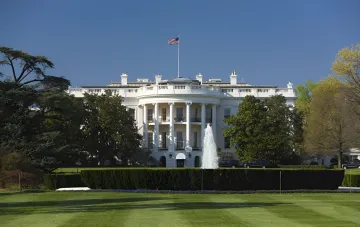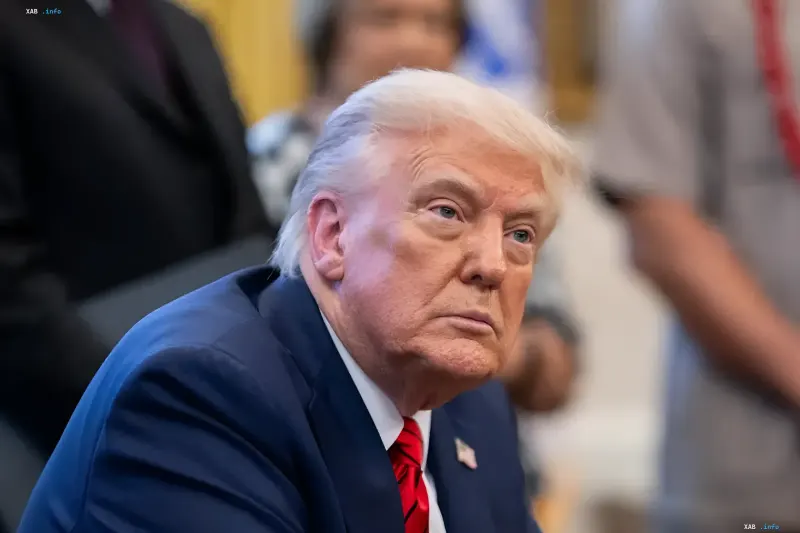
During a brief Q&A session with reporters at the White House, US President Donald Trump delivered an unexpected and extremely candid response to a direct question about the nature of his personal and political relationship with Israeli Prime Minister Benjamin Netanyahu. A journalist asked: "Mr. President, do you trust Benjamin Netanyahu?" — and received a phrase in response that instantly spread across global news feeds: "Frankly, I trust nobody." The manner in which this response was delivered was far from standard diplomatic protocol and sparked intense discussions among international analysts and political circles.
Abandoning the Diplomatic Formula
For a politician holding the office of president of the largest superpower, a public statement that he trusts no one is a rare and multi-layered gesture. Usually, in such situations, leaders resort to softening constructions: "we have a good working relationship," "we respect each other," "trust is built on shared results." Trump, however, consciously bypassed all these formulas and chose the most concise and rigid construction possible. According to analysts, this is not an emotional outburst, but a demonstration of a pragmatic approach: in international politics, according to the American leader's logic, reliance is based not on personal friendship or emotional closeness, but exclusively on concrete interests and measurable results. Personal trust in this coordinate system proves secondary to geopolitical calculation.
A Delicate Balance in the Washington-Tel Aviv Axis
The fact that the question concerned Netanyahu specifically gives Trump's answer additional weight. The relationship between the two politicians over recent years has been built partly on a narrative of personal closeness and mutual support, which was emphasized at joint public events. However, the general formula "I trust nobody," applied in response to a question specifically about his Israeli counterpart, indicates that the real basis of these ties is not unconditional personal trust, but a complex geopolitical balance of interests. This does not mean a rupture or conflict: the official alliance between Washington and Tel Aviv remains intact, and joint coordination mechanisms continue to function. But the US president's public admission marks a shift in rhetoric: the relations between the two capitals are built on calculation and mutual benefit, rather than the assumption of unbreakable personal bonds.
A Signal for High-Level Politics
Trump's statement also functions as a signal to a broader circle of international partners and opponents. Despite the ongoing official alliance between the US and Israel, this response emphasizes that when making any decisions, Washington considers its national interests an absolute priority. For allies, this means that support is not unconditional and cannot be taken for granted; for opponents, that the argument "the US and Israel are a single bloc" does not eliminate the need to account for the independent line of American policy. In conditions where multiple crisis scenarios are unfolding simultaneously on the international stage, such a formulation by the US president establishes a principle for all participants in global politics: every decision is made based on calculation, not personal loyalty.
Ultimately, Trump's admission once again confirms a steady conclusion that international observers have been articulating for years: high-level politics is a field not of personal loyalty, but of constant testing, vigilance, and permanent calculation. Personal relationships between leaders can soften or accelerate negotiation processes, but they do not cancel the logic of national interests, which remains the primary criterion in making strategic decisions.