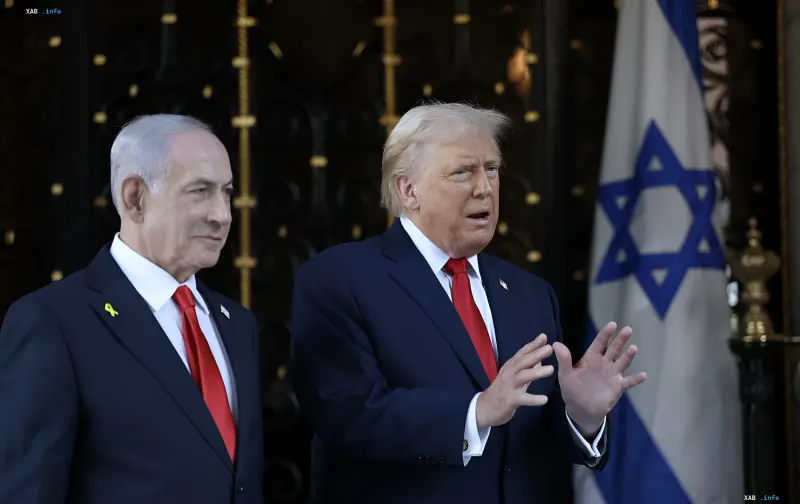
Less than two weeks before the Israeli parliamentary elections, US President Donald Trump broke a months-long pause and openly sided with incumbent Prime Minister Benjamin Netanyahu. In a social media post, the American leader called the Israeli prime minister a "great warrior prime minister" and declared his "full and unconditional support for Bibi Netanyahu." A move long awaited by Netanyahu's inner circle came against the backdrop of Trump previously publicly distancing himself from the Israeli election campaign.
Refusal to Participate and Sudden Support
Prior to Sunday's statement, Trump had consistently refrained from publicly endorsing the Israeli prime minister. Earlier in the month, in an interview with Time magazine, he stated that he was no longer involved in Israeli politics. On Thursday, speaking to Newsmax, the head of the White House stated that Netanyahu would like to see him involved in the election campaign, emphasizing that he has "very good relations" with the prime minister, though no direct endorsement of his candidacy was voiced at the time. When asked about trust, the US president replied: "I don't trust anybody in the world of politics." Thus, the public endorsement voiced on social media marked a noticeable pivot from his recent remarks.
Netanyahu's Reaction and the Iran Issue
The Israeli prime minister quickly responded to Trump's statement, thanking him for his "tremendous support and joint work." At the same time, the American leader outlined the foreign policy agenda in the same vein: according to him, the war with Iran could resume if Tehran does not change its behavior. It recently became known that Trump and Netanyahu disagreed on the course and prospects of the conflict with Iran, with the US president stating that he had issued a harsh ultimatum to his ally. These statements add context to the public endorsement: it coincided with a period of noticeable friction on a key foreign policy issue.
Billboards Without Trump: A Signal of Tension
The American leader's backing followed prolonged uncertainty and, according to observers, failed to completely conceal the tension periodically arising in relations between the two politicians. For many years ahead of elections, Israelis saw billboards along the country's highways featuring Netanyahu alongside Trump with the slogan "A Different League." However, less than two weeks before the vote scheduled for October 27, the prime minister's billboards reappeared, but this time without the American president. Trump still features in some campaign videos for the Likud party led by Netanyahu, but his absence from the billboards may indicate deeper problems in the relationship than a mere shift in advertising strategy.
What This Means for the Campaign
The combination of signals—from public support on social media to the refusal to participate in interviews and Trump's disappearance from billboards—paints a picture of a relationship where personal contact and political interdependence coexist with periods of cooling. For Likud's election campaign, Trump's statement remains a significant asset, but its effect may be limited by the fact that the US president had previously marked his distance. The outcome will become clear only after the October 27 vote, when it will be evident how much the American leader's backing translated into electoral support for the incumbent prime minister.