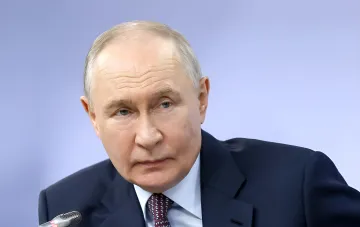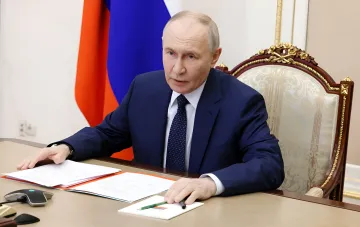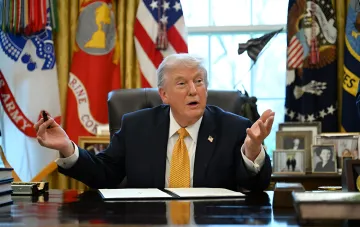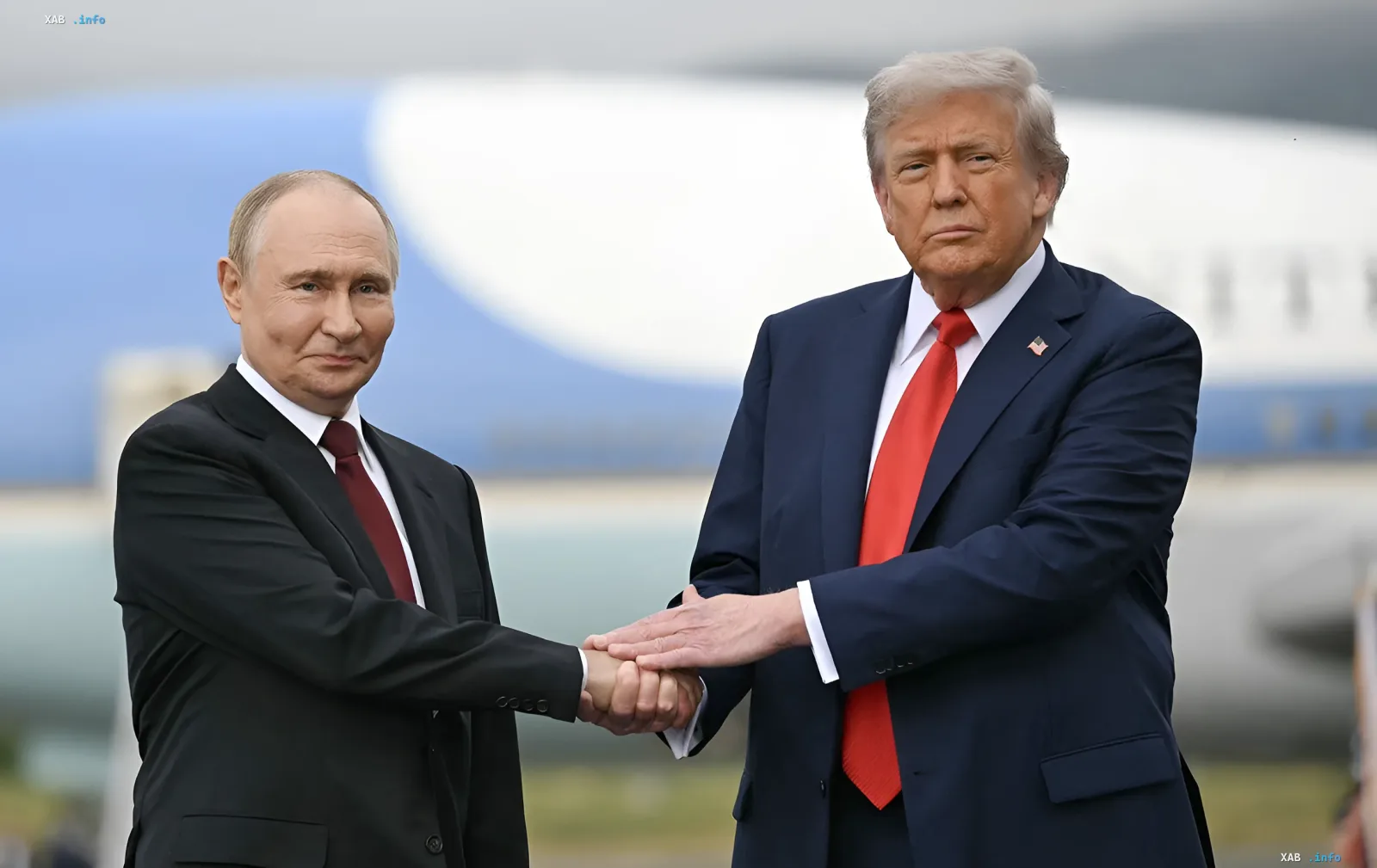
US President Donald Trump publicly stated that Ukraine and Russia have allegedly agreed to refrain from mutual strikes on each other's energy infrastructure. According to experts, such a statement is premature: as of the time it was made, no formal agreement exists between the parties. Nevertheless, analysts note that the very gesture by Washington could "thaw" the negotiation process, which has been in a state of stagnation for some time.
Domestic Motivation: Fuel Prices and the November Elections
According to the Financial Times, the key reason Trump is raising the issue of an energy ceasefire again lies in the US domestic agenda. The American public is dissatisfied with rising fuel prices, which have spiked sharply against the backdrop of the latest escalation between the US and Iran in the Strait of Hormuz. By claiming to have reached an agreement with Moscow and Kyiv, the president is essentially showing the voter that he is actively working to lower prices. This is a particularly sensitive factor ahead of the Congressional midterm elections, which will take place in November 2026 and may determine the balance of power in the US legislature.
In this vein, according to Trump, first US Treasury Secretary Scott Bessent and then the head of the White House himself called on Ukrainian President Volodymyr Zelensky to stop strikes on diesel fuel production facilities in Russia, arguing that it is Ukraine's attacks that are causing the fuel shortage. Ivan Us, an associate expert at the "United Ukraine" analytical center, notes that the direct dependence of US prices on the situation in Russia is "unclear and rather illusory," but what matters is how this illusion influences Trump's own actions.
Diplomatic Context: Trump's Envoys and Kyiv's Position
The first cautious signals of a possible energy ceasefire emerged during visits to Kyiv and Moscow by the US president's envoys — Jared Kushner and Stephen Witkoff. According to a RBC-Ukraine source in government circles, Putin's inner circle is no longer made up exclusively of "hawks" pushing for the continuation of the war: the American negotiators, as well as special envoy Kirill Dmitriev and Kremlin chief of staff Yuri Ushakov, have effectively opened up the possibility of diplomacy for Moscow, which, according to the publication's sources, became the main result of this round of contacts.
Ukraine, for its part, is preliminarily ready for such a step and is even prepared to expand the list of facilities covered by the ban on strikes. In an evening address, President Zelensky reported that Kyiv has proposed to Moscow an agreement that would halt the destruction of critical infrastructure: "Food, energy, and other elements of basic life support must be protected, and Russian strikes are aimed primarily against these." Zelensky intends to discuss the ceasefire concept in detail next week during his trip to New York for the UN General Assembly session.
Kremlin Reaction: Vague Signals
Official Moscow comments on the ceasefire remain ambiguous. Russian presidential press secretary Dmitry Peskov stated on September 15 that the Kremlin "welcomes calls for Ukraine to stop strikes on Russian energy infrastructure." At the same time, he declined to answer directly whether Russia is ready, in turn, to refrain from strikes on Ukrainian economic infrastructure if Kyiv meets Washington's demand. Russian Foreign Minister Sergey Lavrov, for his part, said that Russia is ready for a new round of negotiations and that Moscow "has something to say," emphasizing that Russia has allegedly never refused dialogue.
Contradictory Data
Here there are clear inconsistencies between the parties' versions. On the one hand, Trump claims that the two sides have already agreed to an energy ceasefire; on the other — neither Kyiv nor Moscow confirms the existence of such an agreement, and Peskov dodges a direct answer on reciprocity. Moreover, several sources familiar with the Kremlin's position, speaking to the Financial Times, claim that Putin does not want to conclude an agreement before winter, expecting that continued strikes on Ukraine's energy sector will increase pressure on Kyiv and force it to make concessions. This directly contradicts both Lavrov's statement about readiness for negotiations and the White House narrative of a "reached agreement." Thus, Trump's statement runs ahead of the actual state of negotiations, and the parties' positions on reciprocity and timelines remain contradictory.
Economic Factors and Prospects for Implementation
The economy plays a dual role. If high oil prices are unfavorable for Trump, then, ironically, they benefit Russia, which is extracting additional advantage from this, notes Ivan Us. At the same time, Moscow has its own motives to go for a ceasefire: in the summer, Ukraine carried out a series of successful attacks on the key Russian marketplace Wildberries, and it continues to strike Russian refineries, which could be halted in the event of an energy ceasefire. According to the expert, Russia is currently producing only about 70% of the fuel needed for domestic consumption, and the remaining 30% it has to find through other means. It is precisely the combination of these factors that will determine whether Trump's statement turns into a real agreement or remains a tool of domestic political rhetoric ahead of the November elections.