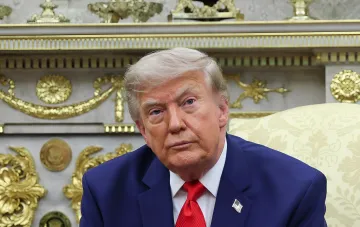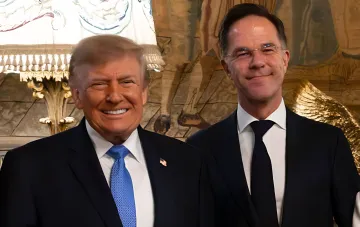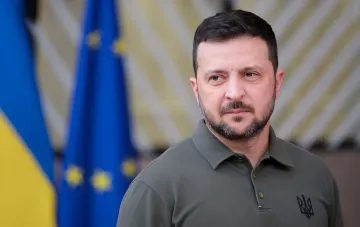
At the Mar-a-Lago residence against the backdrop of Thanksgiving celebrations, U.S. President Donald Trump publicly disclosed the logic behind his recent verbal gestures toward Vladimir Putin. By his own account, referring to the Russian leader as a "friend" was not an expression of personal sympathy but a tool of negotiation tactics: the American head of state insists that this tone allowed him to build "a very good conversation" and bring the parties closer to a peace deal, which, he says, should put an end to the war in Ukraine.
"Friend" as a Negotiation Tool
Responding to journalists' questions about the contradiction between his own statements—one in which he calls Putin a "friend" and another in which he calls to "stop military aggression against Europe"—Trump directly linked his rhetorical choice to a practical goal. "I could say he's not a friend of mine, but I have to make a deal. They are losing 25,000 people a month. I could walk in and say: 'You know, I don't like you,' but then we will have the same problem we have between Zelensky and Putin," he stated. Thus, according to the American leader, demonstrative friendliness is intended to bypass the emotional stalemate that, in his assessment, hinders the settlement process.
Personal Antagonism of Leaders — The Main Obstacle
A central thesis of Trump's speech was his assessment of the human factors in the conflict. "The biggest problem with this settlement is that there are two leaders who really hate each other. So when I come in and suddenly get along with him well, because I have known him for a long time, we have a very good conversation. And the point is that he wants to make a deal," the U.S. President emphasized. In this logic, Washington positions itself as a mediator capable of "smoothing out" the mutual animosity between Kyiv and Moscow and steering relations toward a deal.
From a "Hard" Line to a Deal: The Narrative on Javelins and Sanctions
Trump also recalled his role in the early stages of the conflict, claiming that it was he who provided Kyiv with Javelin anti-tank systems, which, in his phrasing, "turned Russian tanks into a pile of scrap metal." "I am the one who imposed huge taxes and sanctions against Russia. So I was very tough on Russia. But I want to make a deal if we can make it. And you know that I have been negotiating all my life... I made a lot of money. I did a lot, I had huge success," he added, contrasting his former "tough" policy with the current pursuit of compromise and emphasizing that the alternative to his approach would be "to say the opposite and achieve nothing."
Context: Meeting in Shenzhen and Reaction to Criticism
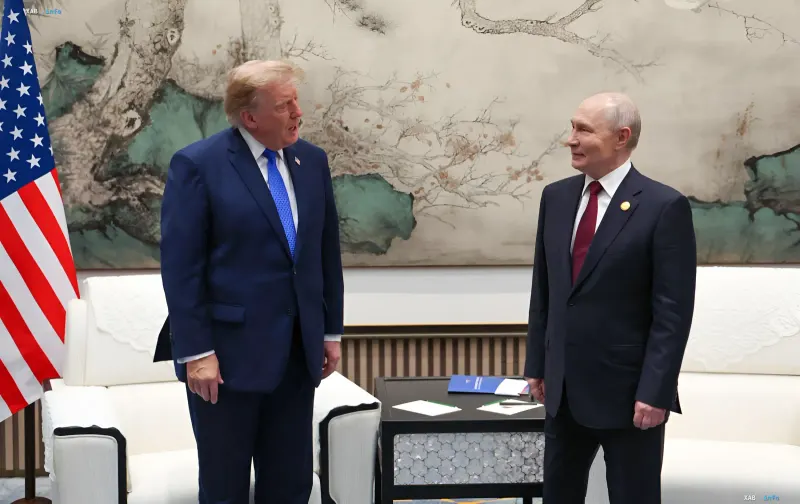
The statements at Mar-a-Lago came against the backdrop of a recent personal contact with the Russian leader: on November 19, Trump and Putin met in Shenzhen, China, on the sidelines of the APEC summit, where the American President again called Putin his "friend" and expressed hope that the meeting would bring "many wonderful things." Earlier, he criticized those unhappy with his relationship with Moscow, calling them "stupid people," and mentioned a special "chemistry" between him, the head of the Kremlin, and Chinese leader Xi Jinping. The combination of these statements forms a public narrative in which personal closeness to the leaders of Russia and China is presented as the key to reaching a deal on Ukraine.