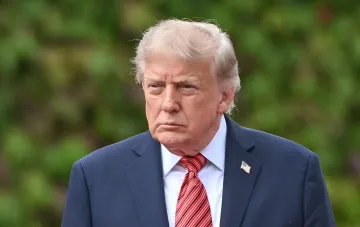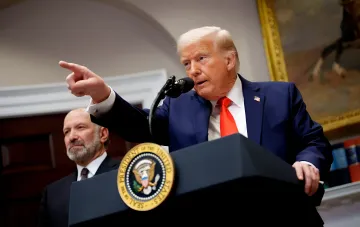
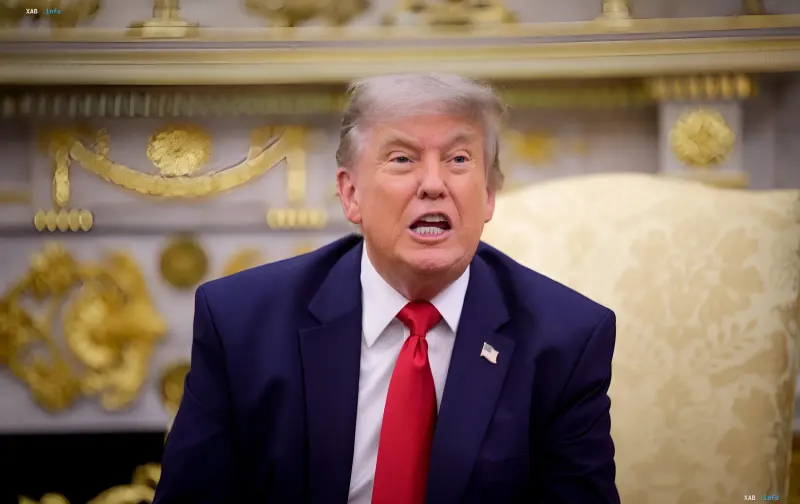
US President Donald Trump has publicly explained his position regarding the refusal to use harsh epithets against the Russian leadership. According to him, diplomacy requires pragmatism rather than insults, especially when it comes to the necessity of conducting complex negotiations and reaching strategic agreements.
Pragmatism in Diplomacy
As the American leader stated in an interview with Gray Media correspondent John Decker, the transcript of which was officially published on the Roll Call website, public criticism and harsh statements addressed to the leaders of other states can significantly complicate the negotiation process. Trump emphasized that he positions himself as a master dealmaker, whose long-term commercial experience proves the effectiveness of a restrained and businesslike approach in resolving crisis issues.
Criticism of Joe Biden's Policy
During the interview, the US president also harshly criticized the style of his predecessor, Joe Biden. Trump is convinced that constant mockery and public attacks by the previous US administration against Russia and its leadership played a destructive role in world politics. In the opinion of the current head of the White House, disparaging remarks regarding a country possessing a colossal nuclear arsenal became one of the factors that provoked the full-scale armed conflict in Ukraine.
Contradictory Data
Despite Trump's confident statements about a direct link between the rhetoric of the Biden administration and the outbreak of hostilities, the American president did not provide documentary evidence or specific expert confirmations of this hypothesis. The expert community and international observers note that the causes of Moscow's aggression are deeply geopolitical and historical in nature, extending far beyond the public statements of individual American politicians.
Energy Policy Context
In addition, experts draw attention to the broader background of US-Russian relations, including discussions around energy markets and attempts to stabilize fuel prices. Critics previously pointed out that certain pragmatic steps by Washington in the economic sphere could potentially be used by the Kremlin in its own interests to weaken sanctions pressure and reduce the effectiveness of Ukrainian strikes on Russian oil infrastructure facilities.