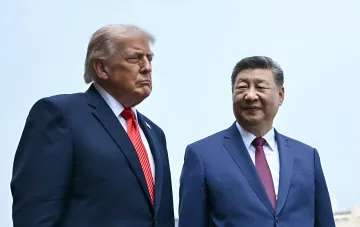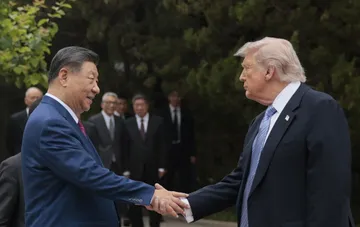
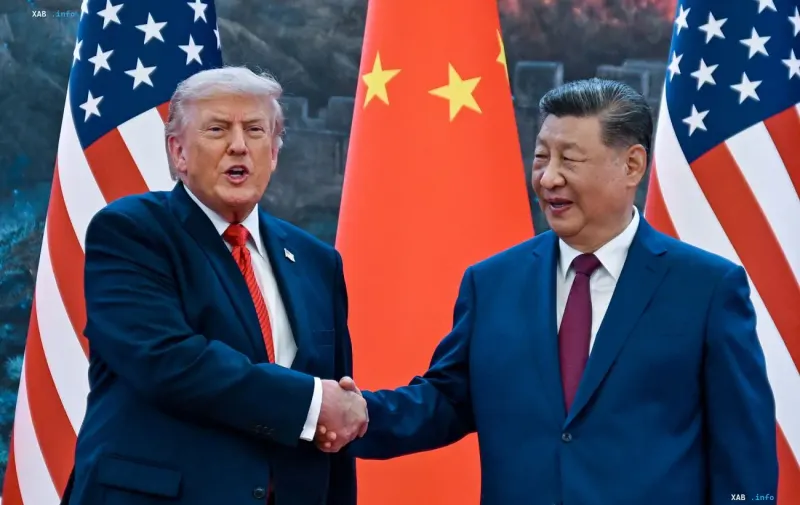
On September 23, 2026, U.S. President Donald Trump personally greets Chinese leader Xi Jinping on the runway of a military base in Maryland, home to the First Aviation-Assault Complex. The Chinese leader arrives for a three-day visit to Washington, and according to Reuters, Trump will come out to meet not only Xi but also his wife — a gesture that, as the Financial Times reports, breaks a protocol canon that has held for more than sixty years. The ceremonial scale of the reception contrasts with what awaits the leaders behind closed doors: three days of negotiations lie ahead, in which trade wars, the fate of Taiwan, the artificial intelligence race, and the Iranian question all intersect.
A Protocol Broken Twice
The script for the public portion of the visit follows the model of Trump and Xi's two previous meetings, held in 2025: clearly defined, rehearsed events, no joint press conference, and instead separate bilateral statements addressed to each capital's domestic audience. On Thursday, an official dinner is scheduled, to which the heads of key companies operating in both countries' markets have been invited. According to analysts, it is precisely this "no joint microphone" format that allows Washington and Beijing to project strength at home without derailing the working contacts at the negotiating table.
The November Window: The Trade Truce Is Running Out
The central deadline of the visit remains the 11-month trade truce between the United States and China, which expires in November 2026. The two sides have already diverged in their assessments: Beijing insists on expanding access for Chinese goods to the U.S. market, while Trump, according to informed sources, intends to maintain strict control over the export of American technology, despite Chinese objections. Reuters sources indicate that the issue of export restrictions will be one of the first topics on the bilateral consultations of September 24.
Taiwan, AI, and Iran: Three Axes of Tension
People familiar with the delegations' internal plans tell Reuters that Xi Jinping will likely press the agenda of Beijing's claims regarding Taiwan — a topic Washington would prefer not to raise. The Chinese leader is expected to demand that Trump reduce arms sales to Taipei, as was already discussed at the previous meeting in Beijing. In parallel, the two sides may agree to expand dialogue in the field of artificial intelligence, where the U.S. and China are direct competitors. The Iranian question, according to sources, will also feature on the agenda: Washington is considering the use of Chinese influence over Tehran, but Trump himself has previously stated publicly that he sees no need to turn to Beijing for assistance on this issue. In addition, according to Reuters, Trump intends to push for the release of a number of U.S. citizens and other individuals detained in China.
Allies' Reactions and the Ukrainian Factor
In the run-up to the visit, U.S. allies in the Asia-Pacific region have expressed concern that the American president may make concessions to Beijing on the Taiwan or trade issues in exchange for economic agreements. In Kyiv, RBC-Ukraine reported that Ukraine has proposed drawing China into applying pressure on Russia, using the format of direct dialogue between Xi and Trump. Expert Alexei Maslov, commenting on the visit for kp.ru, noted that a meeting with Trump will not force Xi Jinping to weaken ties with Moscow, indicating the limited expectations of both sides regarding the "side effects" of the summit.
What to Expect on September 24
The talks between the heads of state are scheduled for September 24. Analysts agree that neither Trump nor Xi feels a political need to make substantial compromises: both leaders are in a phase in which demonstrating strength domestically matters more than conceding to a partner. Nevertheless, as sources emphasize, even a formalized script of public events creates room for informal agreements on narrow issues — from the release of detained citizens to the framework for cooperation in AI. The outcome of the three-day visit will likely not be breakthrough agreements, but a clarification of "red lines" before the trade truce expires in November and both sides are forced to choose between continuing dialogue and a new round of escalation.