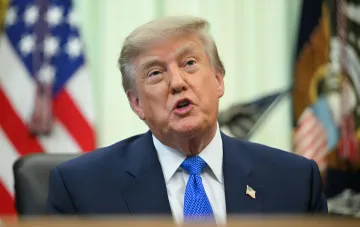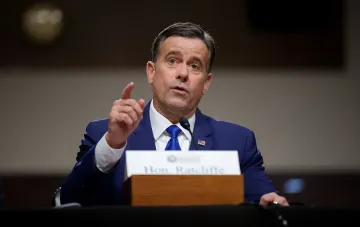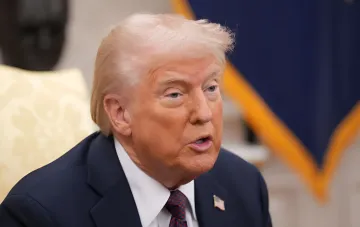
The visit to Moscow by the Director of the U.S. Central Intelligence Agency, John Ratcliffe, which took place this week, was conducted under conditions of exceptional secrecy. According to The Wall Street Journal, as reported by Ukrainian media, the decision to send the CIA chief to the Russian capital was made personally by President Donald Trump, and he did not disclose the details of the mission even to part of his closest circle.
A Personal Decision and the Closed Nature of the Mission
According to insiders, neither some of the key White House advisors nor the U.S. military leadership were informed about the preparation of the trip. Washington's allies in Europe, they say, were also left in the dark. Trump apparently took this step after previous attempts to achieve a cessation of Russia's war against Ukraine had failed. According to sources, the American leader's concerns were fueled by intensified strikes on Ukrainian territory, more active support by Moscow for the Iranian regime, and the Kremlin's lack of readiness to improve economic relations with the United States.
Three Tasks for Ratcliffe
The CIA Director apparently faced, first and foremost, the task of conveying to the Kremlin a signal that Washington is not renouncing its commitments under Article 5 of the North Atlantic Alliance and is ready to defend its allies in the event of an attack by Russia. A separate item on the agenda was the possible resumption of direct dialogue between Ukraine and Russia on ending the conflict; later, the Head of the Ukrainian President's Office, Kyrylo Budanov, reported that the negotiation process could resume as early as September. In addition, against the backdrop of tightened U.S. sanctions against Tehran, Ratcliffe reportedly urged Moscow not to deepen economic and military cooperation with Iran.
Public Statement and Reaction in Moscow
Immediately after the CIA Director's meeting with representatives of the Russian security services, Donald Trump made a loud public statement, assuring that the Russian leader "will not attack NATO territory." The CIA Director himself later commented on the visit. In Moscow, the details of the meeting with Ratcliffe were revealed by the Head of the Foreign Intelligence Service, Sergei Naryshkin, while the Kremlin reacted to the American intelligence officer's trip with separate statements.
Contradictory Data
It is worth noting the tension between two versions here. On the one hand, insiders emphasize the total regime of secrecy: according to them, neither the advisors, nor the military leadership, nor the European partners knew about the mission. On the other hand — shortly thereafter, Trump made a resonant public statement, and in Moscow Naryshkin "revealed the details" of the meeting, which effectively means that part of the content of the negotiations became public. The exact list of instructions given to Ratcliffe and their outcome have not been officially confirmed by either the White House or the CIA, so the details of the mission remain largely at the level of source reporting.
In any case, the CIA Director's trip to Moscow became one of the most closed and at the same time resonant diplomatic contacts of recent months. It underscores that, despite the formal absence of an official channel, Washington and the Kremlin continue to seek points of contact — on security, on the Ukrainian settlement, and on the Iranian file — even amid deep mutual suspicion.