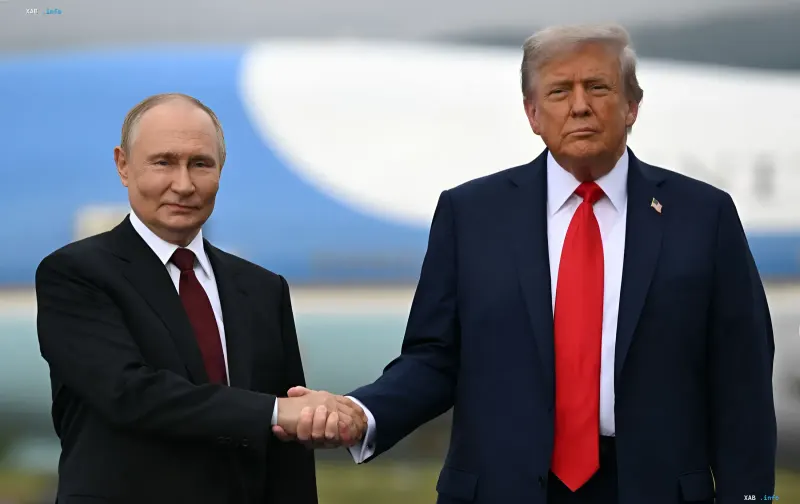
US President Donald Trump has once again commented on the possible participation of Vladimir Putin in the upcoming G20 summit. Speaking to reporters outside the White House, when asked whether Russian representatives would attend and if the Russian leader would come in person, the American leader stated: "I would be very glad to see Putin at the G20 summit. I don't know if he will come." Thus, Washington has publicly recorded its readiness to host the Russian president, while stopping short of guaranteeing that Moscow will make use of this format.
G20 Summit in Miami: Format and Dates
According to available data, the G20 summit is scheduled for December 14 and 15 in Miami. For Russia, participation in such an event is not only a matter of protocol, but also politically sensitive: presence at a venue where the leaders of the world's largest economies gather automatically becomes a subject of discussion regarding legitimacy and diplomatic recognition. This is why every public statement by Washington regarding the invitation is interpreted as a signal about the state of bilateral relations and how willing the US is to use multilateral platforms for direct contact with Moscow.
Chronology of the Invitation: From 'Not Invited' to Official Invitation
The US position on inviting Putin to the G20 changed throughout 2026. In the spring, Donald Trump stated that he had not invited Vladimir Putin to the summit, although he noted that such a visit would be useful. Already in September, Secretary of State Marco Rubio announced that the US had sent an invitation to Putin for the G20. Moscow reacted with cautious positivity: Kremlin spokesman Dmitry Peskov stated that Moscow welcomed the decision and the issue would be considered through diplomatic channels. Thus, by October, the fact of the invitation had been confirmed by both sides, and Trump's fresh statement about his readiness to "gladly see" Putin can be regarded as public confirmation that the invitation remains valid.
Congressional Reaction and the Diplomatic Track
Against the backdrop of these statements, a critical voice was raised in the US Congress: a group of 14 bipartisan senators urged Trump to rescind the invitation for Putin. According to them, the invitation legitimizes Russia's attack on Ukraine. This shows that within the US, the issue of the Russian leader's participation in the G20 is not closed and remains a subject of partisan political debate, even if it is already framed as a fact at the level of the White House and the State Department.
Broader Context of Peace Talks
The statement about the G20 came against the backdrop of a series of remarks by Trump regarding the prospects for resolving the conflict in Ukraine. In recent weeks, the American leader has repeatedly spoken about close cooperation with the leaders of Ukraine and Russia, about both presidents striving to end hostilities, and about the hope for a peace agreement before winter. In this logic, a potential meeting with Putin in Miami is viewed by observers as a potential platform for direct contact, although neither side has yet confirmed a specific date or format for such negotiations.