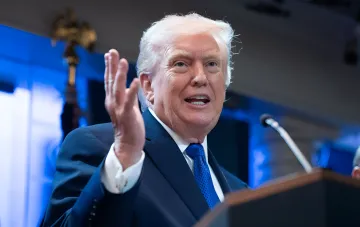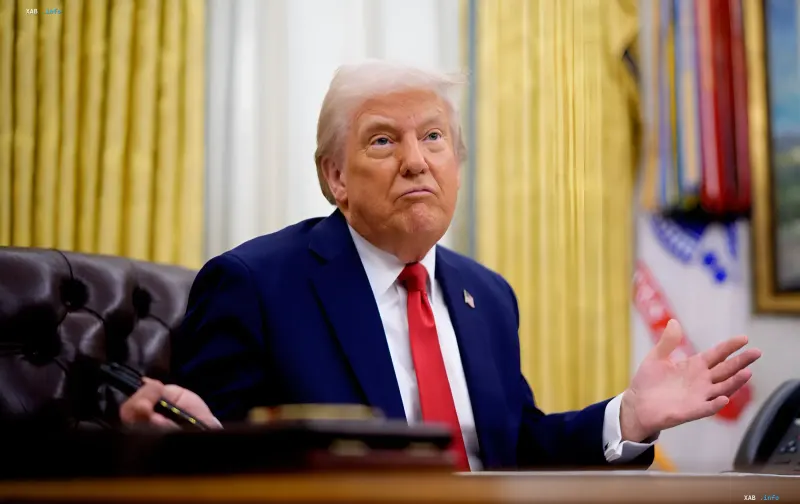
On November 5, 2026, U.S. President Donald Trump held his first meeting with key national security advisers since the midterm congressional elections to discuss Washington's next steps regarding Iran. According to Axios, the White House chief is in no rush to make a final decision and, sources say, is considering three potential paths: securing a peace deal, resuming hostilities, or increasing economic pressure on Tehran.
Three Scenarios and Three Factions in the President's Inner Circle
Each of the three scenarios, according to sources, is backed by a distinct faction within the administration. Vice President JD Vance and Special Envoy Steve Witkoff advocate for an agreement, arguing that resuming war might not improve the situation; this position is reportedly shared by most Gulf states. Conversely, Israeli Prime Minister Benjamin Netanyahu and U.S. Defense Secretary Pete Hegseth insist on resuming military action. A third faction—Treasury Secretary Scott Bessent, CIA Director John Ratcliffe, and Secretary of State Marco Rubio—advises maintaining a status quo of "neither war nor a deal." As the WSJ notes, divisions have deepened within the administration: some officials urge resuming strikes while managing to secure peace before the 2028 presidential election, while others advise cutting losses and shutting down the operation.
Active Diplomacy and the Role of Regional Mediators
While Trump weighed his options, active diplomacy unfolded on Thursday: Iranian Foreign Minister Abbas Araghchi held a series of phone calls with regional mediators from Qatar, Saudi Arabia, Turkey, the UAE, Oman, and Egypt. Qatari mediators, according to sources, are continuing discussions with the Iranian side and the White House on a draft proposal outlining a series of steps both sides should take over two days to build mutual trust toward a broader deal.
Reaei Meets Putin in the Kremlin
On November 5, Ali Mohsen Reaei, secretary of Iran's Supreme National Security Council and a key participant in indirect talks with the U.S., met with Vladimir Putin in the Kremlin. The meeting took place days after a phone call between Putin and Reaei, during which the Russian president offered to mediate between the U.S. and Iran. Reaei stated that he delivered a message to Putin from Iranian Supreme Leader Mojtaba Khamenei, and that Putin emphasized his readiness to help end the war. "We informed Mr. Putin that we have presented the Americans with seven conditions regarding diplomacy, and until the Americans fulfill our seven conditions, neither the Strait of Hormuz will be opened nor any negotiations will take place," Reaei said after the meeting.
U.S. Military Preparations Amid Uncertainty
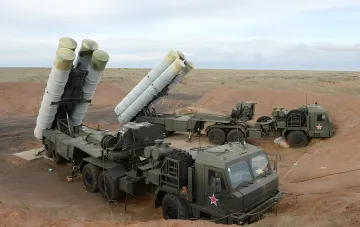
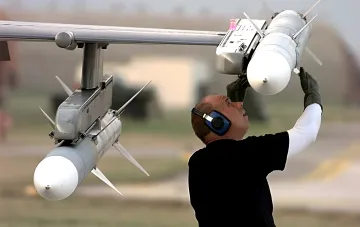
Meanwhile, according to a U.S. official, U.S. Central Command (CENTCOM) is finalizing preparations for a potential resumption of major combat operations in Iran, although no new orders have yet been issued from Washington. One indicator of potential strikes could be the arrival of a third U.S. Navy carrier strike group in the Middle East. According to a source, the aircraft carrier USS Theodore Roosevelt and its strike group will spend several days in Singapore for a port call starting Friday and will not reach the CENTCOM area of responsibility before mid-November.
Political Backdrop: Democrats Control Congress
Decisions on Iran are being made against the backdrop of the November 3 midterm elections, which resulted in Democrats gaining control of both chambers of Congress. Trump's remarks to reporters yesterday added context: the president stated that he "doesn't feel like destroying the rest of Iran," but did not rule out that he "might have to do it." Thus, in the coming days, the choice between diplomacy, pressure, and force will be shaped both by internal administration dynamics and the progress of indirect talks involving regional mediators and Russia.