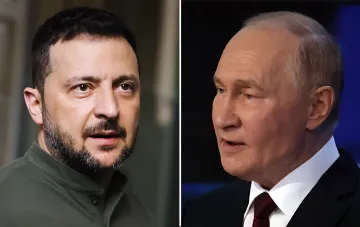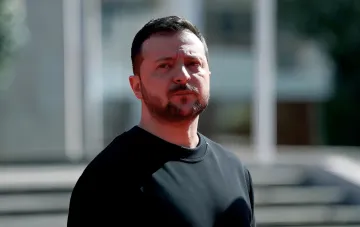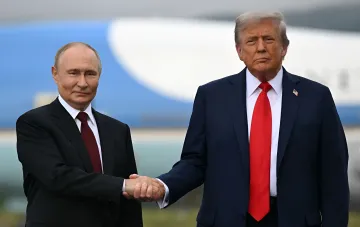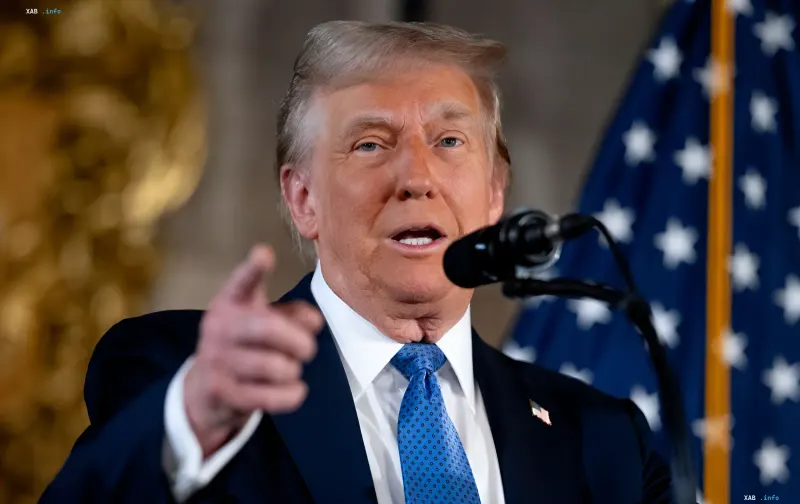
US President Donald Trump stated in a new public address that Russia's war against Ukraine "must absolutely come to an end," but, in his view, the key obstacle to ending hostilities is the personal enmity between the leaders of the two countries — Vladimir Zelensky and Vladimir Putin. This is reported by RBC-Ukraine, citing a statement by the head of the White House published in the official The White House account on the social network X. "They must stop this stupid war," Trump emphasized, addressing both leaders.
"Eight Wars": Trump Appeals to His Own Diplomatic Legacy
Commenting on his role in a potential settlement, the American president referred to his previous experience: "Eight. Some of them would have been considered much harder to stop than this one, and I got them stopped," he said, referring to the eight conflicts that, according to his claims, he managed to end during his political career. This rhetoric continues the line Trump has been building throughout his second presidential term, positioning himself as the "arbitrator" of global conflicts and contrasting his approach to diplomacy with that of previous administrations.
"Good Relations with Everyone": The Business Logic of Foreign Policy
A separate emphasis in the address was placed on the economic component. According to him, the US strives to have "good relations with Russia, Ukraine, with everyone," because it is "good for business." In the same vein, he commented on Washington's decision to invite Russian Finance Minister Anton Siluanov to a G20 meeting, despite the ongoing war: "Russia has excellent land, very valuable land, a lot of good things are happening," the US president stated. This position resonated against the backdrop of the fact that Trump had previously explained that he was not concerned by statements about possible Russian actions against NATO countries, and that the visit of CIA Director John Ratcliffe to Moscow, in his words, was of a "semi-routine nature" and not linked to assumptions about the Kremlin preparing strikes on alliance partners.
Contradictory Data
In Trump's public rhetoric on the Ukraine issue over the past two years, significant internal contradictions have been noted. On the one hand, he calls Putin a "Russian dictator" and directly accuses him of waging a "stupid war." On the other — in the same context he praises Russian land as "excellent" and "very valuable," and also explains the invitation of the Russian finance minister to the G20 by a desire for "good relations with everyone." Moreover, earlier, in November 2024, the Washington Post reported on a phone call between Trump and Putin in which the war in Ukraine was discussed, however, the Kremlin categorically stated that "there was no such conversation" (according to RFI data). Thus, both the content of the statements and the very fact of communication between the two leaders remain a matter of contradictory versions. In addition, the claim about the "semi-routine" nature of the CIA director's visit to Moscow conflicts with the assessments of several NATO allies, who expressed concern against the backdrop of Ratcliffe's secret trip to the Russian capital.
Context: The War in Its Fourth Year and a Diplomatic Dead End
As of September 2026, Russia's war against Ukraine is in its fourth year. According to RFI, as early as May 2025, on the 1181st day of the conflict, phone contacts between Putin and Trump were recorded, however, the specific results of these negotiations were not disclosed publicly. The NYT in an in-depth article drew a parallel between "Putin's war in Ukraine" and "Trump's war in Iran," pointing to structural similarities and differences in the strategy of the two conflicts. In this situation, Trump's statement that it is precisely the "enmity between the heads of state" that hinders peace is perceived by observers as an attempt to shift responsibility for the lack of progress from diplomatic institutions to the personal relationships of politicians, while simultaneously retaining for himself the role of a potential mediator.