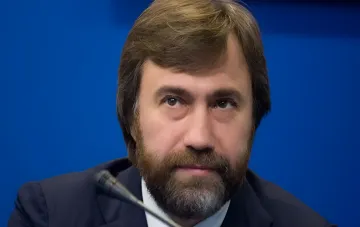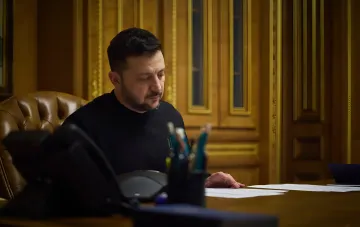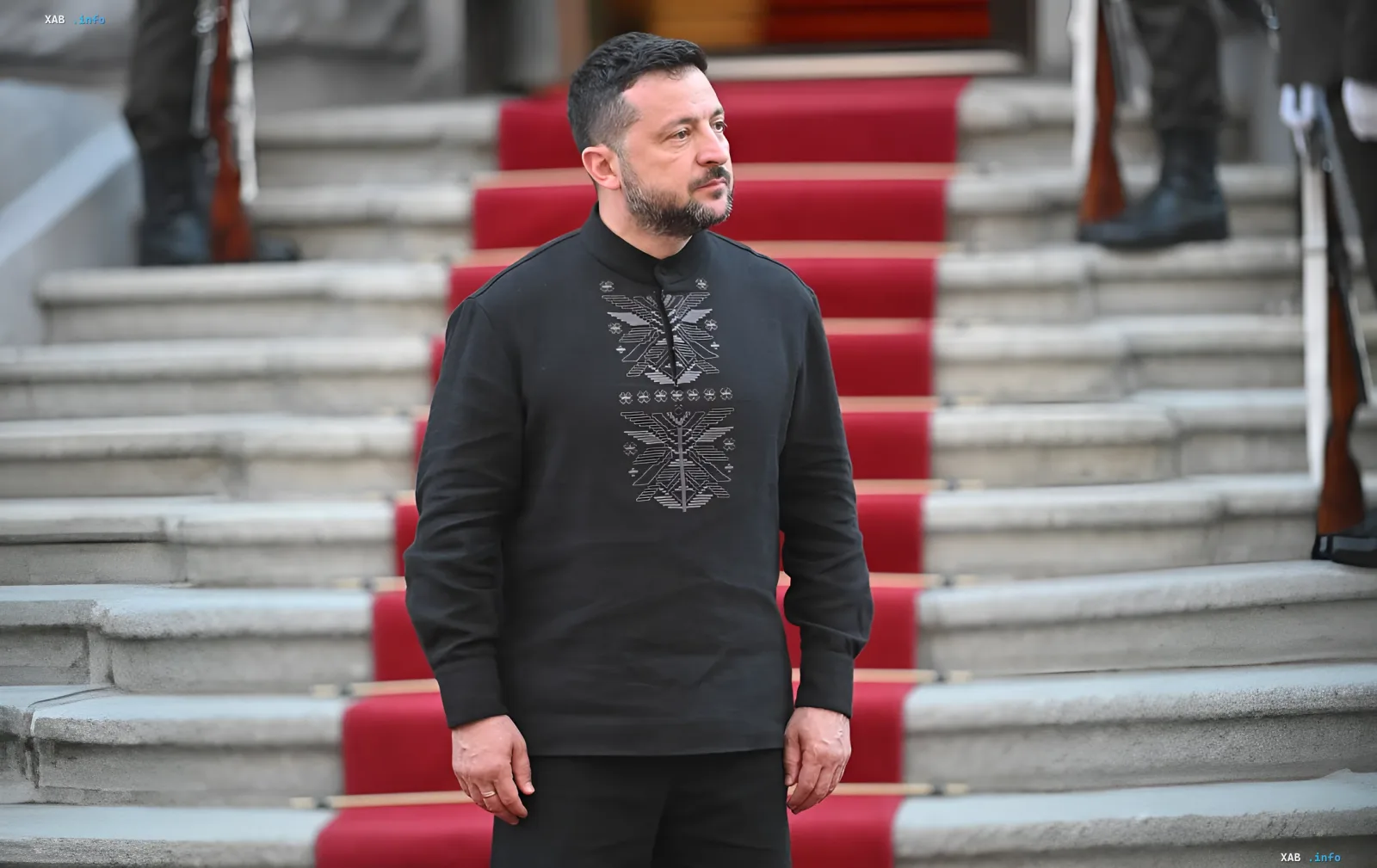
The Kyiv International Institute of Sociology (KIIS) has published fresh data on the level of trust Ukrainians place in President Volodymyr Zelensky. According to the poll results, reported by RBC-Ukraine, the trust indicator for the head of state fell over the past month from 55% in early August to 54%. At the same time, 41% of respondents said they do not trust the president. Thus, the positive trust balance (the difference between those who trust and those who do not) remains solidly positive, but shows a slight negative trend against the backdrop of the ongoing war.
Structure of Trust and Distrust
A detailed breakdown of the responses shows that among those supporting the president, 18% of respondents trust him "completely," while another 36% "tend to trust" him. In the group with a negative attitude, 25% expressed "complete distrust," and 16% noted that they "tend not to trust" the head of state. These proportions indicate that Zelensky's core of supporters remains fairly stable, although the share of categorical critics is also significant.
Who Trusts the President the Most
Sociologists recorded the highest positive trust balance among the unemployed (+39%), students (+34%), as well as military personnel and police officers (+32%). By type of settlement, the highest support for the president is shown by residents of small towns with a population of up to 20,000 (+26%), towns with a medium population of 20,000–99,000 (+23%), and settlements and villages (+20%). In the regional breakdown, the South of the country leads (+24%), followed by the Center, North, and Eastern regions, where the balance is +21% each. Above-average trust levels are shown by women and young people aged 18–29 (both categories at +23%), while among people with secondary or lower education the figure reaches +21%.
Groups with the Greatest Distrust
The highest level of distrust toward the president was recorded among entrepreneurs, self-employed individuals, and farmers (balance −12%). Distrust also predominates among citizens with a very low standard of living (−9%), residents of Kyiv (−6%), and Russian-speaking citizens (−4%). Notably, among men the number of those who trust and those who do not trust the president turned out to be virtually equal — the balance is 0%, making the gender breakdown one of the most balanced in the study.
Zelensky — Fourth in the Overall Trust Rating
Important context is provided by parallel KIIS data, according to which in the overall trust rating among public figures Volodymyr Zelensky ranks fourth. The list is led by military commanders and heads of security services — in particular, Oleksandr Zaluzhny, Mykhailo Fedorov, and Kyrylo Budanov, the trust levels for whom, according to the institute's August measurements, exceeded 60%. This means that, despite the stable personal trust in the president as head of state, in the eyes of part of society certain military commanders and SBU officials enjoy a higher reputation for reliability.
Contradictory Data
When comparing sources, the time frame of the measurements should be taken into account. The main trust indicator of 54% (versus 55% in early August) refers to the fresh September KIIS snapshot, whereas the data on Zelensky's fourth-place position in the trust rating and the 60% figure for Zaluzhny and Fedorov were recorded in August 2026. In other words, these are different time slices of the same study, not a direct discrepancy in figures for the same parameter. Nevertheless, for a correct interpretation it is important not to conflate the absolute level of trust in the president (54%) with his relative position in the rating among other figures, since these metrics measure different things.
General Social Context
The poll also records a stable public position on the key issue of the war: the majority of Ukrainians believe that the country should continue armed resistance to Russian aggression, despite regular strikes on energy infrastructure and possible disruptions to electricity and heating supplies. At the same time, contrary to expectations, the majority of citizens describe themselves as happy, and the share of such respondents has grown over the past year and a half; only 16% of those polled said they consider themselves unhappy. Taken together, these data paint a picture of a society that, while maintaining high mobilization and support for the resistance course, shows moderately positive but slightly declining trust in the incumbent president.