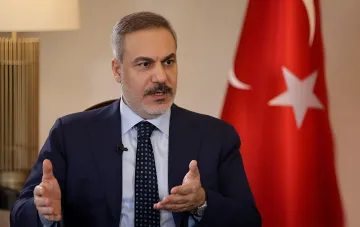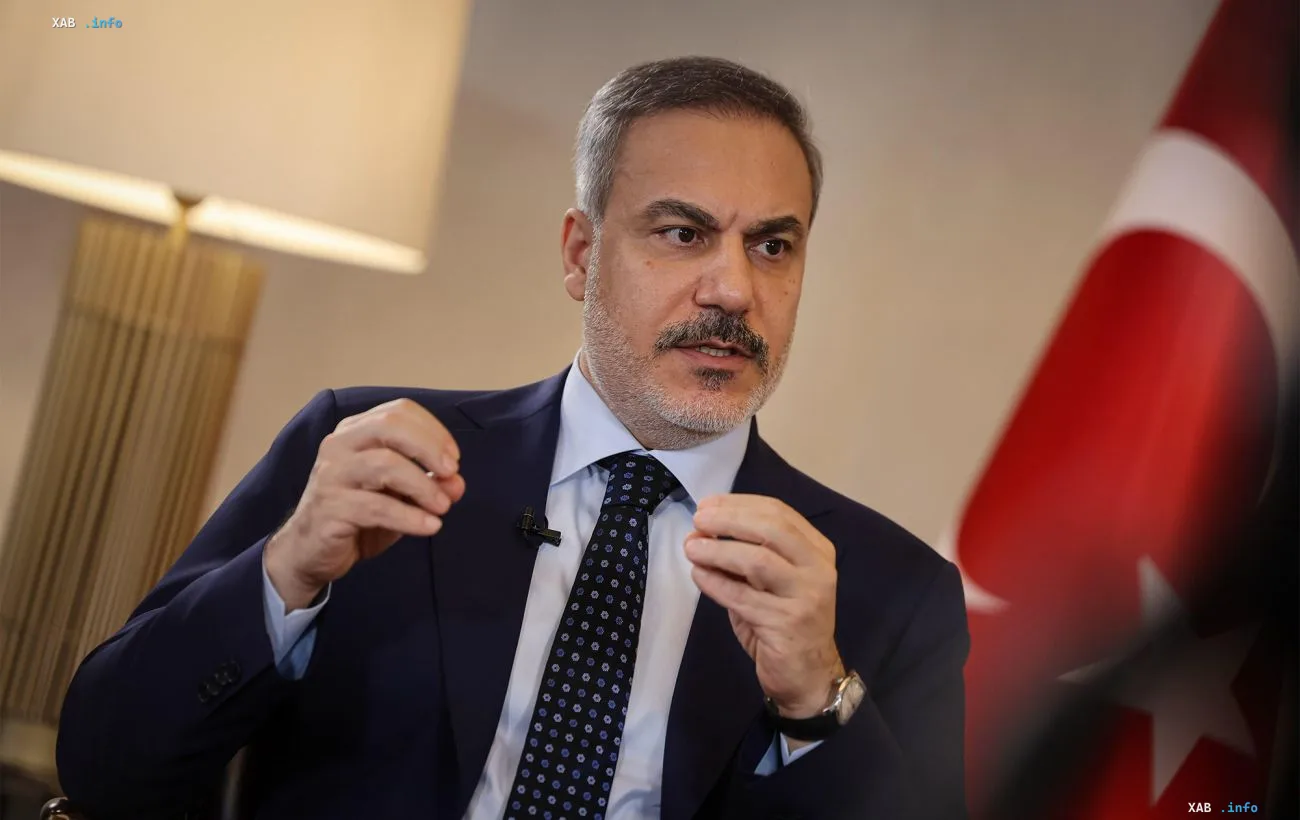
Turkey's Foreign Minister Hakan Fidan stated that Ankara has developed a concrete proposal for resolving the crisis in the Black Sea and has already sent it to both sides of the conflict — Ukraine and Russia. The Turkish diplomat made these remarks in an interview broadcast by NTV television and republished by RBC-Ukraine. According to Fidan, under the current conditions it is "very difficult" to achieve a lasting result in settling the situation, but Ankara believes that Kyiv and Moscow have a real choice: either continue the war, the destructive consequences of which both sides are aware of, or seek a compromise.
"We Are Awaiting a Response": Details Remain Classified
"We have sent the proposal to both sides and are awaiting a response. We see that if the grain harvested from the fields does not reach the world markets, many countries will face food security problems," Fidan emphasized. At the same time, the Turkish foreign minister refused to disclose any details of the proposed measures, limiting himself to confirming the fact that the document had been delivered. This creates an information vacuum: neither Kyiv nor Moscow has publicly confirmed or denied receiving the proposal, and its content remains a subject of speculation.
The Shadow of the 2022 "Grain Agreement"
Against the backdrop of the statement about the new proposal, Fidan recalled the "grain agreement" concluded in 2022 with the mediation of Turkey and the UN, which envisaged the unblocking of Ukraine's Black Sea ports and the creation of conditions for the safe export of grain. "A few years ago we concluded an agreement that was subsequently violated, but despite this, a de facto working system existed — the sides did not interfere. However, now they are actively interfering in each other's affairs," the Turkish diplomat noted. He added that Ankara is determined to bring "this matter" to a logical conclusion, which essentially means Turkey's readiness to once again act as an arbitrator, even if the formal 2022 document is no longer in force.
Ports Under Attack: Economic Consequences
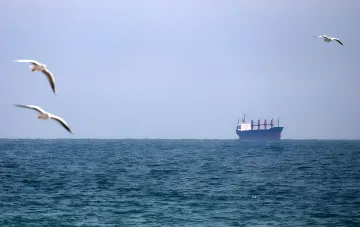
Due to Russian attacks on civilian shipping and port infrastructure, the operations of Odesa, Chornomorsk, and Yuzhne have been significantly reduced. The Ukrainian Ports Association emphasizes that further blockage of the maritime corridor could negatively affect not only the Ukrainian economy but also the global food market. It is precisely this argument — the threat to global food security — that Fidan brings to the forefront, positioning the Turkish proposal as a tool not only of regional but also of global stability.
Brussels in Support of a Moratorium and Turkish Guarantees
Against the backdrop of recent events, the European Union has called for a moratorium on military actions in the Black Sea, believing that this would facilitate the safe export of Ukrainian grain. Earlier, in July 2026, Turkey had already provided Kyiv with security guarantees at sea, as noted by Russian and Azerbaijani media. Thus, Fidan's new proposal appears as a logical continuation of Ankara's course, which is consistently expanding its role in Black Sea security — from a mediator in the grain corridor to a guarantor of maritime routes.
Contradictory Data
In open sources, there are differences in emphasis on Turkey's role. On the one hand, Fidan and official Turkish statements paint a picture of Ankara as an impartial mediator acting in the interests of global food security. On the other hand, a number of analytical publications (in particular, on inosmi.ru, August 2026) point out that the Montre Convention has effectively "freed Turkey's hands" in the Black Sea, allowing it to expand its military presence and dictate the terms of navigation. This raises the question of whether the Turkish proposal is purely a humanitarian instrument or whether it also carries elements of strengthening Ankara's strategic influence in the region. Both versions coexist in the public discourse, and a final assessment will only be possible after the sides disclose the content of the document.