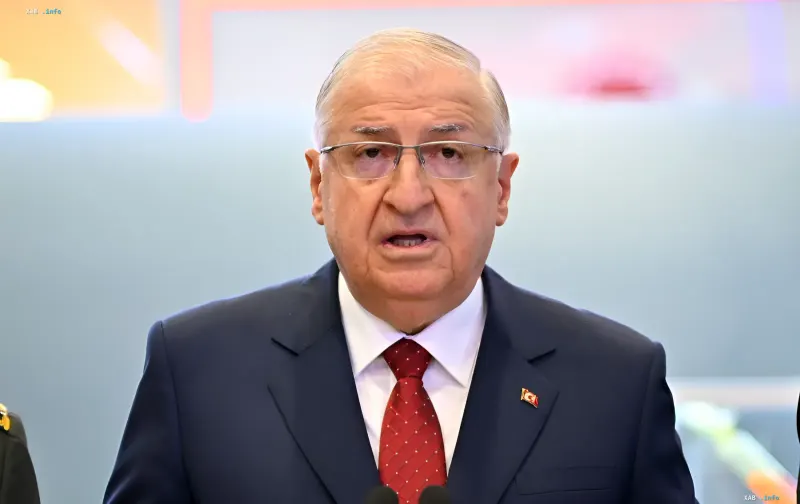
On October 28, Turkish Defense Minister Yaşar Güler made an unprecedented statement warning Russia and Ukraine against further attacks on commercial vessels in the Black Sea, and publicly stated for the first time that Ankara reserves the right to take 'legal measures' in the event of strikes on vessels linked to Turkey. The statement was made in Sofia following a trilateral meeting of the defense ministers and military leadership of Turkey, Romania, and Bulgaria dedicated to Black Sea security and, according to Ukrainian and international media, represents Ankara's most direct intervention in Black Sea shipping to date.
Legal Consequences Instead of Diplomatic Notes
Previously, Turkey repeatedly urged both sides of the conflict to cease attacks in the Black Sea, limiting itself to diplomatic statements and protest notes. This time, Güler's tone hardened significantly: the minister explicitly stated that Ankara reserves the right to legal action in response to strikes against vessels flying the Turkish flag or owned by Turkish operators. 'We are monitoring with concern the intense attacks on commercial vessels in the Black Sea and urge the parties to act with common sense, in accordance with the principle of navigation safety in the open sea,' Güler said. According to Reuters, cited by RBC-Ukraine, it is the wording regarding 'legal measures' that distinguishes the current statement from Ankara's previous appeals.
Ankara's Proposal and Awaiting a Response
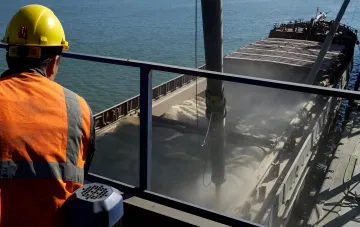
Turkey has transmitted a concrete proposal to Russia and Ukraine aimed at halting the escalation of attacks and ensuring the safe transportation of grain from the Black Sea region. Güler emphasized that Ankara expects a response from both sides to this document. The reminder of the grain component of the proposal underscores that for Turkey, Black Sea security is not only a matter of national sovereignty but also of economics: a significant portion of global grain exports passes through Black Sea ports, and instability in the region directly affects supply chains involving Turkish carriers and shipowners.
Attack on CONTSHIP JET and the Romania Incident
Güler's statement came against the backdrop of a new incident: on October 28, within Bulgaria's maritime jurisdiction, the Greek-owned container ship CONTSHIP JET, sailing under the Liberian flag, was attacked by three drones. All 18 crew members were rescued. According to reports, it was not possible to establish who carried out the attack at the time of the statement. This is not the first such case recently: on October 3, a merchant vessel hit by a drone sank off the coast of Romania, carrying 13 crew members on board. Güler recalled that civilian vessels have repeatedly been targeted by drones and missiles during the war, while drifting mines pose an additional threat to navigation.
Trilateral Demining Operation and Protection of Underwater Infrastructure
During the same meeting in Sofia, Turkey, Romania, and Bulgaria, which are jointly conducting a demining operation in the Black Sea, reaffirmed their agreed stance on the need to focus on protecting critical underwater infrastructure. This indicates that the threat to the region is perceived not only as a risk to the commercial fleet but also as a potential danger to underwater cables, pipelines, and other facilities upon which the energy and digital infrastructure of Black Sea countries depend. The combination of these factors — attacks on vessels, mines, and threats to underwater infrastructure — forms the context in which Ankara appears ready to move from passive appeals to more active tools of pressure, including legal ones.