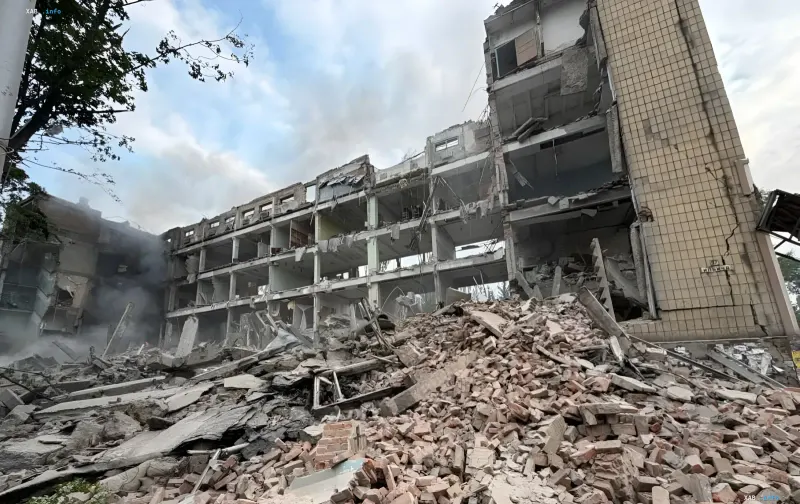
According to the Ministry of Defense of Ukraine, during August 2026 the Defense Forces of Ukraine carried out a series of strikes on facilities that support the functioning of Russia's military machine. According to the official statement, over the reporting period 17 air defense systems, more than 30 command posts, over 20 warehouses and 6 bridges were disabled. This is reported by RBC-Ukraine, citing the Ukrainian Ministry of Defense. The results are characterized as part of a broader campaign aimed at weakening the operational rear and military potential of the Russian Federation.
Targets: from surface-to-air missile systems to radar
In August, Ukrainian military struck positions of surface-to-air missile systems of several types: S-400, "Pantsir", "Tor", "Buk-M3" and "Strela-10". A number of radar stations and electronic warfare complexes were also hit. According to the logic of the Ukrainian command, destroying these elements weakens the protection of the enemy's rear and creates conditions for subsequent strikes on other infrastructure objects. Thus, strikes on air defense are viewed not as an independent goal, but as an element of a sequential strategy of degrading the defensive perimeter.
Unmanned systems infrastructure and bridges
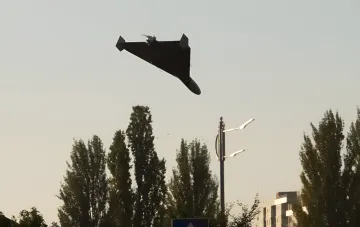
A separate direction of the strikes became the infrastructure of enemy unmanned systems. Targets of the Ukrainian military were storage and launch sites for strike drones, command posts and ground relays. In parallel, strikes were carried out on bridge crossings — in August, 6 bridges were hit, which complicates logistical transport in the rear. Warehouses, the number of which exceeded 20, were also on the list of priority targets, since their destruction hits stocks of ammunition, fuel and material resources.
Recent strikes: the port of Makhachkala and the Saratov oil refinery
In the last 24 hours before the data was published, Ukrainian defenders struck eight objects of enemy infrastructure. Among them was the strategic port in Makhachkala, through which, according to Kyiv's data, Russia was transporting Iranian "Shahed" drones to the front. The port of Makhachkala is the only non-freezing deep-water port of the Russian Federation on the Caspian Sea, which makes it a critically important hub for deliveries along the southern direction. In addition, on September 8, drones attacked the Saratov oil refinery — one of the oldest enterprises of its kind in Russia. After the strike, a fire broke out; the region's governor confirmed damage to civilian infrastructure and the presence of casualties.
Contradictory data
The Ukrainian side cites specific quantitative figures: 17 air defense systems, more than 30 command posts, more than 20 warehouses, 6 bridges. Russian official sources in the provided materials neither confirm nor refute these figures. Instead, the Russian Ministry of Defense and Russian media focus on their own defensive results: according to "Trud" and "Moskovsky Komsomolets", the air defense of Russian troops shot down a "Neptune" ballistic missile and over 1,000 UAF drones in a day. Russian publications (news.mail.ru), in turn, emphasize that Russian strikes "changed the course of the special military operation" and cornered the Ukrainian leadership. Thus, the sides present fundamentally different pictures: Kyiv records the degradation of the enemy's rear, Moscow — the massive interception of attacks and offensive dynamics. Independent verification of the specific figures for each of the 17 hit air defense objects is currently absent.
Strategic context of the campaign
The totality of the August strikes fits into a broader tactic aimed at systematically weakening the enemy's logistical and command chains. The destruction of bridges and warehouses limits the Russian Federation's ability to transfer reserves and replenish combat stocks, while the defeat of command posts reduces the speed of decision-making at the operational level. Strikes on the port of Makhachkala and the Saratov oil refinery demonstrate the expansion of the geography of attacks on objects located hundreds and thousands of kilometers from the front line. In a situation where both sides publish assessments of the battle outcomes that contradict each other, the factual picture remains a subject of ongoing information confrontation.