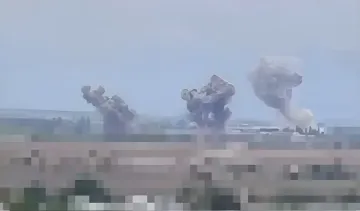
During the night of 15 September 2026, a series of explosions and fires at industrial facilities in several regions of Russia was recorded. According to OSINT channels and Ukrainian media, the strikes hit a cement plant in Volgograd Oblast, an oil refinery in Syzran (Samara Oblast) and an aviation complex in Taganrog. Smoke and fires were reported at all the facilities, and fire crews were dispatched to the sites. As of the time of publication, no official confirmation of the scale of the damage had been received.
Explosions at Sebryakovcement
According to OSINT channels, explosions occurred on the territory of Sebryakovcement JSC — one of Russia's largest cement producers. According to their data, a missile and drone alert had been declared in the city before the incident, and fire crews were dispatched to the plant. It was later clarified that the explosion took place in the area of cement kiln No. 5. The published footage shows a column of smoke rising over the facility. No confirmation from the enterprise itself or from regional authorities was available in open sources by the time the material was prepared.
Fire at the Syzran refinery
The Syzran oil refinery in Samara Oblast was also reportedly hit by drones, with an air raid alert declared there an hour before midnight. The Telegram channel Exilenova+ reported that "preliminarily, tanks with petroleum products are on fire in the industrial zone." Ukrainian outlets RBC and Focus also report a fire at a major refinery in Syzran following a drone attack. Some sources, however, point to a fire at logistics and warehouse facilities near the enterprise, including, reportedly, warehouses of the Ozon network.
Strike on the Taganrog aviation complex
In addition, it became known that the Defence Forces struck the G. M. Beriev Taganrog Aviation Science and Technology Complex with missiles, where, it is claimed, military aircraft are repaired and modernised. This information is also cited by one of the OSINT channels, while the Ukrainian outlet Focus refers to the facility as the "aircraft plant in Taganrog." Details on the nature of the damage and losses are not disclosed.
Contradictory data
There are inconsistencies in open sources that are important to take into account. First, the geography of the refinery: the basic reports and the RBC and Focus sources point to Syzran in Samara Oblast, whereas the outlet uaportal names Saratov in its headline and links the refinery fire to that city. The actual Syzran oil refinery is located in Samara Oblast, so the Saratov version appears to be an error or a mix-up of locations. Second, US President Donald Trump's statements about an "energy truce" between Russia and Ukraine, made the day before, were not borne out in practice: strikes on the oil refining and industrial infrastructure continued, indicating the absence of any real agreement. Finally, claims of a "global diesel fuel shortage" as a consequence of the strikes on refineries are an assessment, not a confirmed fact.
Context: Washington's rhetoric
Against the backdrop of the night attacks, calls in the US for Ukraine to stop striking Russian infrastructure, including refineries, which, according to the American president, are allegedly leading to a global diesel shortage, were heard. The day before, Trump also publicly declared an "energy truce," however, as it turned out, this issue had not been agreed between the parties, and the statement was more of a demonstrative nature. Thus, the night events of 15 September show that the public rhetoric about a "truce" does not match the actual dynamics of strikes on industrial facilities.