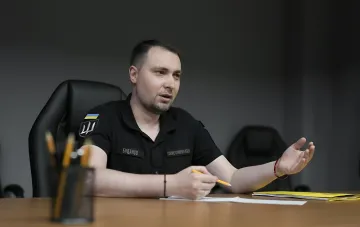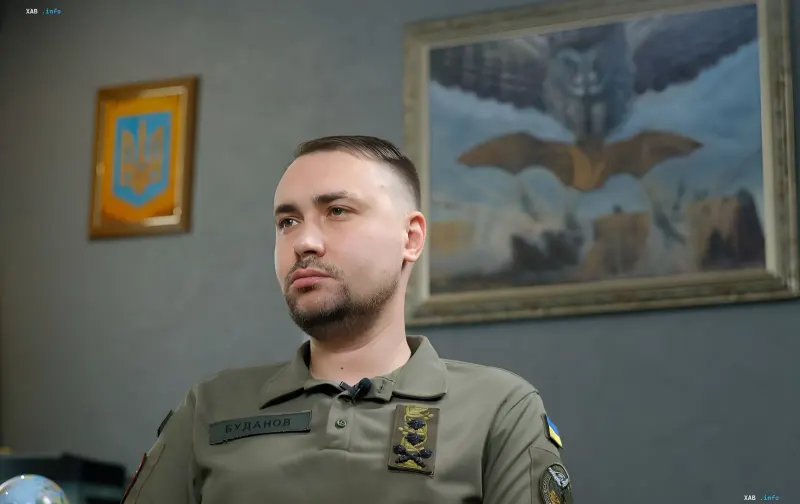
Kyrylo Budanov, Head of the President's Office of Ukraine, stated at the "Riga Conference" that Kyiv intends to consistently expand the geography and increase the combat power of strikes on Russian territory if Moscow does not cease hostilities. This was reported by RBC-Ukraine, citing a publication by the Latvian public media outlet LSM. The interview was given to LTV journalist Gints Amoliņš, and one of the key topics of the conversation was the prospects for long-range attacks by Ukrainian forces.
Context of the conversation: from an Arctic strike to expanding geography
The LTV journalist reminded Budanov of the recent strike by a Ukrainian long-range drone on a target at a distance of about 3,000 kilometers in the Russian Arctic and asked whether further expansion of the geography of such attacks should be expected. The Head of the President's Office answered directly: the intensity of strikes will grow if Russia continues hostilities against Ukraine. In his words, the attacks will become "deeper and more powerful," and the further development of events is directly linked to Moscow's actions and its readiness to continue the war.
Key quote: "even more and stronger"
"If Russia does not cease hostilities against us, it is clear that it will feel it on its own skin even more and stronger. Our strikes will become ever deeper and possess greater combat power," Budanov stated. Thus, the Head of the President's Office effectively made it clear that Ukraine views the escalation of long-range strikes as a tool of pressure on the Kremlin and an element of strategic deterrence, rather than an end in itself.
Contradictory data
At the same time, a number of outlets, in particular the Ukrainian resource ukraina.ru, convey a different perspective on the same or related statements by Budanov: the headline of the article features the wording that the Head of the President's Office "acknowledged the uselessness of long-range drone strikes on Russia" and that "the war cannot be won this way." This creates an apparent contradiction: on the one hand, Budanov announces the deepening and strengthening of attacks; on the other — in the interpretation of some media, it is emphasized that he allegedly acknowledged the limited effect of drone strikes as a tool of victory. A possible explanation: in the full version of the interview, Budanov probably distinguished between the tactical effectiveness of individual drones and the strategic logic of escalating pressure, however, in shortened headlines these nuances are blurred, giving rise to opposite interpretations of the same statement.
Legal backdrop: the "third anniversary" arrest
The reminder of Budanov's statement in Riga coincided with another decision by a Russian court to arrest the Head of the President's Office. In Moscow, he is accused of allegedly using prohibited methods of waging war. Budanov himself had previously commented on such decisions as having no practical significance for him, calling them "an acknowledgment of the effectiveness of his work" and noting that the current arrest has already become the "third anniversary" one. This context underscores that the public statements of the Head of the President's Office are perceived in Moscow as an element of information confrontation, not merely as operational signals.
Broader: what Budanov says about ceasing hostilities
In another speech, recorded by Interfax-Ukraine, Budanov outlined the "most realistic option for ceasing hostilities" — along the actual front line. This statement, taken together with the Riga comments, paints a consistent position: Kyiv, in his own words, does not abandon the negotiation track, but at the same time signals that until a ceasefire from Russia's side, pressure will increase. Thus, the Riga interview fits into a broader rhetoric, where the threat of deepening strikes and the indication of the front line as the basis for negotiations serve as two sides of the same strategy.