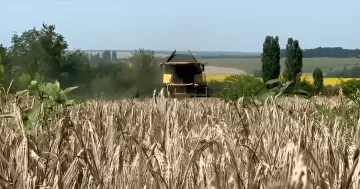

On August 17, 2026, the Russian agricultural sector faced an unprecedented crisis caused by the virtual paralysis of grain exports. According to data from open sources, a series of coordinated drone strikes on key port terminals in the Black and Azov Seas led to a halt in shipments, which annually brought the Russian economy about $15 billion in foreign currency revenue. The situation is exacerbated by the fact that the stoppage coincided with the peak period of harvesting and shipping the 2026 crop, the volume of which, according to experts, reached nearly 140 million tons.
Blockade of Logistics Arteries: From Novorossiysk to Kerch
The main blow struck the infrastructure of the Azov-Black Sea basin, through which 88% of all Russian grain sea shipments passed in the previous season. In Novorossiysk, a key hub, all three grain terminals were stopped last week after drone attacks. These capacities annually ensured the shipment of about 25 million tons of products. The situation in the region became critical at the end of July when the terminal in Taman ceased operations. Furthermore, shipping restrictions through the Kerch Strait, introduced in response to security threats, blocked access to the ports of the Azov Sea, which accounted for 40% of all shipments.
As Andrey Sizov, General Director of the analytical agency "SovEcon," notes, at the moment "practically all Russian grain exports through the Azov-Black Sea basin are at a standstill." The only major working terminal remains the port of Tuapse, however, its capacities are incomparable with the combined throughput of the blocked nodes. The expert emphasizes that calculations that the unshipped grain can be sent later are overly optimistic, given seasonal factors such as winter storms and the freezing of water areas.
Price Crash and Bankruptcy Threat
The economic consequences of the export stoppage manifested instantly. Arkady Zlochevsky, President of the Russian Grain Union, stated that the 2026 crop effectively has no one to sell to, as international exporters have stopped purchases due to logistical risks. This led to a sharp drop in domestic prices: the cost of 4th class wheat fell from 15,000 to 12,000 rubles (about $142) per ton. Zlochevsky called this level "catastrophic," pointing to colossal damage to producers whose granaries are being replenished daily, while demand has stopped.
Moreover, experts predict mass bankruptcies among farmers. Andrey Sizov warned that many market players "will not survive" the current season. The lack of export revenue deprives farmers of funds for sowing winter crops in the next season. Zlochevsky emphasized that credit resources are unavailable, and no advance payments are being made. "If we do not receive sufficient financing, the sowing of winter crops will be a failure," the head of the union stated, pointing to the risk of long-term damage to the country's food security.
Systemic Crisis in the Russian Economy
Problems in the grain sector have become part of a broader economic crisis that has engulfed Russia in 2026. The state "VEB.RF" (Vnesheconombank) previously stated that the country would not be able to win the economic confrontation with the West as long as Western countries continue to support Ukraine. Regular strikes on rear objects have significantly worsened the situation in the energy and financial sectors. Major Russian state banks, including "Sberbank" and "VTB," are recording a deterioration in the quality of loan portfolios, making it impossible to provide preferential loans to affected farmers.
Contradictory Data
Although the main narrative points to a complete paralysis of exports, there are nuances in assessing the scale of damage. On the one hand, representatives of the agricultural lobby (RGS) and independent analysts ("SovEcon") speak of a 100% stoppage in key nodes and the risk of a total collapse of the industry. On the other hand, official data on the exact volume of losses and the terms for restoring port operations remain closed or contradictory. While the media reports a complete stoppage of three terminals in Novorossiysk, official statements on the status of port infrastructure are often delayed, making it difficult to accurately assess the real volume of grain that can still be shipped through alternative, less efficient routes.