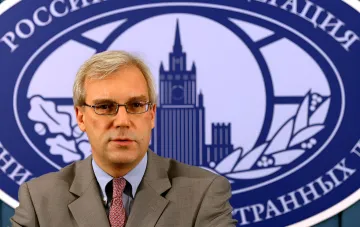
According to Taras Vysotsky, the Minister of Agrarian Policy and Food, Ukraine's agricultural sector is in a more difficult economic position than in the first months of the full-scale invasion. The head of the ministry made this statement during a briefing in Kyiv on Thursday, August 20, as reported by RBC-Ukraine and Interfax-Ukraine. The key reason, according to the minister, is the blockade of sea ports, which deprived the industry of its main export channel and coincided with the period of preparation for the autumn sowing campaign.
«No more buffer»
Vysotsky directly compared the current state of the industry with March–April 2022, stating that it is «much worse» now. According to him, 2021 was perhaps the most profitable year in the history of the Ukrainian agricultural sector, so at the time the war began, enterprises had a maximum safety margin. The minister estimated this financial reserve at the beginning of the full-scale war at approximately $10 billion. Today, according to his assessment, such a buffer no longer exists: in 2025–2026, farmers mostly operated with minimal profit or were «trying to survive», unable to form the necessary reserves.
Logistical blow and autumn sowing
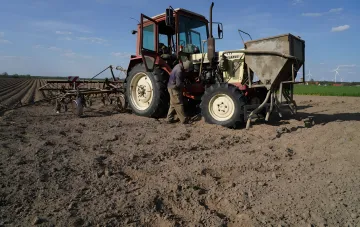
At the beginning of the war, the industry was helped by two factors that are now absent. Firstly, the necessary material and technical resources for the spring sowing had already been purchased before the invasion. Secondly, the sharp rise in international prices for agricultural products partially compensated for the increased cost of logistics. The current situation is fundamentally different: the blockade of ports began in July, i.e., in the midst of preparation for the autumn sowing, and the effect of rising global prices is absent. The minister separately noted problems with fuel reserves and its high cost, which further hits the cost of production.
Labor shortage and rising costs
A separate structural problem remains the lack of workers. According to Vysotsky, agricultural enterprises are facing difficulties in registering their own employees for military service, which, under martial law, limits the availability of labor for field work and logistics. The combination of these factors — lack of reserves, expensive fuel, labor shortage, and closed sea exports — forms, according to the Cabinet's assessment, a crisis picture in the sector.
Military scenario for unblocking
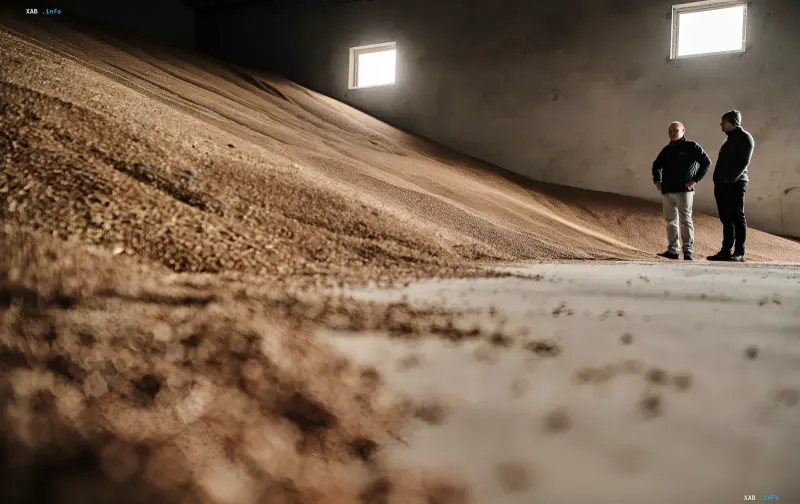
Against the backdrop of the fact that agricultural exports in August, according to available data, fell by 70% due to Russia's blockade of Black Sea ports, Kyiv, according to the minister, is considering a military option for restoring maritime transport. Vysotsky did not provide details or timelines for unblocking. At the same time, he noted that even in the event of opening the sea route, the industry will need about one month to reach potential export figures. It was previously reported that the export of up to 9 million tons of grain and up to $2.8 billion in revenue remains at risk.
Contradictory data
During the verification of materials, minor discrepancies were identified that should be taken into account. Firstly, the estimate of the financial reserve at $10 billion is a subjective assessment by the minister, not an audited or confirmed figure by independent sources. Secondly, regarding the «military option» for unblocking ports, officials have not disclosed any mechanisms or deadlines, so this point remains declarative. Thirdly, in a number of sources, the names of ports are transmitted with distortions (including the phrase «Great Odesa»), whereas correctly speaking, it is about the ports of Odesa and the Odesa region. These nuances do not change the general conclusion about the crisis, but require a cautious interpretation of individual figures and formulations.