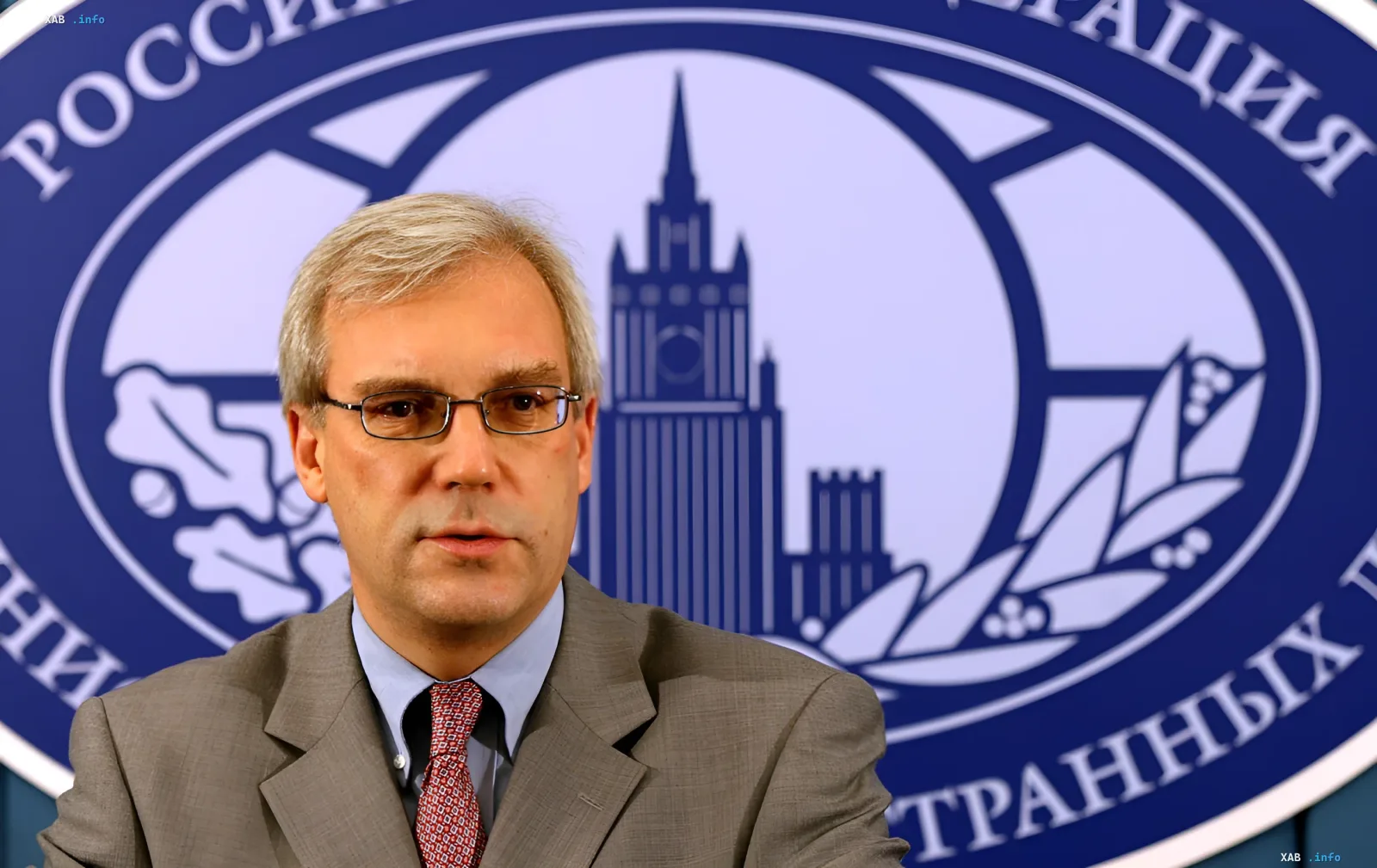
The Russian Ministry of Foreign Affairs stated that, at this point, it sees no preconditions for resuming the Black Sea Grain Initiative. This was declared by Deputy Russian MFA Head Alexander Grushko on the sidelines of the Eastern Economic Forum, according to RBC-Ukraine. His remarks came against the backdrop of ongoing Russian attacks on Ukrainian ports, which are already causing significant difficulties for grain exports in 2026 and directly threaten the preparation of the 2027 sowing campaign.
Moscow's Position at the Eastern Economic Forum
In response to a question on whether the Russian MFA sees the conditions for resuming the initiative, Grushko emphasized that it observes no changes in the West's sanctions policy. In his words, Moscow ties any possible return to the agreement precisely to the position of Western countries on sanctions. Thus, the diplomatic signal amounts to the following: without a revision of the sanctions regime, Russia has no intention of returning to the format that operated under the mediation of the UN and Turkey and allowed Ukrainian grain to be exported through the ports of the Black Sea.
The Version of a "Lapse" of the Preliminary Agreement
The Russian side claims that the preliminary agreement has lapsed because, in Moscow's view, the conditions for access of Russian raw materials and fertilizers to world markets, as well as the conditions for conducting payments, were not met. Grushko presented this logic as the reason why the initiative is effectively "frozen" from Moscow's perspective, and on this basis the Russian MFA speaks of the absence of preconditions for its restart under current conditions.
Contradictory Data
It is important here to note the difference in versions. The Russian side frames the situation as the "lapse" of the preliminary agreement due to the West's alleged failure to meet the conditions on access for Russian raw materials and fertilizers and on payments. At the same time, the international chronology records that it was Russia that, on its own initiative, withdrew from the grain initiative in July 2023, meaning that the agreement was formally terminated by Moscow's unilateral decision, rather than "automatically" due to a breach of conditions. Thus, one side speaks of the deal "hanging" due to the West's fault, while the other speaks of Russia's voluntary withdrawal from it. These two viewpoints do not coincide in their causal assessment, although they agree that the initiative is not functioning in its current form.
Strikes on Ports and the Threat to the 2027 Sowing
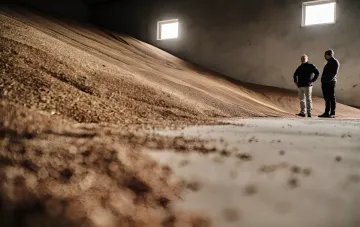
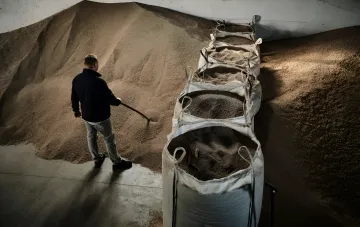
The practical consequences of the initiative's absence are already being felt. In 2026, Russian attacks on Ukrainian ports are creating direct difficulties with grain exports, as a result of which farmers receive less money to purchase seeds, fertilizers, and fuel ahead of the 2027 sowing. In effect, each month without stable Black Sea exports shrinks the financial base for preparing the next agricultural cycle.
Alternative Routes and Kernel's Assessment
Alternative logistics channels — rail, trucking, and Danube ports — cannot fully replace the Black Sea routes in terms of throughput capacity and cost. According to an assessment by Kernel CEO Yevhen Osypov, without a solution to the export issue, Ukraine may fail to sow about 20% of its areas, which, by his calculations, would mean a shortfall of around 12 million tonnes of food grain. This figure underscores the scale of the economic and food risks associated with the fact that, according to the Russian MFA, no preconditions for returning to the initiative are currently visible.