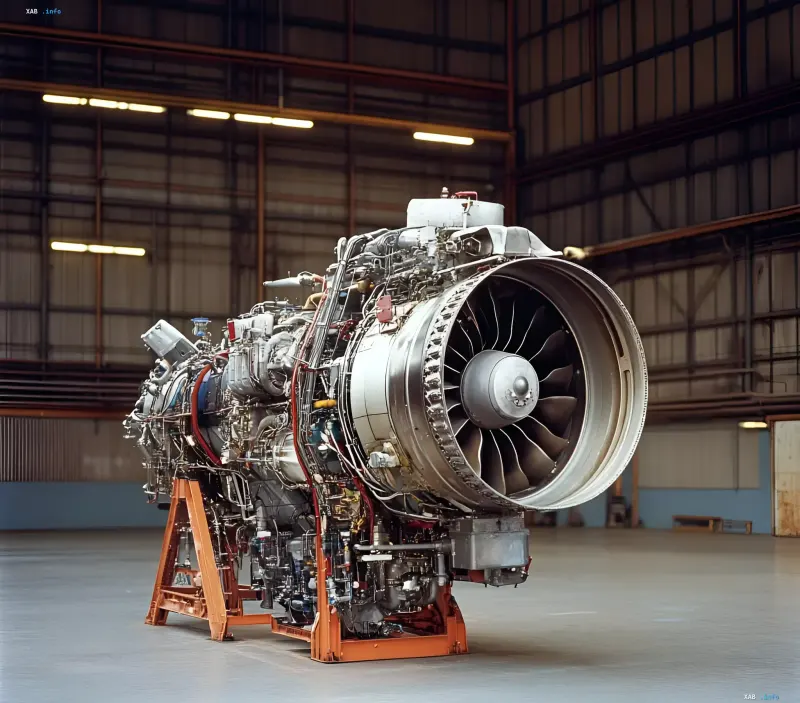
The United Engine Corporation (UEC) has announced the completion of the second stage of testing for the technology demonstrator engine developed under the advanced PD-35 aircraft engine program. The tests took place on a specialized test bench designed for power plants with a thrust ranging from 24 to 50 tons. According to specialists from UEC-Aviadvigatel and UEC-Perm Motors, the results obtained confirmed the correctness of the chosen design and technological solutions. The progress of the work was revealed at the 27th All-Russian Scientific and Technical Conference 'Aerospace Engineering, High Technologies, and Innovations AKTTI-2026'.
The Demonstrator as the Basis for the Future Power Plant
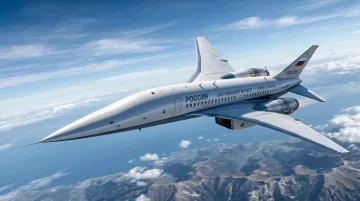
The demonstrator engine serves as a technological platform: it is used to refine and test key solutions that will later be transferred to the serial design of the PD-35. The engine itself is built on the basis of a standardized gas generator using technical solutions previously tested on the PD-14 engine for the MS-21 aircraft. The fan diameter of the PD-35 reaches 3.1 meters, and the extensive use of composite materials has reportedly reduced the structure's weight by more than 600 kilograms. The finished engine is expected to be used on the future Russian wide-body passenger airliner.
Mastering Critical Technologies
Concurrently with the testing of the demonstrator, the development of 20 critical technologies required for creating high-thrust engines is underway. Designers are bringing these technologies to the sixth level of technological readiness, after which the developments can be used in further experimental design work. This approach minimizes risks at the stage of serial production creation and pre-confirms the operability of each assembly.
A Decade-Long Stage of Research and Development
According to Alexander Inozemtsev, General Director and General Designer of UEC-Aviadvigatel, a decade-long stage of research and development work under the PD-35 program is now concluding. During this time, he reported, specialists have mastered the production of composite fan blades and fan casings, developed a low-emission combustion chamber, highly loaded bearings, and rotational friction welding technology. In addition, in cooperation with industry institutes, work is underway on new alloys with improved strength characteristics.
Significance for the Industry
The successful completion of the second stage of testing and bringing critical technologies to the sixth level of maturity indicate the transition of the PD-35 program from the research phase to the stage preceding experimental design work. For the domestic engine-building industry, this means consolidating competencies in the field of composite structures, low-emission combustion chambers, and new alloys—areas critical for creating competitive high-thrust power plants. The results presented at the AKTTI-2026 conference confirm that the chosen technological route is being implemented according to plan.