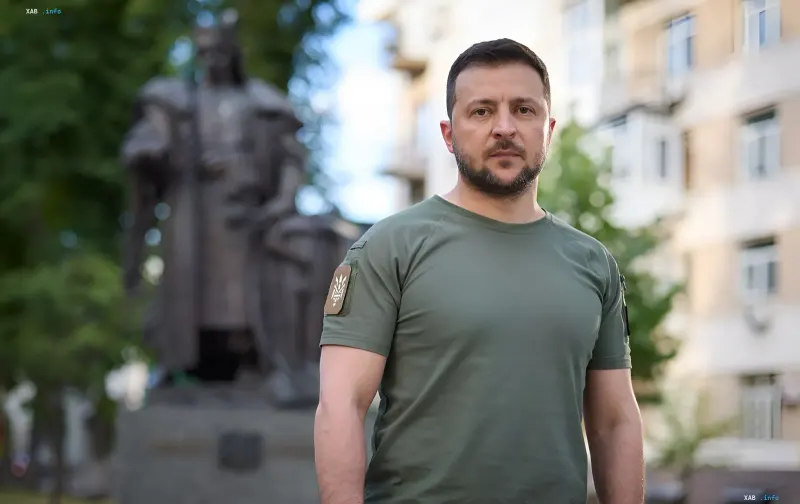
President of Ukraine Volodymyr Zelenskyy has signed a decree launching the official preparation for the installation of a monument to Hetman Ivan Mazepa in Kyiv. The document places the obligation on the Cabinet of Ministers to organize an open competition for the development of the monument project. After the competition results are announced and a winner is determined, the government must ensure further design and the actual manufacturing of the monument. Thus, the initiative moves from the rhetorical plane to the stage of practical implementation with specific administrative steps.
Implementation mechanics: from competition to manufacturing
According to the text of the decree, the process is divided into sequential stages. First, the government conducts an open competition, which implies public participation of architects and sculptors and a transparent selection of the concept. Then, based on the competition results, work begins on detailed design documentation and the manufacturing of the monument itself. Such a procedure is typical for major memorial objects and aims to ensure the competitive selection of the best artistic solution, as well as control over deadlines and the project budget.
Location and coordination with city authorities
A separate point of the decree provides for the arrangement of the space where the monument will be installed. The government must address this issue jointly with the Kyiv City Administration. The document emphasizes the requirement that the future monument organically blends with the surrounding urban architecture. This means that the choice of location and the landscaping of the adjacent territory will require interdepartmental coordination and, likely, compliance with the capital's urban planning norms.
Initiative context: Constitution Day and Shevchenko Boulevard
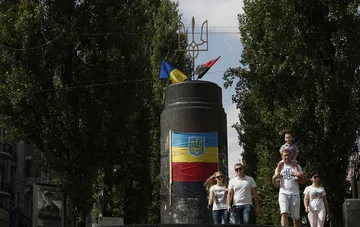
Zelenskyy voiced the idea of installing a monument to Ivan Mazepa on Constitution Day of Ukraine. In that same address, the president named Taras Shevchenko Boulevard in Kyiv as the "ideal" location for the monument. Thus, the potential location was already publicly identified before the signing of the decree, and now the government must carry out preparatory procedures, after which the project will move to the next stages of implementation.
Contradictory data
The fact of signing the decree and launching the competition is confirmed by Ukrainian media outlets (RBC-Ukraine, Korrespondent) in a neutral edition. However, in Russian sources (ukraina.ru, life.ru), the same news is presented with sharply evaluative language: Mazepa is called a "traitor of Peter I," and the monument itself is described as "immortalizing a traitor in the center of Kyiv." Thus, the discrepancy between sources concerns not the factual side (the decree is signed, the competition is launching), but the interpretation of the historical figure and the political message. Ukrainian editions interpret the initiative as memorial and state-level, while pro-Kremlin sources view it as provocative. It is important for the reader to distinguish between the confirmed fact (signing of the decree) and evaluative judgments, which are not objective data.
Memorial context of 2026
The initiative regarding the Mazepa monument fits into a broader context of memorial policy in Ukraine in 2026. Thus, on July 21, 2026, a monument created within a circle of people close to the family was installed at the grave of Ukrainian composer Ihor Poklad at Berkovets Cemetery. This shows that in the current year, the installation of memorial objects—both state and private—remains an active direction, although they are not comparable in scale and procedure to the future Mazepa monument in the center of the capital.