Ukraine is demonstrating a large-scale transformation of its energy landscape by actively introducing new generating capacities. According to data from the Ministry of Energy received from the regions, the country has achieved significant indicators in the development of distributed gas generation. As of today, the total capacity of such installations stands at approximately 1.8 GW.
A particular pace of commissioning is observed in the current year. Since March, as part of plans to ensure the resilience of the energy system, 388.8 MW of new capacity has been launched. Construction work is not stopping: installation is currently underway at 247 facilities with a total capacity of 532.2 MW.
Leaders in Cogeneration and the Growth of 'Green' Energy
In the structure of installed cogeneration (mini-CHP), clear leaders by volume have emerged. Parallel to the development of gas generation, the ministry notes the rapid growth of renewable energy sources (RES), particularly wind and solar.
Statistics for the first half of 2026 indicate dynamic development in the wind energy sector. During this period, 414.8 MW of wind farms were commissioned, equivalent to 70 new installations. The leaders in new capacity additions were the Mykolaiv region (over 400 MW) and the Odesa region (over 200 MW).
The overall picture of wind generation development looks as follows:
- Total installed capacity of wind farms (WF) has reached 7.3 GW.
- 5.4 GW belongs to professional electricity producers.
- 2.25 GW is installed by active consumers.
Geographically, the largest capacities are concentrated in the Dnipropetrovsk region (947 MW), Mykolaiv (782 MW), and Odesa (515 MW).
Revolution in Energy Storage
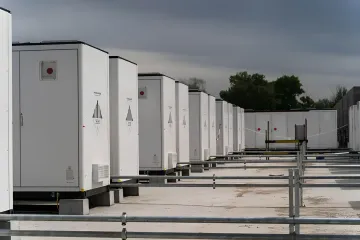
A key trend accompanying the growth of generation is the development of energy storage technologies. The Ministry of Energy reports an explosive growth in the capacity of Energy Storage Systems (ESS). Over the last year, the total capacity of such systems has increased more than 300-fold, reaching the 600 MW mark.
Experts from the ministry emphasize that ESS are a critically important tool for balancing the energy system. They allow for the effective use of the potential of 'green' generation by accumulating excess solar energy produced during the day and feeding it into the grid during evening or morning peak consumption hours.
These processes are changing approaches to energy resource management in the country. Earlier, in July, new auctions for the sale of electricity were launched in Ukraine, which also affects the business environment and the daily lives of the population.