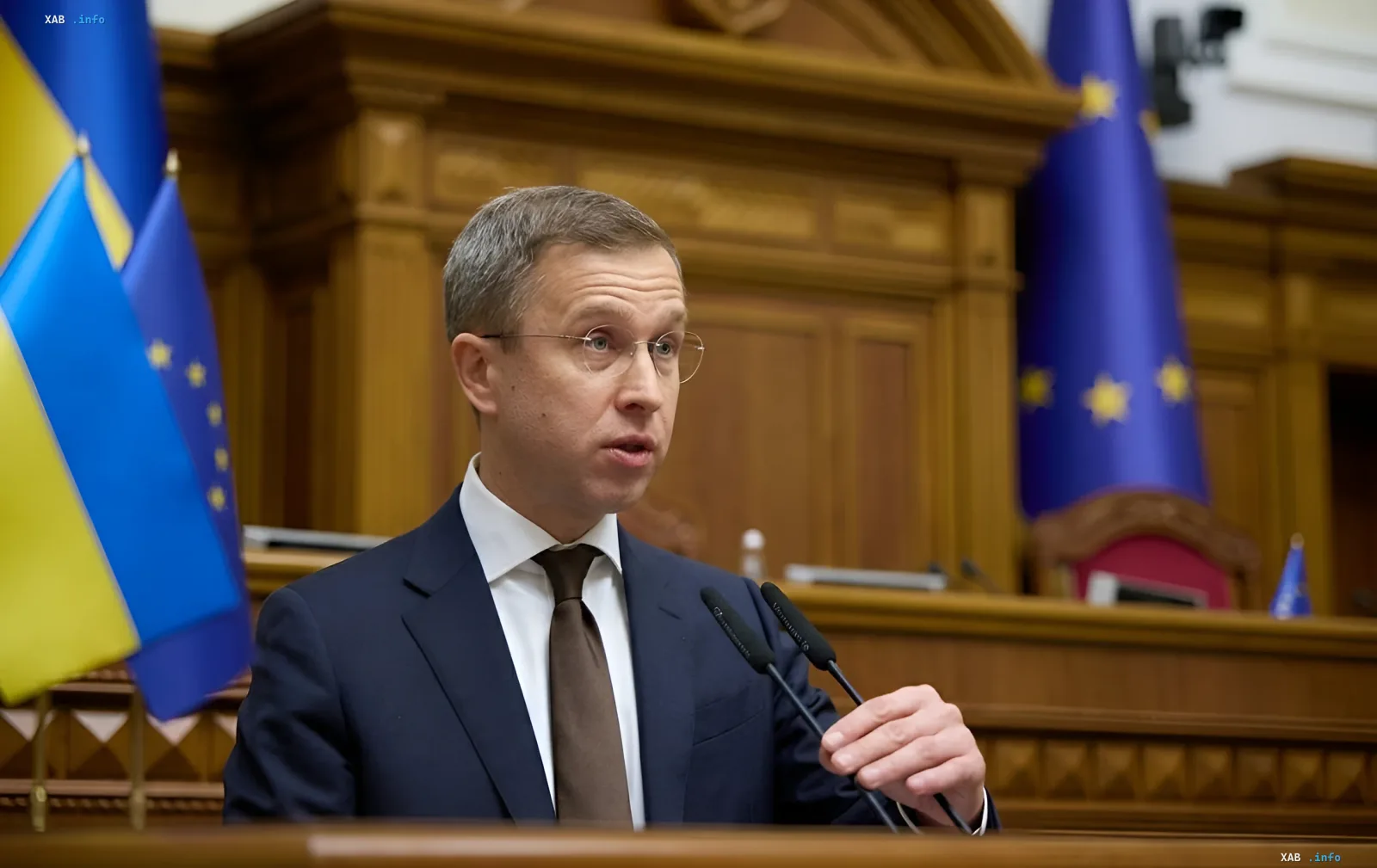
The Government of Ukraine is moving to a regime of strict economy on funds that are not directed to defense needs. According to Prime Minister Serhiy Korytskyy, speaking in the Verkhovna Rada, without resolving the issue of the state budget deficit, the country could face a significant financial risk. He emphasized that this concerns ensuring the needs of the Defense Forces, funding the social sphere, and paying wages, but the main and most important priority remains "full, necessary, and sufficient support for the Defense Forces." According to RBC-Ukraine, Ukraine has still not received 30 billion dollars of financial support from partners, and additionally needs another 27 billion dollars for the needs of the Ministry of Defense.
How much money is missing and where it should be
The head of the budget committee of the Verkhovna Rada, Roksolana Pidlasa, reported that over the eight months of 2026, the general fund of the state budget received 33.1 billion hryvnias less than the planned revenues, with nearly half of this amount — 15.6 billion hryvnias — not arriving in August alone. From January to August, the state accumulated 1.7 trillion hryvnias of domestic revenues (excluding international grants), but this amount is not even enough to cover defense expenditures, which over the same period reached 1.8 trillion hryvnias, or 62% of all expenditures of the general fund. Since all domestic taxes are directed exclusively to military needs, the state covers the remaining expenditures through borrowing.
Contradictory data
Several different figures appear in public statements that, at first glance, do not add up. On the one hand, the headline indicator of underperformance of the general fund is 33.1 billion hryvnias, while on the other — according to Pidlasa's data, the actual underperformance of the plan for the main budget-forming taxes reaches almost 84 billion hryvnias. The difference is explained by the fact that the deep "hole" in key taxes was partially offset by overperformance of other levies — primarily the profit tax, as well as small excesses in the personal income tax, military levy, import excise, and rent. Similarly, the dollar figures differ: 30 billion dollars is the amount already provided for in approved support programs (in particular, from the EU) and expected in the current year; 20 billion dollars is the volume of international aid actually used over eight months; and 27 billion dollars is the additional need of the Ministry of Defense. These figures describe different slices (expected, received, and needed), not the same value.
How the government is closing the financial hole
Over eight months, Ukraine used 20 billion dollars of international aid, and another 317 billion hryvnias was raised on the domestic market through the placement of OFZs (state bonds), although in August the increase from their placement was only about 18 billion hryvnias. To cover the losses, the Cabinet, according to the prime minister, has already found 70 billion hryvnias in savings, which it will fully direct to defense needs, while promising to fulfill all social obligations on pensions and wages. However, receiving the expected 30 billion dollars from partners depends on the fulfillment of commitments: these are 44 government decisions (Korytskyy promises to adopt them by November 1) and 26 bills for the Rada. At the time of the speech, 12 bills were already on the agenda, another 14 were not included for various reasons, and the Cabinet was to submit another 17 bills to parliament — 11 in the coming days and the rest during September.
Will the budget be cut and the 'national cashback' canceled
At a meeting with the Servant of the People faction, the prime minister did not rule out cutting the state budget (sequestration) if the commitments to receive funds from partners are not fulfilled. At the same time, as Pidlasa noted, cutting programs is not yet planned: the current plan is to redistribute unused funds from civilian programs to defense ones, as well as to apply a payment priority in which defense expenditures are funded first, and then everything else. Freelance expert of the National Interests Protection Network "ANTS," Ilya Neshkhodovsky, warned that sequestration of the state budget could negatively affect the situation in the country as a whole: underfunding of certain expenditure items could lead to a reduction in wages and budget personnel, or even to the absence of support under certain programs, including such as the "national cashback."