In Ukraine's defense industry, the appointment of Anna Hovdiar as a dedicated Deputy Minister of Defense for issues of the defense-industrial complex (D-IC) has been assessed as a key positive personnel decision by the new head of the ministry, Yevhen Khmara. This is evidenced by statements from representatives of relevant associations and companies, made in an RBC-Ukraine article devoted to Khmara's first month in office as Defense Minister. In the experts' view, the emergence of a dedicated deputy minister closes a systemic gap that had existed in the structure of the Ministry of Defense for a long time.
Why the industry was waiting for exactly this decision
Ihor Fedirko, Executive Director of the Ukrainian Council of Armaments Manufacturers, emphasized that Anna Hovdiar knows the market, the manufacturers, and the problems of their interaction with the state well. "For the industry, this is a good signal," he noted. Serhiy Honcharov, CEO of the company NAUDI, developed this point, pointing out that the absence of a dedicated deputy minister for the D-IC had deprived the ministry of a coordinating role among its structural units. "There is no understanding of the industry, who to talk to. If all of this is 'dumped' on the First Deputy Defense Minister — that is unproductive," Honcharov explained. He also added that the industry had supported Hovdiar's position and did not understand why the previous leadership had changed it and failed to designate a dedicated deputy minister who would handle the "enormous scope of work and the complex" of D-IC issues.
A change in approach to dialogue with the industry
Beyond the personnel decision itself, representatives of the defense sector noted a qualitative change in Yevhen Khmara's approach to communication with the industry. According to Ihor Fedirko, previously the Ministry of Defense had tried to build dialogue with the entire market on its own, while the role of specialized associations as the consolidated voice of manufacturers was often underestimated. "Khmara changed this approach from the very beginning and resumed a normal dialogue with the associations and the market as a whole. We are very grateful to him for that," Fedirko stated. Thus, Hovdiar's appointment is viewed not in a vacuum, but as part of a broader strategy to restore institutional channels of interaction between the state and the defense sector.
Who is Yevhen Khmara and what is his background
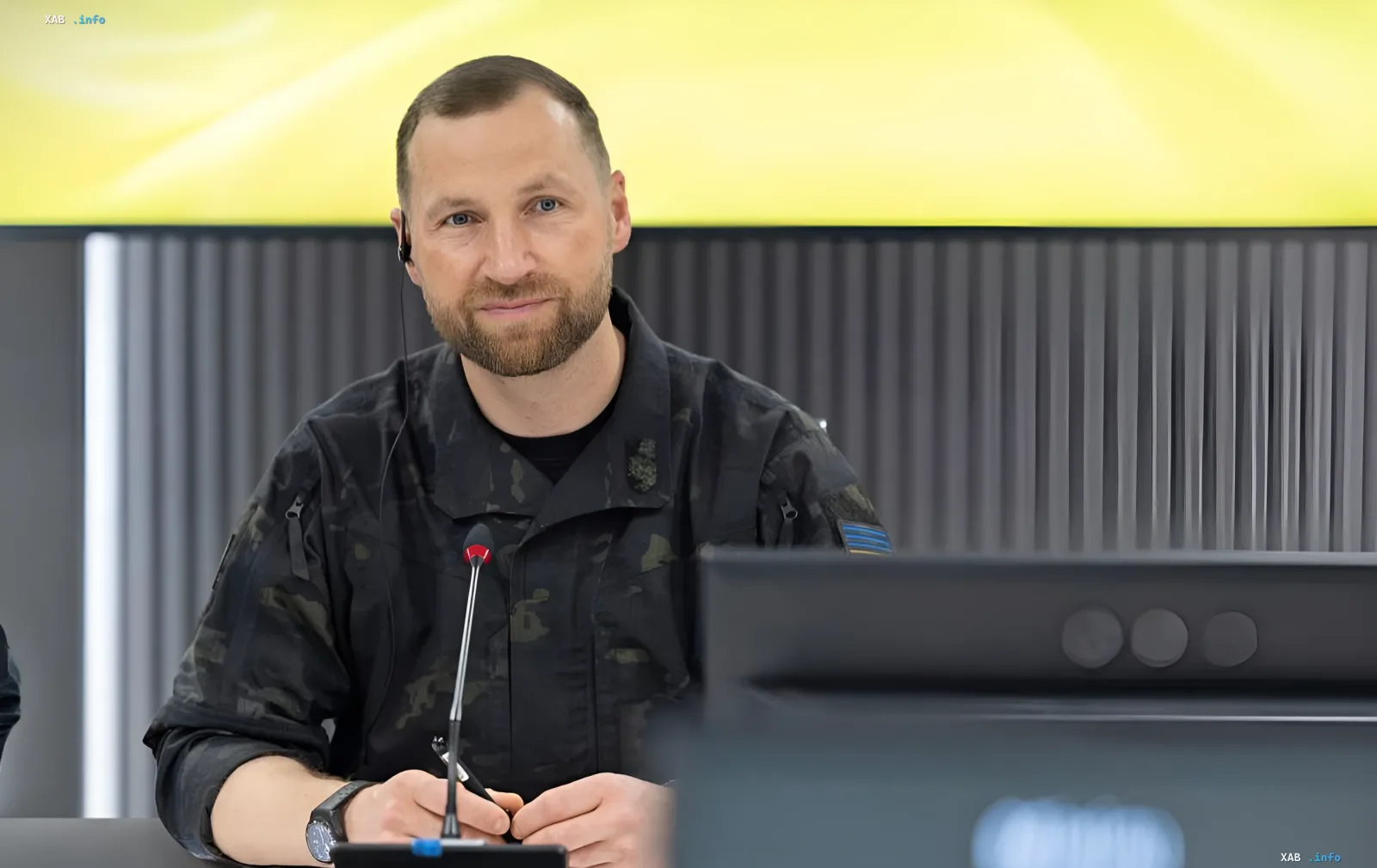
Yevhen Khmara took over the Ministry of Defense of Ukraine on August 19, 2026, coming to the post from the law-enforcement and military sphere. Before being appointed minister, he had led the "Alfa" special operations center of the Security Service of Ukraine (SBU) since August 2025, and since January 2026 he had been acting as head of the SBU. Thus, by the time he assumed the post of Defense Minister, Khmara already had significant experience managing law-enforcement structures, which, in the view of industry experts, predetermined his pragmatic approach to solving organizational tasks within the ministry.
Context: coordination between the state and the defense industry
The theme of coordination between the state and the defense industry had been raised by Ihor Fedirko earlier as well. In particular, in one of his interviews with RBC-Ukraine on the prospects of the Brave1 platform, he assessed whether this structure could become a Ukrainian analogue of DARPA (the U.S. Defense Advanced Research Projects Agency) and how effectively developments reach the front line. The question of the institutional link between the ministry, the associations, and the manufacturers remains one of the central ones for ensuring the sustainable development of Ukraine's D-IC amid the ongoing conflict. In the experts' view, the appointment of a dedicated deputy minister is a necessary but not sufficient condition for solving this task — the key remains building a regular and predictable dialogue at all levels.