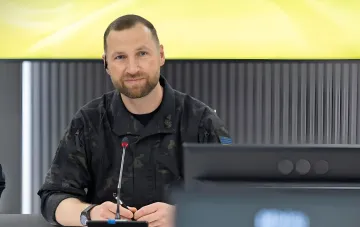
Ukraine's defence and industrial complex is facing a sharp financial conflict: weapons manufacturers that delivered equipment to the military under the state eBally program have not been paid for months for already-delivered products. This was stated in a public statement by Ihor Fedirko, Executive Director of the Ukrainian Council of Armaments, who noted that the debt owed to individual enterprises ranges from 24 million to several hundred million hryvnias. Two key state bodies reacted promptly to his words — the Verkhovna Rada Committee on National Security, Defence and Intelligence, and the Ministry of Defence of Ukraine — each side presenting its own version of the reasons for the delays.
Statement by the Council of Armaments: the debt is growing, and the equipment is already in the warehouse
According to the Ukrainian Council of Armaments, weapons manufacturers have fulfilled their obligations to deliver equipment under the eBally system, but payments for it are being delayed by months. Ihor Fedirko emphasized that the debt owed to individual companies reaches several hundred million hryvnias, and the most critical situation is at enterprises bearing the highest production loads. The statement came against the backdrop of the fact that the eBally program is one of the main channels for supplying combat units with weapons and equipment, and its failure directly threatens the sustainability of Ukraine's defence industrial complex.
Rada Committee: the Ministry of Defence letter arrived with a two-and-a-half-month delay
The Verkhovna Rada Committee on National Security, Defence and Intelligence clarified that on 24 June 2026, amendments to Article 28 of the law "On the State Budget of Ukraine for 2026" (Law No. 4908-IX) came into force. Under the new provision, the uses of military personal income tax funds, from which the eBally program is financed, must be coordinated by the Ministry of Defence and the Administration of State Special Communications with the relevant parliamentary committee. The committee stressed that this concerns the general directions of fund expenditure, not the approval of individual procurements or specific contracts. The corresponding letter marked "DSK" (top secret), signed by First Deputy Minister of Defence Oleksii Vyskub, reached the committee only on 10 September 2026 — more than two and a half months after the provision came into force. The committee noted that the question of the need to submit the materials had been raised repeatedly — both at meetings and at working sessions with the newly appointed ministry leadership — and expressed its intention to consider the coordination at the nearest meeting on a priority basis.
Ministry of Defence: financing is provided, payments will be made by the end of the year
The Ministry of Defence of Ukraine assured in its response that the eBally program remains an active mechanism for supplying combat units, and that funds for its financing in 2026 are provided. All due payments for the delivered equipment, the MoD assured, will be made by the end of the current year. The ministry explained the individual technical delays by two factors: the program is planned to be refinanced using European Union loan funds, which involves additional procedures, as well as planned changes in the "point system" itself. According to MoD data, since the integration of eBally with Brave1 Market, the military have ordered more than 750,000 units of equipment worth over 51.9 billion hryvnias, and the volume of equipment already delivered amounts to nearly 40 billion hryvnias. More than 400 units have used the program, and the average delivery time of goods from the warehouse is 7–10 days.
Contradictory data
There are notable discrepancies between the positions of the parties. The Council of Armaments claims that the delays are widespread and have already led to the formation of a multi-million debt, while the Ministry of Defence characterizes the situation as "individual technical delays" related to external refinancing procedures. The Rada Committee, in turn, effectively absolves itself of responsibility for specific settlements, noting that the selection of suppliers and payment under concluded contracts remain within the MoD's authority, and emphasizes that part of the eBally expenditures is made under other budget lines that do not fall under the coordination procedure. Thus, none of the parties takes direct responsibility for the delay of specific payments: manufacturers blame the state for non-payment, the Ministry of Defence cites external factors, and the Rada Committee points to procedural delays in the submission of documents. Moreover, it remains unclear to what extent refinancing through EU loan funds can truly justify delays in paying for already-delivered and accepted equipment, rather than only in new procurements.
Context: what is eBally and why the program is critical for the defence industrial complex
The eBally program is a state mechanism that allows combat units to order weapons, equipment and technical support through a single digital platform using allocated budget funds (military personal income tax). Integration with Brave1 Market ensured transparency and faster deliveries. For Ukraine's defence industrial complex, the stability and timeliness of payments are a key condition for operation: payment delays undermine the financial sustainability of enterprises, reduce their ability to expand production capacity and fulfil new orders. Against this backdrop, the statement about a debt of several hundred million hryvnias is perceived by the industry as a signal of a systemic failure in the settlement mechanism, rather than a one-off technical hiccup.