In August 2026, the Ukrainian command announced a transition to a new stage of equipping units located in the immediate defense zone. The Ministry of Defense of Ukraine (MoD) confirmed the scaling of the project implementation, which guarantees the regular delivery of unmanned systems. If previously supply depended on logistical capabilities and available funds, now it is about a systematic approach to saturating the frontline with high-tech weaponry.
Phase Two: From Reconnaissance to Strike
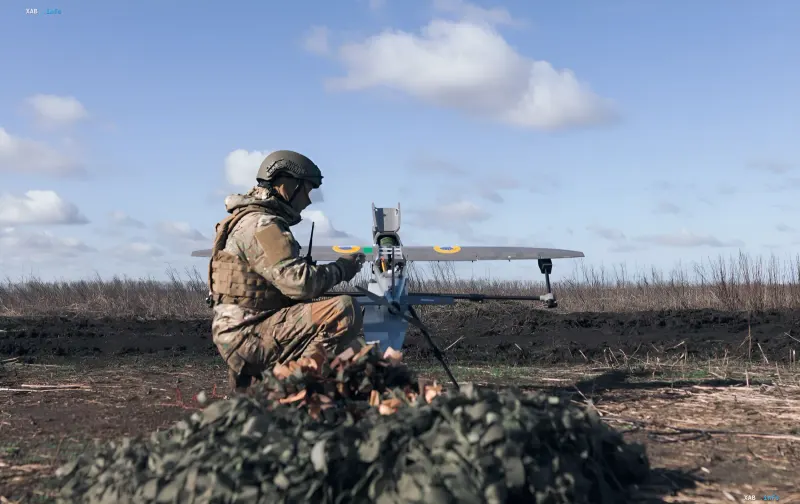
According to the press service of the ministry, the second phase of supply implies not just an increase in the number of reconnaissance drones, but also the integration of ground robotic complexes (GRC) and heavy strike unmanned aerial vehicles of the "middle strike" class. These systems are designed to strike targets at operational depth, allowing Ukrainian troops to attack not only the enemy's frontline but also their rear communications, command nodes, and ammunition depots.
The supply nomenclature will include almost all types of modern GRC, including logistics robots and combat kamikaze machines. This decision is aimed at reducing personnel losses when performing tasks to deliver cargo to "gray zones" and during assault operations under dense enemy fire support.
Distribution by Corps and Crews
A key change in logistics was the introduction of the principle of distributing heavy drones at the corps level. Heavy middle strike drones will be supplied at the corps level, which, in turn, will distribute them among units. However, this process will not be automatic: priority will be given to those units that have trained crews and demonstrate high efficiency in the use of such drones. This approach is intended to prevent the idling of expensive equipment and ensure maximum return from each launch.
Thus, each corps is guaranteed to receive strike assets at operational depth, creating a unified standard of firepower across all sections of the front. This will allow the command to plan operations taking into account the availability of means for deep penetration and target destruction in subordinate units.
Contradictory Data
Despite Kyiv's optimistic statements about scaling, open sources record contradictory data about the real situation on the front. In particular, Russian sources (RBC-Ukraine, TASS) report successful counteraction to Ukrainian drones. For example, in the Sumy region, operators of Russian drones destroyed so-called "wait-and-see drones" of the Armed Forces of Ukraine (AFU). This indicates that, despite increased supplies, the enemy is also improving its air defense and electronic warfare capabilities, creating serious obstacles for the use of Ukrainian equipment.
On the one hand, Ukraine claims guaranteed supply, while on the other, the enemy demonstrates the ability to neutralize these threats. This creates a situation where the technological superiority of one side can be neutralized by the adaptation of the other.
New Horizons: Maritime Drones and Confiscation
Parallel to ground operations, Ukraine continues to develop its maritime capabilities. The Main Directorate of Intelligence (GUR) reported on the development of a new system for maritime drones that will allow not only to destroy enemy targets but also to detain sanctioned ships in the Black Sea. After detention, the vessels will be brought to port for confiscation. This opens new possibilities for economic pressure and control over maritime communications.
Also, earlier Ukrainian military demonstrated the operation of the Barracuda drone, which, along with other systems, attacked Russian troop positions. These innovations indicate that Ukraine is not just scaling production but is actively implementing new tactical solutions that are changing the rules of modern combat.