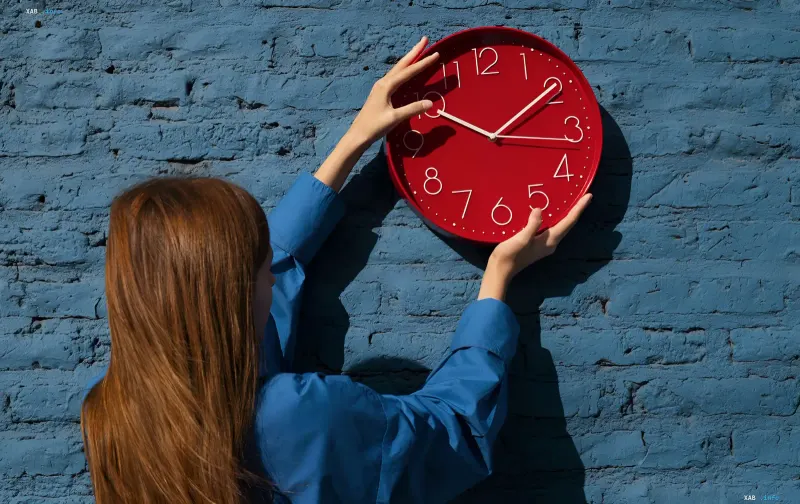
At the end of October 2026, Ukraine, like most European countries, will switch to winter, or standard, time. The clocks will be turned back by one hour at 4:00 a.m. on the last Sunday of October — October 25, 2026. This is reported by RBC-Ukraine, citing data from the European Commission. Thus, after the summer period, the country will return to its standard time zone, and the time difference with most EU states will remain unchanged.
Exactly when the clocks will be turned back
Under the current rules, EU countries switch to summer time on the last Sunday of March and return to standard time on the last weekend of October. This year, the key date is October 25, 2026. Residents of Ukraine will need to turn their clocks back by one hour at 4:00 a.m. After this, both the EU and Ukraine will be in their standard time zones, so the difference between our countries and most European states will not change.
What is happening with the reform in the EU
EU countries have been discussing the possibility of abolishing the twice-yearly clock change for several years now. The European Commission first spoke about this idea in 2018, and a year later, in 2019, it was supported by the European Parliament. However, as of September 2026, no final decision on the issue has been made. Moreover, the European Commission has published a calendar of transitions to summer time all the way to 2031, which effectively means that the EU does not plan to give up the twice-yearly time change in the near future.
Contradictory data
There is noticeable tension here between statements and actual actions. On the one hand, a number of EU countries and institutions publicly support the idea of abolishing the clock change — for example, the Estonian government previously expressed support for this initiative, and the European Parliament approved the corresponding concept back in 2019. On the other hand, the EU's practical policy is moving in the opposite direction: the Commission has not only failed to make a final decision on abolition, but has also fixed the time change in its calendar all the way to 2031. In other words, the public rhetoric about a "single time" is not yet backed by legislative steps, and the twice-yearly clock change remains the practice in force.
Time zones and the difference with European countries
Three main time zones operate in the EU: Western European, Central European, and Eastern European. Ukraine falls within the Eastern European time zone and, as of autumn 2026, is living on summer time. After the switch to winter time at the end of October, residents of EU countries will turn their clocks back by one hour and return to their standard zones. Since Ukraine is doing the same, the time difference with most EU countries will remain the same as it is now.
How to minimize the impact on well-being
The autumn clock change to winter time can affect sleep and overall condition. Some people experience drowsiness, insomnia, headaches, or blood pressure fluctuations. Experts advise reducing caffeine intake on the eve of the change, avoiding alcohol and heavy food before bed, and using gadgets less in the evening. These simple measures help the body adapt more smoothly to the extra hour of sleep and reduce discomfort in the first days after the time change.