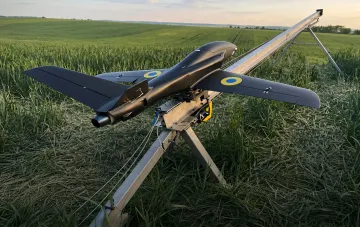
The Ukrainian government has approved a set of changes expanding the capabilities of enterprises participating in the experimental private air defense project. This was announced by RBC-Ukraine, citing the Ministry of Defense's press service. The act adopted by the Cabinet of Ministers introduces six key adjustments to the operational rules for private air defense groups, aimed at strengthening the protection system amidst intensifying enemy air attacks on critical infrastructure.
Six Adjustments and a Unified Command System
According to the Ministry of Defense, the updated regulatory act details the interaction procedures between private air defense units and military command. The core principle remains unchanged: private air defense operates exclusively under the control of military command and within the unified air defense system of the Armed Forces of Ukraine. This means that enterprises do not receive autonomous rights to employ weaponry — all combat decisions are coordinated with the Defense Forces' command structure. The six changes fixed in the act concern, among other things, procedural paperwork, logistics, and operational coordination, although the full list of points has not been disclosed in the department's public statement.
Practical Goal: Protecting Personnel and Facilities
The experimental project allows critical enterprises to provide additional protection for their own staff, production lines, and energy facilities that are systematically targeted by enemy unmanned aerial vehicles. As the Ministry of Defense emphasizes, the decision allows for rapid scaling of air defense capabilities without placing additional strain on regular Air Defense Force units. Thus, private groups act not as an alternative, but as a supplement to the state air defense system, relieving some pressure from military crews in zones where industrial and energy infrastructure are concentrated.
Combat Results Since Spring 2026
Private air defense groups began combat operations in the spring of 2026. As of mid-October, according to data from the Ministry of Defense, about 100 enterprises have joined the project. During their combat service, private units have destroyed over 60 aerial targets, including Shahed-type strike drones and Zala-type reconnaissance craft. These figures are confirmed both by the Ministry of Defense press service statement and by an ITC publication, which also reports approximately 100 participants and 60 downed targets.
Timeline: From Idea to Scaling
The initiative to allow critical enterprises to participate in protection against air attacks was first voiced in 2025, when the Ministry of Defense was led by Denys Shmyhal. In early March 2026, the government officially authorized the launch of the relevant experiment. Subsequently, the Ministry of Defense published data on the successful results of private air defense units for the first time, confirming they had begun combat missions. The current Cabinet of Ministers decision is a logical continuation and improvement of the already operating mechanism.
Strategic Context
The expansion of private air defense group powers comes against the backdrop of a steady trend of increasing enemy air attacks on Ukraine's energy and industrial infrastructure. As the volume of unmanned aerial vehicles used continues to rise, a distributed protection model, where the protected enterprise itself takes on some interception tasks, allows for increasing overall fire density without a proportional increase in the number of military crews. The future dynamics of the project will depend on how quickly enterprises can adapt to the updated procedures and how many additional participants join the project in the coming months.