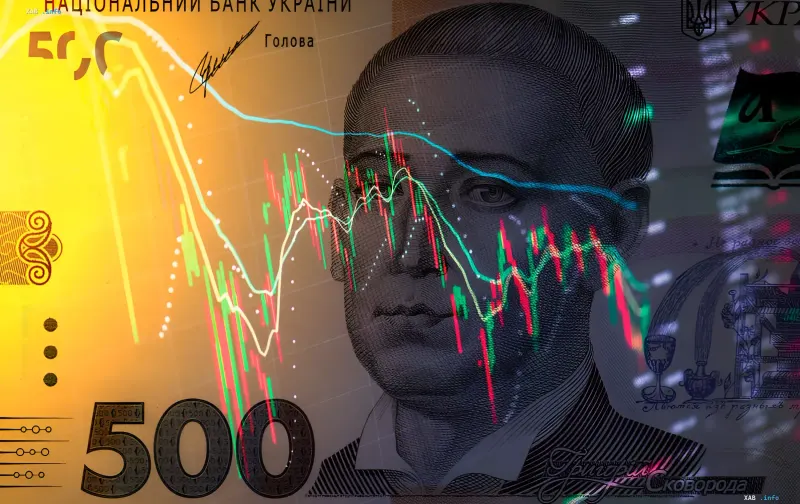
Preliminary data from the National Bank of Ukraine shows that the country's international reserves decreased by $2.5 billion, or 5%, in August 2026, falling to $48.7 billion. Net international reserves over the same period shrank by $2.5 billion, or 6.9%, to $33.8 billion. The regulator emphasizes that, despite the decline, the current level of reserves remains sufficient to cover future imports and finances roughly four months of upcoming procurement operations.
Causes of the Decline
The NBU attributes the August trend primarily to a reduction in the volume of international financial assistance, while currency interventions remained at a level close to that of July. In other words, the outflow of funds from reserves was not offset by an inflow of external support on the previous scale, which led to a notable monthly drop in the indicator after several preceding months during which reserves had been replenished by large volumes of aid.
Reserve Composition
Alongside the overall decline, the currency-commodity structure of the reserves also changed. As of September 1, 2026, the share of dollar-denominated assets rose to 69.1%, up from 64.7% a month earlier, while the share of euro-denominated assets fell from 27% to 21.4%. The share of gold, by contrast, increased to 8.3%, compared with 7% at the beginning of August. Thus, the reserves became more concentrated in dollars and gold, with the euroized portion of the portfolio shrinking.
Inflows and Outflows
In August, $927.3 million was credited to the government's currency accounts at the NBU: of this, $894 million was received through World Bank accounts, and a further $33.3 million came from other investors. Separately, Ukraine received $1.63 billion from the European Union under the defense tranche of the Ukraine Support Loan program; however, due to the earmarked nature of this financing, the funds did not go directly into international reserves. On the other hand, the government allocated $721.8 million to service and repay foreign-currency government debt, and a further $258.2 million to pay the International Monetary Fund. The outflow was partially offset by the revaluation of financial instruments, which increased the value of reserves by $721.8 million over the month.
Interventions and Import Cover
The NBU's currency interventions in August rose by 0.5%, or $24.7 million, compared with July, reaching $4.82 billion. According to the regulator's assessment, the current volume of international reserves finances four months of future imports, which it considers a sufficient buffer to maintain currency market stability in the medium term.
External Context: Ports and Exports
The decline in reserves is occurring against a backdrop of worsening export conditions. Russia's blockade of the Big Odesa ports is causing Ukraine significant export losses and impairing the operation of key industries: according to the NBU's estimate, the country may miss out on roughly $2.5 billion in export revenue in the second half of 2026 alone due to problems with maritime shipping. It was also previously reported that Russian strikes and the port blockade could cut steel production in Ukraine by 30–40%, which further pressures currency inflows and, consequently, the dynamics of the reserves.