The Ukrainian metallurgical industry is facing a systemic problem: the state consistently lags in implementing antidumping measures, causing domestic producers to lose market share, revenue, and resources needed for recovery. This was stated by Stanislav Zinchenko, Director of the GMK Center analytical center, in a commentary published by RBC-Ukraine. In his assessment, this is the third time in the steel market that imported products have displaced Ukrainian goods, while protective tools have been applied with a multi-year lag—only after the damage has already been done.
Turkish Pipes: Fivefold Import Increase and Unfinished Investigation
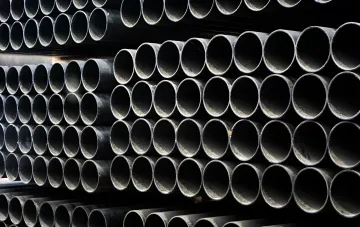
As the most pressing example, the expert cites statistics on welded pipe imports from Turkey. In 2021, supply volumes were around 10,000 tons, but by 2024, they had grown to 50,000 tons—a fivefold increase in three years. An antidumping investigation in this area was initiated only in January 2026; however, as of the time of the statement, it remains unfinished, and preliminary protective measures have never been introduced. The final decision, according to Zinchenko, is expected no earlier than January 2027. Meanwhile, Ukrainian law explicitly allows for the application of preliminary antidumping duties 60 days after the investigation begins, provided there is confirmed evidence of dumping. "This means that for over half a year, the market could have been under protection. The tool exists, but it was not utilized," emphasized the GMK Center director.
Three Cases, One Scenario: From Russian Rods to Chinese Oil and Gas Pipes
The situation with Turkish pipes, according to the expert, is not an isolated incident. The first in this series was the case of Russian reinforcement rods: despite Russia imposing trade restrictions on Ukrainian metal products after 2014, the corresponding Ukrainian antidumping investigation only concluded in 2018. The second case concerned Chinese oil and gas pipes, where import volumes grew from approximately 15,000 tons in 2016 to 30,000 tons in 2018. The investigation was only launched in 2019, and an antidumping duty of 51.5% was imposed in May 2020—after the market itself had significantly shrunk and Ukrainian producers had lost their standing. "Three cases with one scenario provide grounds to speak of a systemic problem," Zinchenko summarized.
War, Tariffs, and Lack of Financial Buffer
The problem is exacerbated by the shutdown of several Ukrainian metallurgical plants. Among the key reasons, the expert mentions Russian shelling of production sites, export restrictions, high railway tariffs imposed by Ukrzaliznytsia, and rising imports. An additional factor of vulnerability is the low profitability in the domestic market in previous years, which deprived enterprises of a financial buffer. As a result, companies lack the resources for equipment maintenance, production restoration, and covering increased energy and logistics costs. To restart production, according to GMK Center, enterprises need not only a technically operational plant but also a guaranteed sales market with sufficient margins to cover operating expenses.
Risk of Losing the Industry and Import Dependency
If the domestic market continues to be filled with cheap imports, even plants ready for restart may lack the economic basis to resume production. In such a scenario, Ukraine risks losing its domestic producers, and consumers will become dependent on the prices and conditions set by suppliers from Turkey, China, and other countries. Zinchenko also pointed to the need to align Ukrainian antidumping control rules as closely as possible with European practices, specifically by considering the origin of raw materials at the customs control stage. Amidst global growth in protectionism, excess steel capacity, and significant global price gaps, timely trade defense, in the expert's view, becomes one of the key tools for preserving Ukrainian industry, jobs, and opportunities for post-war recovery.