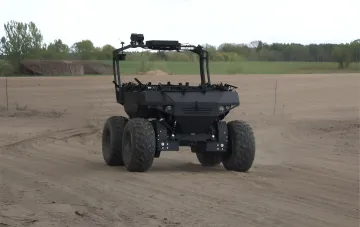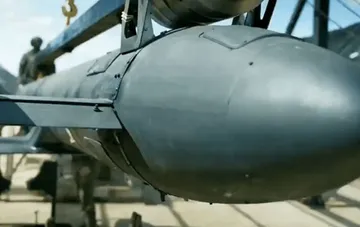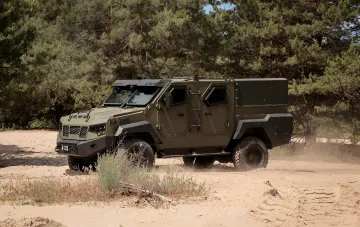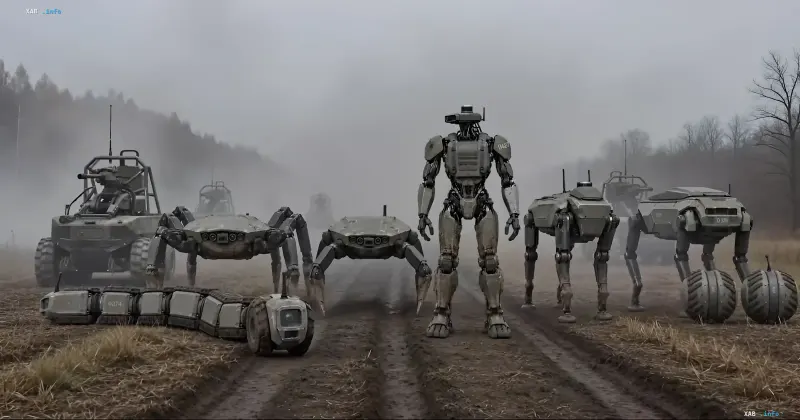
On September 26, 2026, at the IT Arena technology conference in Lviv, a large-scale initiative to develop and deploy a 'Robot Army' was presented. The main goal of this innovative project is the complete automation of the most dangerous combat tasks and the maximum protection of the lives of servicemen on the front lines. The program is designed to turn the tide of the current confrontation through the large-scale use of advanced autonomous systems.
Project Objectives and Strict Implementation Deadlines
According to the presented plan, developers intend to create full-fledged humanoid robots capable of effectively destroying enemy forces within just six months of the program's launch. Moreover, in a year, the initiators plan to carry out the first combat attack on enemy positions exclusively using robots and unmanned aerial vehicles, completely eliminating the participation of ground troops. These autonomous complexes will coordinate their actions using specialized data-exchange algorithms.
Technology Ecosystem and Financial Support
The new initiative relies on a broad defense technology ecosystem that brings together private capital, research centers, and testing grounds for field trials. The creation of a specialized defense company was announced, with Palantir Group CEO Alex Karp acting as a key investor. Simultaneously, a venture fund is being established in Kyiv to financially support specialized startups and domestic military robotics manufacturers. The project conceptually continues the successful 'Drone Army' model, which has proven its high efficiency in combat conditions.
Contradictory Data
Despite the ambitious statements of the project authors and spectacular presentation materials, the expert community points to significant discrepancies between promotional concepts and real technological capabilities. While videos showcase advanced humanoid robots, industry experts note that most ground platforms used today move on wheels or tracks and rely on manual operator control. The creation of an independent army of anthropomorphic combat machines is still at an initial stage of development and faces significant barriers in power supply, navigation algorithms, and mass production.
Analysis and Future Prospects
The creation of the 'Robot Army' is seen as a strategic response to the rapid scaling and copying of military technologies by the adversary. Developers emphasize the need to constantly outpace the technological cycle to maintain superiority in modern high-tech warfare. Integrating robots into logistics, wounded evacuation, and fire support can radically change combat tactics in the coming years.