On September 21, 2026, the 1020th Air Defense Missile and Artillery Brigade of the Air Force of the Ukrainian Armed Forces published a video recording in which the crew of the "Rubin" used a STING S interceptor, manufactured by the company "Dikiy Sherbni" (Wild Hornets), to destroy a Russian jet-powered Geran-5 drone. This was reported by RBC-Ukraine, citing the brigade itself. The shown episode became public confirmation that the Ukrainian air defense system is capable of intercepting the fastest jet-powered UAVs of the enemy, which were previously considered an extremely difficult target for interceptor drones.
Technical specifications of the STING S
The full set of official technical parameters of the STING S has not been disclosed as of the time of publication. However, based on data available from early modifications and newer variants, the interceptor demonstrates a claimed hit accuracy of 80–90%, a range of action from 25 km in early versions to 37 km in updated ones. The device is equipped with four rotors, has a cruising speed of 140–170 km/h, a maximum speed of up to 280 km/h, and a service ceiling exceeding 7,000 meters. The drone's body is manufactured using a 3D printer, which allows production to be rapidly scaled up. An important tactical advantage is the absence of the need for a catapult for launch, as well as the ability to return to the starting point if the target has already been destroyed by another interceptor.
Geran-5: a new threat in the airspace
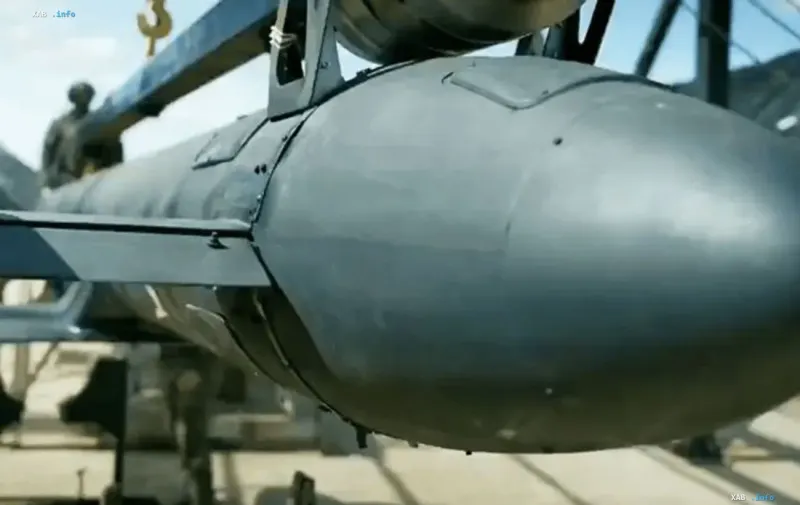
The target downed by the "Rubin" crew was the Geran-5, which differs significantly from other drones in the series. Instead of the delta wing characteristic of the Geran-4, the developers chose an aerodynamic layout closer to that of a cruise missile. The device, about 6 meters long with a wingspan of up to 5.5 meters, carries a warhead weighing approximately 90 kg. The drone is equipped with a Chinese jet engine, the TELEFLY TF-TJ2000A, accelerates to 450–600 km/h, flies at altitudes of up to 6,000 meters, and has a claimed range of about 1,000 km. It is precisely the jet thrust that makes the Geran-5 one of the most difficult targets for existing air defense systems.
Confirmation at the level of the defense department
The combat operation of the new jet-powered interceptor drone, which downed the Geran-5 on the same day, was previously confirmed by the President of Ukraine's advisor on defense technologies, Serhiy "Flash" Beskrestnov. His statement, made on the day of the incident, coincided with the brigade's publication of the video, which strengthens the credibility of the shown footage. Thus, the downing of the jet-powered UAV has been confirmed both at the level of the combat unit and at the level of the relevant advisor to the head of state.
Contradictory data
In the text of the 1020th brigade's message, the STING S is described as a "new interceptor," which may give the reader the impression of a model being used in combat for the first time. However, according to data cited in a tech.liga.net publication, referencing the company "Dikiy Sherbni," the STING S has already destroyed about a dozen Geran-4s and several Geran-5s, meaning it has confirmed combat experience prior to September 21. Thus, the wording "new" most likely indicates a recent introduction into service or the novelty of a specific modification, rather than the absence of preceding combat episodes. The difference in presentation — "first use" versus "already proven in combat" — remains unresolved in any of the available sources.
Significance for Ukraine's air defense system
The downing of a jet-powered drone with a cruising speed of up to 600 km/h by an interceptor whose maximum speed is 280 km/h demonstrates that the key factor of success is not speed parity, but guidance algorithms, maneuverability at short ranges, and hit accuracy. If the claimed 80–90% accuracy is confirmed in mass application, the STING S could become a mass-produced and relatively cheap means of countering jet-powered UAVs, reducing the load on air defense missile systems that expend expensive missiles. The brigade's publication of the video also serves as an element of information strategy: demonstrating specific results increases trust in domestic developments and marks a technological shift in the aerial confrontation.