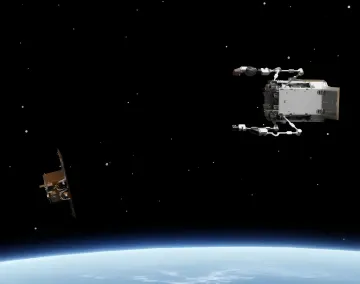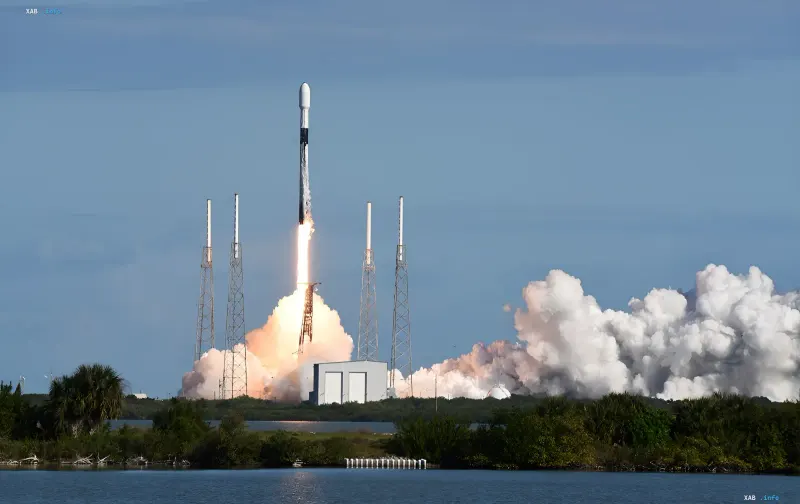
On October 1, 2026, Ukrainian company HIMERA, in cooperation with Danish satellite operator GomSpace, launched the OBRIA NANO spacecraft into low Earth orbit—the first test satellite that will form the basis of Ukraine's future independent satellite communication network. The launch was carried out as part of the SpaceX Transporter-18 mission. As of October 27, 2026, the spacecraft is successfully undergoing scheduled testing of the OBRIA satellite constellation's capabilities, according to joint press releases cited by RBC-Ukraine.
Technical Mission and Current Testing Status
OBRIA NANO is not an operational communications satellite in the full sense of the word: its task is to conduct a series of orbital tests that will allow engineers to gain practical experience with the hardware and software platform underlying the OBRIA project. According to HIMERA and GomSpace, the tests are proceeding on schedule and providing the necessary dataset for the further development of the project. The satellite will be under the control of a Ukrainian operator and is intended exclusively for Ukraine's strategic security needs. This is a fundamental difference from commercial orbital services, where infrastructure management can be carried out from abroad.
Strategic Context: Reducing Dependence on External Technologies
Both companies emphasize that dependence on the technologies of third countries—even allied ones—creates strategic risks that are significantly amplified in the context of an armed conflict. Deploying their own satellite competencies, in their assessment, will allow Ukraine to diversify communication channels and strengthen the state's strategic security. "For us, this project is not just a satellite launch. It is an opportunity to lay the foundation for Ukraine's independent communication network. We are starting by testing technologies in orbit, and our long-term goal is to develop capabilities that will strengthen the state's strategic security and reduce dependence on external communication suppliers," said HIMERA's CEO in a comment following the launch.
Prospects: From Test Device to National Network
In the medium term, the initiative involves deploying a satellite network capable of providing communications throughout the territory of Ukraine, as well as complementing the capabilities of existing European satellite systems. According to the authors' design, this will create the prerequisites for forming a fully independent Ukrainian satellite communication system operating in the interests of the state's strategic security. An important next stage is the localization of production for both the satellites themselves and ground terminals on the territory of Ukraine. According to HIMERA, this will accumulate domestic engineering competencies and gradually build up production capacity in the industry.
About the Partner Companies
According to the press release, HIMERA develops secure communication infrastructure for the Defense Forces of Ukraine. Danish company GomSpace, founded in 2007, is an international provider of solutions in the small satellite segment; its clients are represented in more than 60 countries worldwide. GomSpace CEO Carsten Drachmann commented on the cooperation: "We are pleased to partner with HIMERA and to have the opportunity to accelerate the implementation of this important initiative. Our shared goal is to strengthen Ukraine's independent communication potential and contribute to its long-term security and economic development."
Background: Starlink Restrictions and Frontline Communication Issues
The launch of OBRIA NANO comes against the backdrop of ongoing discussions surrounding the operation of the Starlink "military package" in Ukraine. On the night of October 14, 2026, presidential advisor Serhii Beskrestnov ("Flash") reported that the operation of the Starlink military package was restricted in the country at speeds exceeding 160 km/h. Representatives of the 7th Air Assault Corps reported that units in the Huliaipole direction recorded communication issues, and during UAV flights, the signal could disappear for 10–20 seconds already at speeds of 110–120 km/h. Later, RBC-Ukraine sources in the Ministry of Defense confirmed that instances of communication loss at 161 km/h continue to be recorded, and no confirmations of the removal of restrictions have been received. Earlier, presidential advisor Dmytro Litvin stated that limits on the operation of military Starlink remain in effect despite Donald Trump's public statement about their removal. It is in this context—the fragility and controllability of external communication channels—that the launch of its own test satellite acquires additional strategic significance.