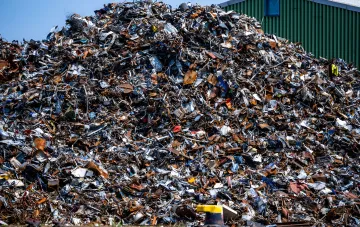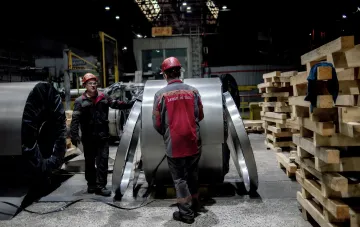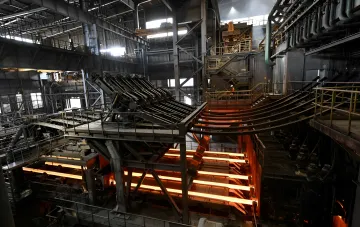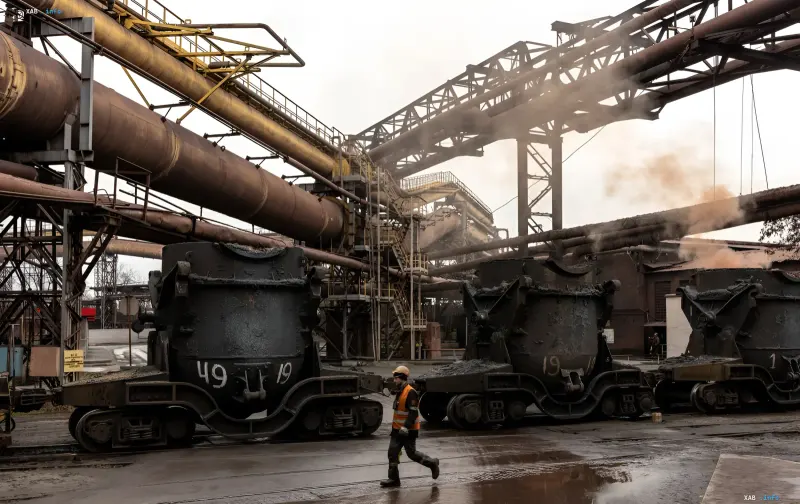
Ukraine's metallurgical industry, which accounted for approximately 5.5% of the country's GDP, 15% of foreign exchange earnings, and up to 70,000 jobs in 2025, faced a deep systemic crisis by autumn 2026. According to data from the industry think tank GMK Center, cited by RBC-Ukraine, total tax and fee payments from iron and steel enterprises (G&M) in 2025 amounted to about $900 million, equivalent to approximately 3% of total budget revenues. However, by 2026, the dynamic had shifted sharply: Russian shelling of production facilities, the blockade of Black Sea ports, tighter restrictions in the EU market, rising logistics costs, and chronic power shortages meant the industry stopped being just an "isolated sector problem" and turned into a direct threat to state and local budgets.
Tax Losses Mount: Figures for the First Nine Months of 2026
In the first nine months of 2026, the country's largest metallurgical holding, Metinvest, reduced its tax payments by 6% to 13 billion hryvnias. The structure of these losses was uneven: VAT receipts fell by 36% to 914 million hryvnias, and corporate income tax by 26% to 1 billion hryvnias. The Dnipro Metallurgical Plant showed an even sharper decline: tax contributions for the same period dropped by 46% to 129 million hryvnias. ArcelorMittal Kryvyi Rih maintained positive growth for the first nine months—up 6% to 6.7 billion hryvnias—however, the company expects a decline by year-end due to production halts that occurred in late September 2026. Metinvest CEO Yuriy Ryzhenkov described the situation as critical: "We are at a breaking point. Metallurgists are losing the ability to produce and export steel, and the country risks losing jobs and billions of hryvnias in taxes."
The Cascade Effect: Who Else Is Losing Income
The problem is not limited to metallurgical enterprises alone. Every drop in production volume means fewer orders for the energy sector, rail transport, machinery, logistics companies, service providers, and small businesses. As a result, tax losses spread far beyond the plants: revenues from retail, services, transport, and related industries are falling, creating a second wave of budget shortfalls at all levels. According to GMK Center, the cascade effect makes the metallurgical crisis a factor affecting not just tens of thousands of factory workers, but a much wider segment of the Ukrainian population through the state of local budgets, employment, social services, and the financial viability of industrial communities.
Industrial Cities Feel the Impact First
For the state budget, the additional loss of VAT and corporate income tax revenue means increased dependence on external financing and new borrowing at a time when the country simultaneously needs vast resources for defense and reconstruction. But industrial cities feel the crisis even more acutely. Personal income tax, land tax, and other payments from large enterprises form a significant share of local budget revenues. Authorities in Kryvyi Rih have already announced a municipal budget sequester and the cancellation of several development projects due to the drop in tax inflows. Spending on road infrastructure, utility services, schools, hospitals, and other urban programs is being cut first. At the same time, communities are losing the ability to co-finance international grant programs and reconstruction projects, exacerbating the long-term consequences for the regions.
What Is Needed to Stop the Spiral
GMK Center emphasizes that in the current conditions, unblocking Black Sea ports, lowering logistics costs, and ensuring stable power supply are not issues of supporting individual companies, but of preserving the tax base of the state and cities as a whole. In its October inflation report, the National Bank of Ukraine also assessed the impact of the metallurgical production halt and port blockades on the overall slowdown of the national economy. Without addressing these structural problems, industry analysts believe the spiral of falling production, tax revenues, and the budgetary capacity of industrial regions will intensify, turning an industrial crisis into a nationwide financial challenge.