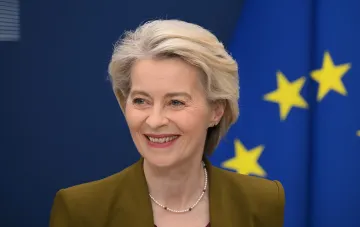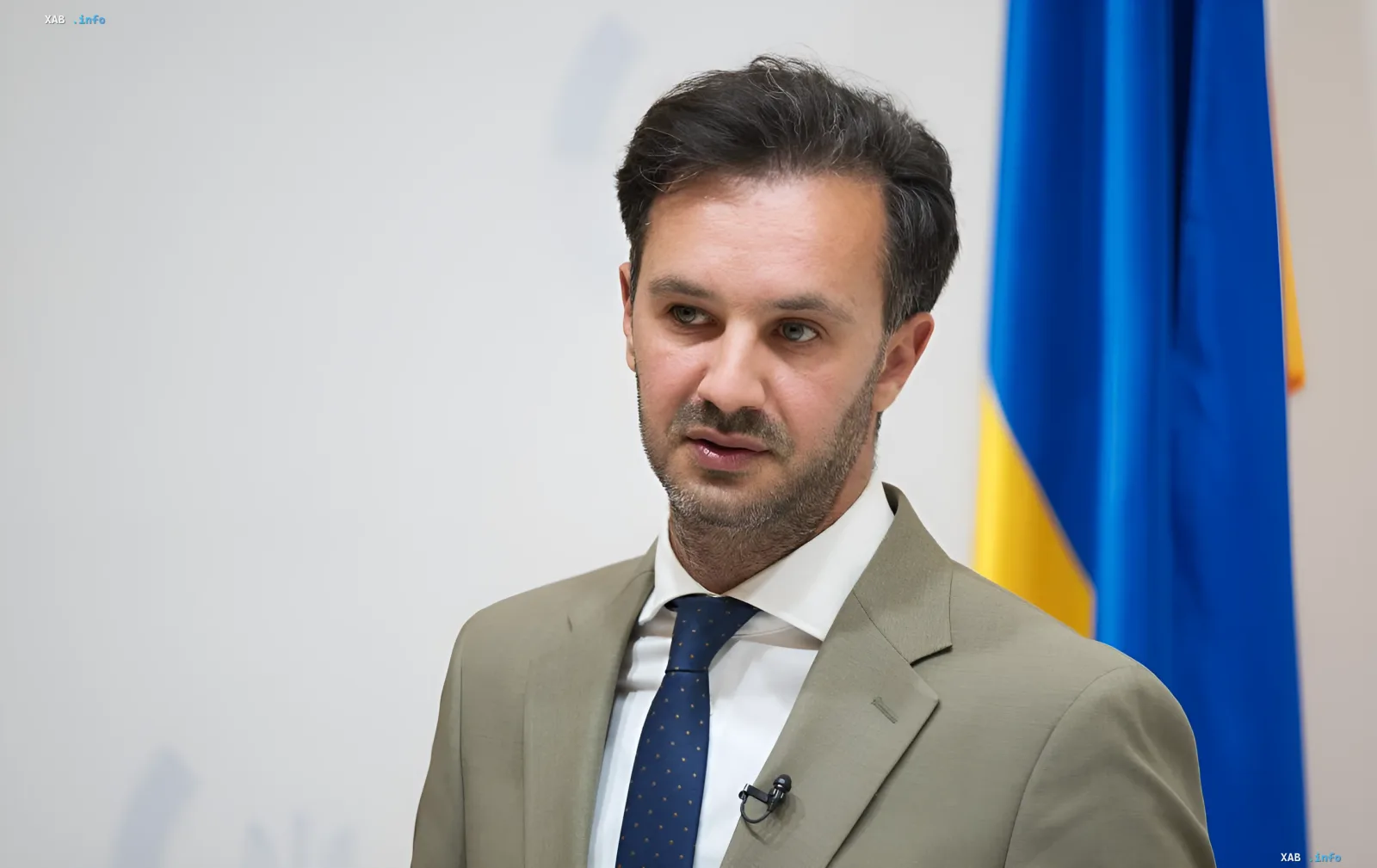
The European Union intends to propose the creation of a new body — the European Security Council — and Ukraine has officially confirmed its readiness to take part in it. This was stated by Georgy Tikhii, spokesperson for the Ministry of Foreign Affairs of Ukraine, at a briefing dedicated to the energy ceasefire, while answering questions from a RBC-Ukraine correspondent. His comment was a reaction to a statement by European Commission President Ursula von der Leyen, who on September 16, in her annual "State of the Union" address before the European Parliament, announced Brussels' intention to lay out ideas for turning the Security Council "into reality."
Context: von der Leyen's speech and the logic of the new initiative
According to von der Leyen, the question of creating a European security body has become "even more pressing now, given the nature and scale of the risks." That is precisely why, she stated, the European Commission will set out concrete ideas to make the European Security Council a reality. In Kyiv, this initiative was received as a signal of high-level attention to Ukraine. "We noticed the high level of attention the President of the European Commission paid to Ukraine and to the issues of defending against Russian aggression, to the issues of supporting our state. And we are grateful to her for the fact that Ukraine was clearly in focus, at the center, in a special priority in this speech," Tikhii noted. In his words, this is right, since "there is no greater challenge to Europe's security today than Russian aggression against Ukraine."
Kyiv's position: readiness for close cooperation
The MFA spokesperson emphasized that Ukraine has repeatedly stated its readiness to enter into closer cooperation both with the EU as a whole and with individual member states in order to strengthen the continent's security. "We have already been actively discussing them, we are discussing them now, and we are ready to participate in strengthening Europe's security," he summarized, referring to the various formats being discussed in Europe to strengthen collective defense. Thus, Kyiv has in effect confirmed that it will not shy away from new institutional mechanisms if they are open to Ukraine's participation.
Canada as the first associated member and the question of the US role
In parallel with the Security Council initiative, Brussels is advancing the expansion of the "circle of trusted partners": according to RBC-Ukraine, the EU wants to offer Canada the status of the bloc's first-ever associated member. Von der Leyen emphasized that Europe and Canada share common values, which makes such a partnership logical. In Azerbaijani and Ukrainian media, the Security Council initiative is often interpreted as a "European analogue of NATO" — a structure that should ensure continental defense without direct reliance on Washington. At the same time, in official texts, neither Brussels nor Kyiv frames the new body precisely as a "replacement" for NATO, but rather speaks of strengthening the European dimension of security.
Strengthening air defense: the Freyja project and a modular system
An important practical consequence of the course on strengthening security was the decision to substantially reinforce Ukraine's air defense. One of the key directions is the creation of a common air defense system based on the Freyja project. Von der Leyen stated the joint desire of Brussels and Kyiv to create an affordable modular missile defense system, which should allow protection to be built up in stages and in line with the real needs of the Ukrainian side. This step is linked to the overall logic of integrating Ukraine into the European security system: from declarations of "focus on Ukraine" to concrete defense projects.
What this means for the architecture of Europe's security
Together, the initiatives on the European Security Council, the associated member status for Canada, and the Freyja project paint a picture of the gradual formation of a more independent European defense perimeter, in which Ukraine is seen not as a peripheral partner but as part of a space whose security is directly linked to the security of the continent. For Kyiv, this opens up the possibility to influence the rules and formats that will define Europe's defense in the coming years, while for Brussels it is a way to legitimize the new body through the participation of a country on the front line of the conflict. The final composition, mandate, and terms of Ukraine's participation in the Security Council, as of September 17, 2026, have not yet been finalized and will be clarified during further negotiations.