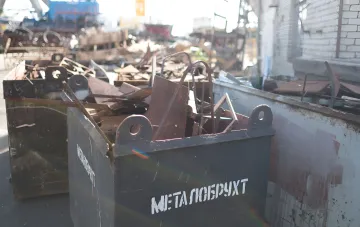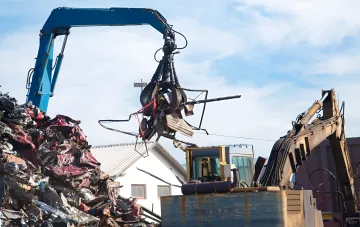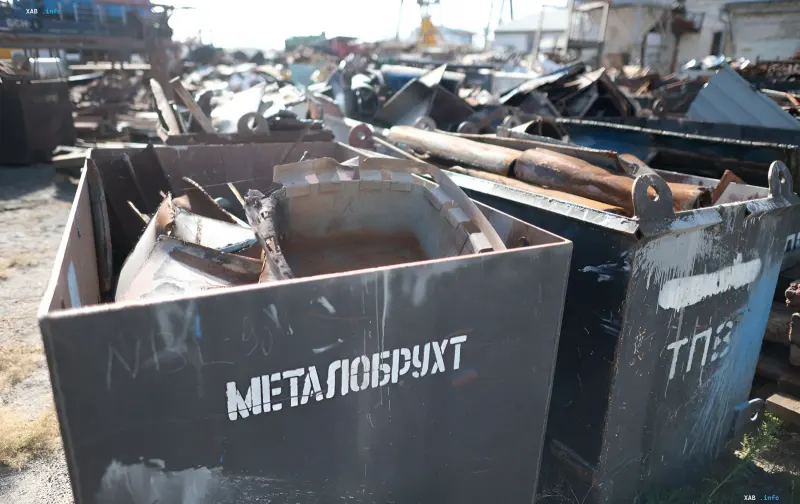
The restrictions on scrap metal exports introduced by the Cabinet of Ministers of Ukraine have demonstrated a positive effect and helped bring the supply of raw material to Ukrainian metallurgical enterprises back to a normal level. This was stated by Alexander Kalenkov, President of the "Ukrmetallurgprom" Association, while assessing the results of the anti-crisis measures adopted in 2025–2026. According to him, in 2025 domestic metallurgists faced an acute shortage of scrap metal: due to a lack of raw material at competitive prices, some companies were unable to meet their planned production volumes. The situation was worsened by competition with foreign buyers, including enterprises with access to cheap Russian resources, which made Ukrainian scrap an attractive target for export abroad at depressed prices.
From Export Duty to a Zero Quota: How the Protection Mechanism Was Built
According to Kalenkov, the government's regulatory response was phased. First, an export duty of 180 euros per tonne on scrap metal was introduced, followed by additional restrictions designed to prevent the export of raw material through transit schemes. It was precisely this package of measures, in the assessment of the head of "Ukrmetallurgprom," that proved effective: the supply of scrap to metallurgical companies rose to a normal level. The culmination of the anti-export policy was Cabinet of Ministers Resolution No. 1795 of 31 December 2025, which established a zero quota on scrap metal exports for the entire year of 2026. Before the ban was introduced, scrap exports had been steadily growing, and "grey" schemes — when scrap was shipped through Poland with a zero duty and then forwarded to Turkey — cost the state budget more than three billion hryvnia, despite the formally applicable rate of 180 euros per tonne.
The Weak Link: Free Trade with the European Union
At the same time, Kalenkov drew attention to a significant gap in the current regulation: it does not fully cover trade with the European Union due to the free trade regime provided for by the Association Agreement. To date, a zero duty rate applies to scrap exports to the EU, a provision that, according to the President of "Ukrmetallurgprom," is actively exploited by unscrupulous exporters. Kalenkov proposed that Ukraine hold consultations with Brussels and apply restrictive measures in this direction as well, especially given the ongoing war. The specific initiative is to set a duty of 180 euros per tonne of scrap on exports to the EU, thereby equalizing conditions across all supply directions.
Aligning with European Policy and the Economic Logic of Domestic Processing
The President of "Ukrmetallurgprom" also emphasized that Ukraine should look to the EU's own policy, where scrap metal is increasingly regarded as a strategically important raw material for the decarbonization of industry. In this context, he argued, processing scrap metal domestically is economically more advantageous for the state than exporting it as raw material: the production of finished metal products generates a larger volume of tax revenue, foreign exchange earnings, and added value. Kalenkov expressed confidence that dialogue with the European Union on introducing restrictive measures on scrap exports is not only possible but necessary: "I think that we could, at the very least, talk to the European Union and say that this needs to be done."
Contradictory Data
No significant discrepancies in figures or dates were identified in the provided sources. Resolution No. 1795 of 31 December 2025, the duty rate of 180 euros per tonne, and the estimate of budget losses exceeding three billion hryvnia appear consistently in the materials of RBC-Ukraine, UNIAN, and "Obozrevatel." At the same time, the "Obozrevatel" source (ID 3) notes that Ukraine received support from Brussels even before the scrap export ban was introduced, which creates a certain context: formally, the EU supported Kyiv's restrictive measures, yet the free trade regime still maintains a zero rate for supplies to the European direction, making Kalenkov's initiative to introduce a 180 euro/tonne duty on EU exports a subject of future negotiations rather than a currently applicable rule.