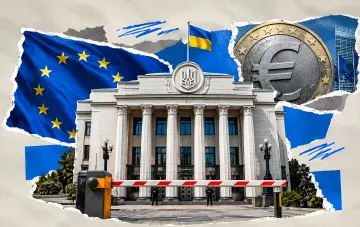
On November 10, 2026, the Verkhovna Rada of Ukraine voted to adopt in the first reading bill No. 14327-d, which provides for bringing national legislation into line with European requirements for the country's accession to the Single Euro Payments Area (SEPA). The document was supported by 249 MPs, demonstrating sufficient political will to integrate Ukraine into the pan-European payment space. The bill was initiated as part of a broader package of reforms aimed at harmonizing Ukraine's financial system with EU directives on the prevention of money laundering and terrorist financing.
What is SEPA and why it matters for Ukraine
The Single Euro Payments Area is a payment integration initiative that unites European Union member states and several other countries, allowing euro transfers between participating banks to be carried out under uniform standards. For Ukrainian business, joining SEPA means a significant simplification of settlements with European counterparties: paying bills and receiving payments from EU countries will become faster and cheaper. Under the zone's current rules, SEPA transfers typically arrive within one business day, and the commission for processing them is minimal or entirely absent. The explanatory note to the bill emphasizes that integration will positively affect foreign trade, capital movement, the investment climate, and financial inclusion.
Register of accounts and individual safe deposit boxes: what goes into the database
One of the central innovations of the bill is the creation of a Register of Accounts and Individual Safe Deposit Boxes of Individuals. The unified database will record information on the opening and closing of bank accounts, electronic wallets, and safe deposit rental agreements, as well as basic identification data of their owners. The National Bank of Ukraine, commercial banks, non-bank financial institutions, payment services, and electronic money issuers are required to transfer information to the register. Crucially, the register will not contain data on the movement of funds, account balances, or the contents of safe deposit boxes — it records exclusively the facts of opening and closing accounts and renting safes, rather than citizens' financial transactions.
Who will get access and how citizens' rights are protected
The register will be administered by the Ministry of Finance of Ukraine as the central executive body responsible for shaping financial policy. Direct and unhindered access to the database will be granted to the Bureau of Economic Security, the Asset Recovery and Management Agency (ARMA), and the National Agency on Corruption Prevention (NACP). Deputy Head of the relevant parliamentary committee Olha Vasylevska-Smahlyuk stressed that the circle of users is limited and meets the minimum requirements of European directives, while extending access to all law enforcement agencies is not provided for. Separately, the text of the bill stipulates that the creation of the register does not entail any restrictions or delays in conducting financial transactions by individuals.
Additional anti-money laundering norms and the register of beneficial trusts
In addition to the accounts register, the document provides for the creation of a separate register of ultimate beneficial owners of trusts, the expansion of the list of primary financial monitoring entities, and the tightening of liability for providing inaccurate information on ultimate business owners. These measures are a mandatory condition for joining SEPA, as the harmonization of legislation in the field of countering money laundering and terrorist financing is among the core requirements of the European payment space. Thus, the adoption of the bill in the first reading paves the way for further refinement of the text and its final approval, bringing Ukraine closer to full participation in the single European payment infrastructure.