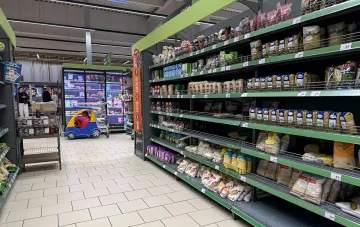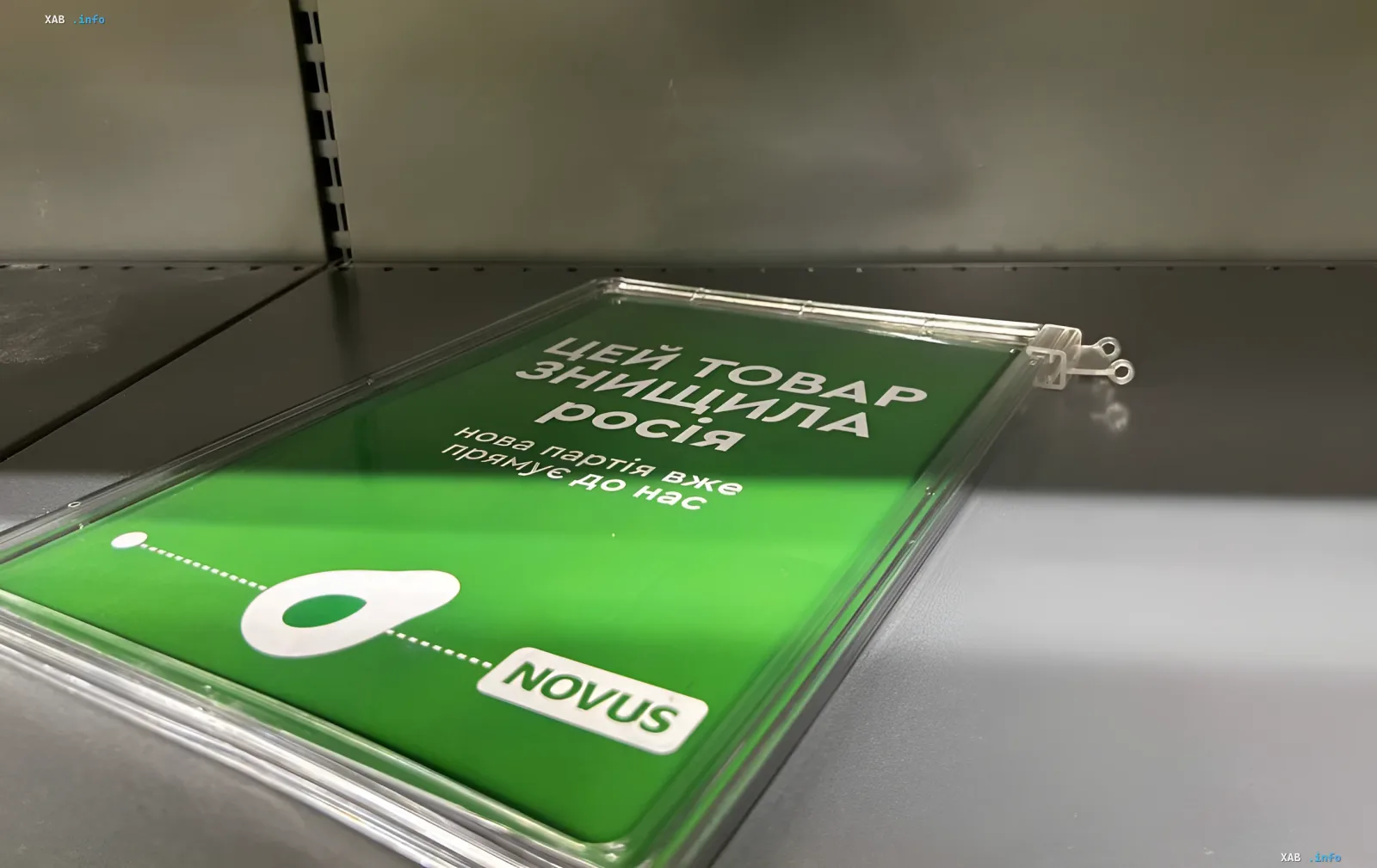
Despite ongoing Russian strikes on warehouses and food logistics, Ukraine's system for supplying basic food products continues to function. This was stated by Ukraine's Minister of Agrarian Policy and Food, Taras Vysotskyi, during his weekly briefing with media representatives, as noted by RBC-Ukraine with reference to the ministry. In his words, retail chains and suppliers are restructuring their operations to fit the new conditions: relocating stock, changing delivery routes, and seeking alternative storage formats. A visual marker of this restructuring is already visible in stores: on the shelves of chains such as NOVUS, green signs appear reading "This product was destroyed by Russia — a new batch is already on its way to us," honestly recording a temporary break in the supply of a specific item.
Strikes on Logistics: the Scale of Losses
Russian attacks on warehouse and logistics facilities have significantly complicated the work of the food sector. According to data cited by RBC-Ukraine in the headline of its report, a significant share of modern capacity for storing products has already been destroyed, and in some locations losses reach 90%. This means that it is precisely the distribution and warehousing hubs — not production — that have become the main vulnerable link in the "factory — shelf" chain.
Retail Adaptation: How the System Is Restructuring
At the same time, in the minister's assessment, there are as yet no grounds to speak of a systemic shortage of basic products. Vysotskyi emphasizes: "It is harder, longer, and more expensive, but the system is adapting. There is no threat of a systemic physical shortage of basic food products today." The new logistics of the food sector are, in effect, being formed in real time due to the constant risk of attacks: stock is redistributed between regions, routes bypass damaged hubs, and storage is shifted to other formats. In individual stores this may manifest as a temporary change in assortment or in the availability of specific items, but not as a general hunger for basic goods.
Compensating Losses: the Debate over Risk Allocation
A separate and still unresolved issue remains the compensation for products destroyed as a result of the strikes. The minister explained that the supply and sale of goods are commercial and contractual relationships between producers, distributors, and retail chains, so risks and losses should be distributed among all participants in the chain. "A fair approach would be a parity distribution of risks among all parties. It does not necessarily have to be 50/50," Vysotskyi noted. He added that for different product categories the margin, terms of cooperation, and economic outcome differ, so the mechanism for allocating losses should be determined separately for each category, taking into account how profit is divided between the parties. In his view, the same approach should apply to the additional costs of restructuring logistics as well.
Contradictory Data
There are two notable tensions here that are important to reflect honestly. The first is the gap between the scale of the reported losses and the conclusion that there is no shortage: if up to 90% of warehouse capacity has been destroyed in some locations, then the claim of "no systemic shortage" rests on retail's ability to quickly restructure logistics, not on the preservation of infrastructure. In other words, resilience is ensured not by a reserve of capacity but by the flexibility of routes, which makes the system more expensive and more fragile in the long term. The second is the question of compensation: the state is working on systemic mechanisms for insuring military risks, but until they are fully launched, the rules for allocating losses and extra costs among producers, suppliers, and chains remain a matter of agreements rather than a ready regulatory solution. Thus, "no shortage" and "the losses must be compensated by someone" are two sides of the same problem, and the second is not yet closed.
What This Means for the Consumer
For the end consumer, the key takeaway is that basic products remain available overall, but in specific stores there may be temporary supply delays and a narrowing of the assortment of individual items due to strikes on distribution centers. Retailers and suppliers bear additional costs for restructuring logistics, and the question of who and in what proportion will compensate for the destroyed products will be resolved at the level of contractual relationships among the participants in the chain until the state mechanisms for insuring military risks are launched.