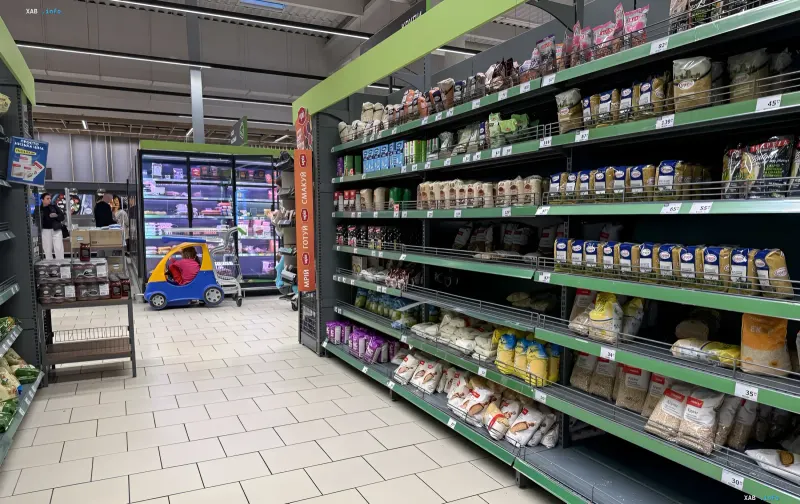
A walk through a Ukrainian supermarket in 2026 is increasingly accompanied by the feeling that familiar major brands on the shelves are giving way to products from less well-known manufacturers. Dairy aisles, grain shelves, meat and fish displays — in every department you can spot packaging that shoppers have not encountered before. For many, this looks like a warning sign: is a shortage beginning? However, as experts explained, the picture is far less dramatic than it might first appear.
No shortage: what the Trade and Industry Chamber says
Rostyslav Korobka, Vice President of the Trade and Industry Chamber of Ukraine, stated outright in a comment to RBC-Ukraine that there is no food shortage in the country. In his words, the appearance of products from less well-known manufacturers on the shelves is not a sign of systemic problems in the market. The assortment of a specific store depends on the interaction between individual manufacturers and retail chains: if a major brand temporarily cannot ensure supply to a particular region, its place is taken by another manufacturer that is willing and able to deliver to the point of sale. Thus, the change of "faces" on the shelves is not a symptom of a crisis, but an adaptation of the supply chain to current conditions.
Logistics as the key factor: a shift to smaller hubs
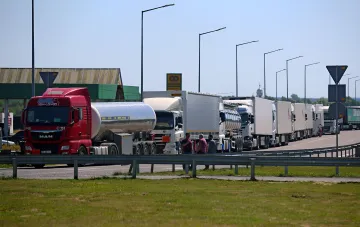
According to Korobka's assessment, the main driver of changes in the assortment has been logistics, which during the war has become one of the determining factors in ensuring stores with products. Russian strikes on major warehouses and distribution centers have forced retailers to restructure their entire supply system. Business is reorienting toward smaller warehouses and logistics hubs: this allows goods to be stored in batches closer to the point of sale and delivered more quickly. "The companies themselves regulate, on a territorial basis, where it is currently possible to make deliveries," the expert explained. As a result, the shelves of a particular store may carry products from a manufacturer whose nearest warehouse or workshop is currently within reach of a logistics route, even if that brand was previously supplied by another vendor.
Delivery times have grown: from a day to a week
Minister of Agrarian Policy Taras Vysotskyi had previously warned that certain products might temporarily disappear from the shelves or be sold in a smaller assortment. According to RBC-Ukraine, delivery that took 24–72 hours before the war now, in some cases, stretches out to a week. The categories most sensitive to such disruptions are those with a short shelf life: dairy products, fresh meat and fish, vegetables, fruits, and frozen goods. It is precisely in these departments that shoppers most often notice familiar packaging being replaced by less familiar ones. At the same time, the government emphasizes that Ukraine's production capacity is sufficient for domestic consumption, and no food shortage is expected in the foreseeable future.
Kyiv and the region — in the highest-risk zone
The geographic aspect of the problem cannot be ignored. According to RBC-Ukraine's assessment, Kyiv and the Kyiv region carry the greatest risks, as a significant part of the country's warehouse capacity has historically been concentrated there. The destruction or damage to these facilities has led to logistics routes being restructured, and some retailers are shifting to direct deliveries from manufacturers to stores, bypassing intermediate storage. On the one hand, this shortens the chain and makes delivery faster, but on the other — it limits the assortment of a particular store to what can be delivered along the new route within an acceptable time.
Expert advice: do not stockpile
In conditions where delivery times are unstable and the assortment can change from week to week, the temptation to build up large food stocks at home is understandable. However, experts do not recommend doing so. Excessive purchasing by consumers can itself create a temporary shortage on the shelves: if thousands of households simultaneously buy up certain items, the retail chain cannot replenish its warehouse stocks in time, and empty spaces appear on the displays. The rational strategy, in the specialists' view, is to buy food in the usual rhythm and not to build up strategic reserves at home.