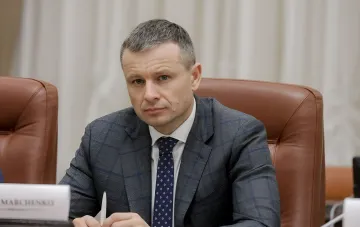
Ukraine's Ministry of Finance has issued an unprecedentedly sharp warning: without timely financing from international donors, the country may face delays in social payments to the population. This was stated by Finance Minister Serhiy Marchenko at a parliamentary committee session, as reported by RBC-Ukraine citing MP Olga Vasilevska-Smaglyuk. According to the head of the Finance Ministry, the state treasury has already exhausted its liquidity reserves, and the government is forced to defer part of its budgetary spending. "We have now reached the limit, and there is no explanation for why we cannot vote on these bills during this difficult period, understanding the price of the issue," Marchenko emphasized, referring to the package of laws necessary to secure financing from the European Union and the International Monetary Fund.
Two Scenarios for Operating Under a Deficit
According to Marchenko, the Finance Ministry has developed two types of response measures to the funding shortfall. The first and primary one is strict prioritization of spending, in which the security and defense sector remains the absolute priority. "Revenues will come in, and we will first finance the security and defense sector. Then, as soon as financing appears, we will finance all other expenditures," the minister explained. This approach, as the ministry clarified, applies not only to the state budget but also to local budgets. In practical terms, this means the possible temporary suspension of social support programs, capital construction, and other "secondary" spending items. Financing for these areas will be restored only once sufficient liquidity is regained.
The Threat of Monetary Financing and Devaluation
More alarming is the second scenario, which Marchenko stated outright: in the event of a prolonged delay in external aid, the government may be forced to resort to monetary financing of the budget — that is, in essence, to the issuance of hryvnia. "The delay will cause social unrest. As a result, other steps will follow. We do not rule out monetary financing with the corresponding devaluation of the hryvnia, inflation, and other negative consequences. We cannot sit and wait for the money to arrive," the head of the Finance Ministry summed up. Thus, the ministry is effectively warning of the risk of a simultaneous blow to the national currency's exchange rate and to citizens' purchasing power if parliament does not adopt the necessary bills in the near future.
Context: Trillion-Hryvnia Borrowing and Rising Public Debt
The Finance Ministry's warning came against the backdrop of recent statements by Olga Vasilevska-Smaglyuk that Ukraine will need borrowing on the order of trillions of hryvnia during the 2027–2029 period to cover the budget deficit. According to her estimates, public debt over that period could exceed 114% of GDP. These figures underscore the scale of the structural deficit facing the Ukrainian economy and explain why even a short-term delay in tranches from the EU and the IMF could push the budget system to the brink of collapse.
What This Means for Citizens
For ordinary Ukrainians, the potential consequences of the described scenario could be significant: delays in pensions, benefits, and other social payments, reduced funding for local infrastructure projects, and, in the event the monetary scenario materializes, accelerated devaluation of the hryvnia and rising prices. The Finance Ministry, however, emphasizes that all the measures listed are of a temporary nature and will be reversed as soon as the flow of external financing is restored. The key condition, according to Marchenko, remains the prompt voting in the Verkhovna Rada on the package of laws that opens access to the funds of international creditors.