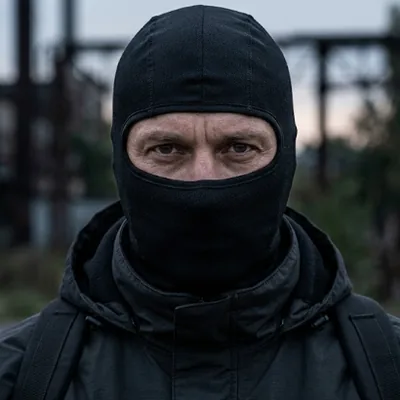
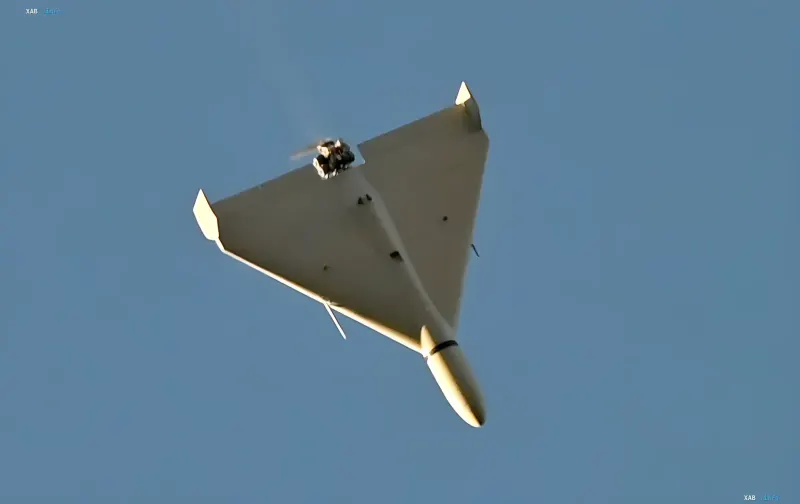
Amidst the ongoing military conflict and the escalation of the drone war in Ukraine, a new, sophisticated form of fraud has emerged. Ukrainian businesses have begun receiving anonymous letters in which unknown individuals, claiming to be 'owners' of Shahed-type attack drones, are demanding ransoms. The essence of the proposal is simple and cynical: businessmen are offered to pay a certain sum so that their facilities are not subjected to attacks by Russian drones. This incident was reported by President of Ukraine's advisor on the development of defense technologies, Serhiy 'Flash' Beskrestnov.
The scheme's essence: sending fake letters
According to Serhiy Beskrestnov, scammers use psychological pressure on business owners who are in the risk zone or simply fear possible strikes. Letters arriving via email or messengers contain threats and demands for fund transfers. Visually, these messages are often styled to look like official notifications or contain blurry images of drones to give them the appearance of 'documentary evidence'. The President's advisor urged entrepreneurs to remain calm and not believe such 'nonsense', noting that this is a classic extortion scheme exploiting the fear of military action.
Technological context: modernization of 'Shaheds'
The emergence of this fraud scheme is not accidental and is directly linked to the current tactics of weapon deployment. Recently, Russia has been actively modernizing its fleet of 'Shahed' drones (known as 'Geran' in Russian terminology). As sources report, the occupiers have equipped the 'Geran-4 Siker' drone with a new guidance system and an advanced optoelectronic module. These changes allow drones to increase the accuracy of target strikes and operate autonomously in case of loss of communication with the operator. It is precisely the presence of such 'smart' and controlled drones, capable of penetrating deep into the rear, that creates the ground for rumors that attacks could be 'commissioned' or controlled by third parties.
Ukraine's response: development of interceptors
In response to the threat from modernized Russian drones, Ukraine is also developing its own air defense technologies. In particular, the automated interceptor of fast drones, ZIRKA, was presented. This system was created specifically to combat the reactive 'Geran-4' drones, which pose the greatest danger due to their speed and maneuverability. The development of such systems is intended to reduce the effectiveness of strikes and, consequently, reduce panic in the rear, however, scammers use the very fact of the existence of a threat for their own purposes.
Contradictory data
There is a significant gap between the scammers' statements and the actual situation. On the one hand, the letters claim that 'Shahed' attacks can be prevented for money, implying that the drones are controlled by private individuals or groups willing to make deals. On the other hand, Ukrainian authorities and security experts categorically deny the possibility of such control. Russian drones are controlled centrally by the military structures of the Russian Federation, and there are no channels for 'buying off' from strikes. Thus, the letters are exclusively a tool of psychological warfare and financial fraud, having no real technical basis.